
Launching and growing an online business in 2026 is fundamentally different from five years ago. The biggest change is not the tools you use, the platforms you sell on, or the payment rails you integrate it is how customers find you in the first place. AI search agents like ChatGPT, Perplexity, Gemini, Claude, and Google AI Overview are increasingly the first point of discovery, and if your business is invisible to them, every channel you build on top of that foundation leaks value.
This guide merges everything a founder needs to know into a single playbook: the launch foundations that make AI engines recognize you, the growth techniques that compound visibility over time, the year-one survival tactics that keep the business alive long enough for those investments to pay off, and the digital marketing disciplines that connect all of it. It is the equivalent of five separate articles, organized as one narrative arc from "day zero" to "year two and beyond."
Key Takeaways
- AI search has no page two ChatGPT, Perplexity, and Gemini either recommend your business or they do not, making AI visibility a launch-day priority, not a post-launch optimization.
- Gartner predicted a 25% drop in traditional search volume by 2026 as users shift to AI assistants and according to Otterly.ai, community platforms capture 52.5% of AI citations versus 47.5% for brand domains.
- According to PwC's 2026 Digital Trends in Operations Survey, 80% of financial services respondents say their company is scaling AI implementation enterprise-wide or has fully embedded AI across business units and most categories of value come from redesigning how work gets done, not from the technology itself.
- Roughly 20% of new businesses fail in year one, almost always from running out of money rather than lacking customers which makes every pound or dollar spent a strategic decision about compounding versus diminishing returns.
- Content marketing generates 3x more leads per dollar than paid advertising, email delivers $36 for every $1 spent, and GEO-optimized content sees up to 40% more AI visibility the highest-leverage channels for year-one businesses all compound.
- The signals driving AI visibility structured data, content clarity, entity consistency, authoritative backlinks overlap heavily with good digital marketing practice across every channel.
- A business can rank on page one of Google and still be completely invisible to AI assistants. AI search visibility is a measurable gap that affects real revenue, and it is rarely tracked by the SEO tools most founders already use.
- The businesses that will dominate their categories over the next few years are the ones being built right now with AI visibility as a core principle, year-one budgets engineered for compounding, and growth techniques that reinforce each other across channels.
The Discovery Landscape Has Shifted

When a potential customer asks ChatGPT "what's the best online accounting tool for freelancers" or tells Perplexity "find me a sustainable clothing brand that ships to the UK," the AI engine synthesizes information from across the web and returns specific recommendations. There is no page two of results. There is no list of ten blue links. The AI either recommends your business or it does not.
For new online businesses, this changes the calculus entirely. You are not just competing for search rankings you are competing for AI mindshare from your first day online. And it is happening at scale: AI assistants are processing billions of queries, and the brands that appear in those answers are capturing demand that never reaches traditional search results.
This does not mean traditional SEO is dead. Organic search still accounts for 53% of trackable website traffic, and Google remains the single largest discovery channel on the web. But the surface area has expanded. "Search" no longer means just Google's ten blue links it means Google AI Overviews (which now trigger on roughly 48% of US searches as of February 2026, up from 30% a year earlier per BrightEdge data), Microsoft Copilot, ChatGPT with web browsing, Perplexity, Claude, and the rest of the AI ecosystem. All of them pull from search indexes, but they present results differently and weigh signals differently.
The second shift is more subtle. Even when traditional search is doing its job, AI systems are increasingly mediating the final decision. A buyer might discover three options through Google, then paste them into ChatGPT and ask "which of these is best for a solo freelancer who invoices in GBP?" The AI's answer shaped by structured data, entity signals, reviews, and citation patterns effectively chooses the winner. Being on the shortlist is no longer enough; you need to win the AI recommendation.
Launching a business today therefore requires a dual strategy: visibility in Google's conventional results and visibility in the AI engines that are rapidly absorbing search intent. Tracking your AI visibility is no longer optional it is as fundamental as tracking your search rankings.
What Digital Marketing Looks Like Now
Before getting into launch foundations and growth techniques, it is worth stepping back to see the whole board. Digital marketing in 2026 is a set of disciplines, not a single activity, and every new business needs to understand how the pieces fit together before picking where to invest.
Search Engine Optimization (SEO). The process of improving your website so it ranks higher in search engine results on-page work (content quality, keyword targeting, meta tags, schema markup), technical improvements (site speed, mobile usability, crawlability), and off-page signals (backlinks, brand mentions, domain authority). SEO has been the backbone of digital marketing for two decades; what has changed is that an SEO checklist from 2020 is necessary but no longer sufficient.
Content Marketing. Creating and distributing valuable content blog posts, guides, videos, infographics, whitepapers to attract and retain a defined audience. The goal is not to sell directly but to build trust and authority so that when the audience is ready to buy, your brand is the obvious choice. Good content marketing is the single biggest driver of both traditional search rankings and AI search visibility. AI systems cite sources that provide direct, factual, well-structured answers; vague or overly promotional content gets skipped by both humans and models.
Social Media Marketing. LinkedIn, Instagram, TikTok, X, and Facebook for brand awareness, community engagement, and traffic. Organic posting builds a following; paid social delivers targeted reach. Beyond direct conversions, consistent brand presence across social platforms contributes to entity recognition the signals that help AI engines decide which brands to recommend.
Email Marketing. Direct delivery to a subscriber's inbox newsletters, product announcements, promotional campaigns, abandoned cart recovery, post-purchase nurture. It remains one of the highest-ROI channels because you own the audience rather than renting attention from a platform's algorithm.
Pay-Per-Click (PPC). Paid advertising where you pay per click Google Ads, Microsoft Ads, Meta Ads, LinkedIn Ads, TikTok Ads. PPC delivers immediate visibility, making it essential for product launches, seasonal campaigns, and competitive keywords. The economics are shifting: as AI Overviews absorb more of the results page, organic click-through rates drop, which drives more businesses into paid channels.
Affiliate and Influencer Marketing. Third parties earn a commission for driving sales; creators get paid to promote your product to their audience. Both leverage someone else's credibility to reach customers who do not yet know your brand. In 2026, micro-influencers (10,000–100,000 followers) in specific niches consistently outperform broad celebrity campaigns.
AI Search Visibility. The newest discipline in modern marketing strategy and the one most businesses are still ignoring. AI search visibility means ensuring your brand appears when someone asks ChatGPT, Perplexity, Gemini, or Google AI Mode a question relevant to your business. AI systems evaluate structured data, content clarity, entity consistency, citation patterns, and training data presence to decide which brands to mention. AI search vs traditional search is not a theoretical distinction it is a measurable gap that affects real revenue.
Every type of digital marketing above still works. SEO still drives traffic. Email still converts. PPC still delivers. But the environment those channels operate in has fundamentally shifted. The rest of this guide is about launching into that shifted environment deliberately.
Launch Foundations: Equip Your Business for AI Discovery

The first weeks after launch determine how AI engines perceive you. Retrofitting is harder and slower than building correctly from day one. By the time a business has been live for six months with no structured data, thin content, and zero entity signals, it has already built a foundation that AI engines ignore.
Here is what matters most, in priority order.
Build a Strong Digital Foundation First
Your website is no longer a brochure. It is your most important employee answering questions, building trust, and converting visitors around the clock. A strong digital foundation means three things working together.
A fast, mobile-friendly website that loads in under 3 seconds. Google considers pages loading in under 2.5 seconds as having a "good" Largest Contentful Paint score, and a widely cited Google study found that 53% of mobile visitors abandon sites that take longer than three seconds to load. Mobile-first design is not optional over 60% of web traffic is mobile, and Google indexes the mobile version of your page first.
Clear, structured content that explains who you are, what you offer, and why someone should choose you. This matters for humans and for AI. A site that buries key information in cluttered layouts is actively working against you on both fronts.
Technical signals that tell search engines and AI agents that your site is legitimate, current, and authoritative. This is where most new businesses underinvest, and it is where the compounding advantage of early AI visibility is built.
Structured Data from the Start
Implement JSON-LD schema markup on every key page Organization, LocalBusiness, Product, Service, FAQ, Review, and Article schemas, depending on your business model. AI engines use structured data to understand what your business is, what it sells, and who it serves. Without it, AI platforms have to guess what your business is, which typically means they skip you entirely.
Structured data is also the single clearest compounding investment you can make on day one. AI agents tend to cite sources they have successfully extracted structured information from before, which means every week your structured data exists is a week your brand is being learned and indexed by AI retrieval systems. A site that launches with proper schema has an enormous head start over one that adds it a year later.
Clear, Answer-Ready Content
AI engines extract and cite content that directly answers questions. Your homepage, about page, and product pages should contain clear, factual statements about what you do.
"We provide handmade leather bags with a lifetime guarantee, shipped from our workshop in Bristol" is citable. "We're passionate about quality" is not. "SwingIntel tests websites against 24 checks across structured data, content clarity, and technical signals" is citable. "We offer comprehensive analysis" is not.
The structural rules are simple: clear H2 headings that mirror natural language questions, direct factual answers in opening paragraphs before expanding into context, and specific claims with numbers wherever they exist. This pattern serves both audiences it improves conversion for human readers and improves retrieval for AI engines. These are not competing objectives.
Entity Signals: Establish Who You Are
AI engines need to recognize your brand as a distinct entity. This means consistent Name, Address, and Phone (NAP) data across your site and business directories, a complete Google Business Profile if applicable, and mentions of your brand across authoritative third-party sites. The earlier you establish entity signals, the faster AI engines start recognizing and citing your business.
This is also where the Otterly.ai finding matters most. Community platforms capture 52.5% of AI citations compared to 47.5% for brand domains. In practice this means guest articles, community participation, industry listings, and press mentions are not "nice to have" marketing activities they are how AI engines build their picture of who you are. New businesses should focus on three things in parallel: structured data on their own website, consistent brand information across directories and business profiles, and third-party mentions through authentic community presence.
Regular Content Updates
AI engines favor recently published and recently updated content. A static website that launched with a handful of pages and never adds new content will gradually lose AI visibility existing content ages out of the retrieval window while competitors publish fresher signals.
Building a regular publishing cadence a blog, resource updates, case studies, or a changelog keeps your business in the AI retrieval window and feeds Google's ranking algorithms at the same time. Start with a goal of one high-quality post per week. Every post should answer a question your ideal customer is actually asking.
AI-Specific Monitoring
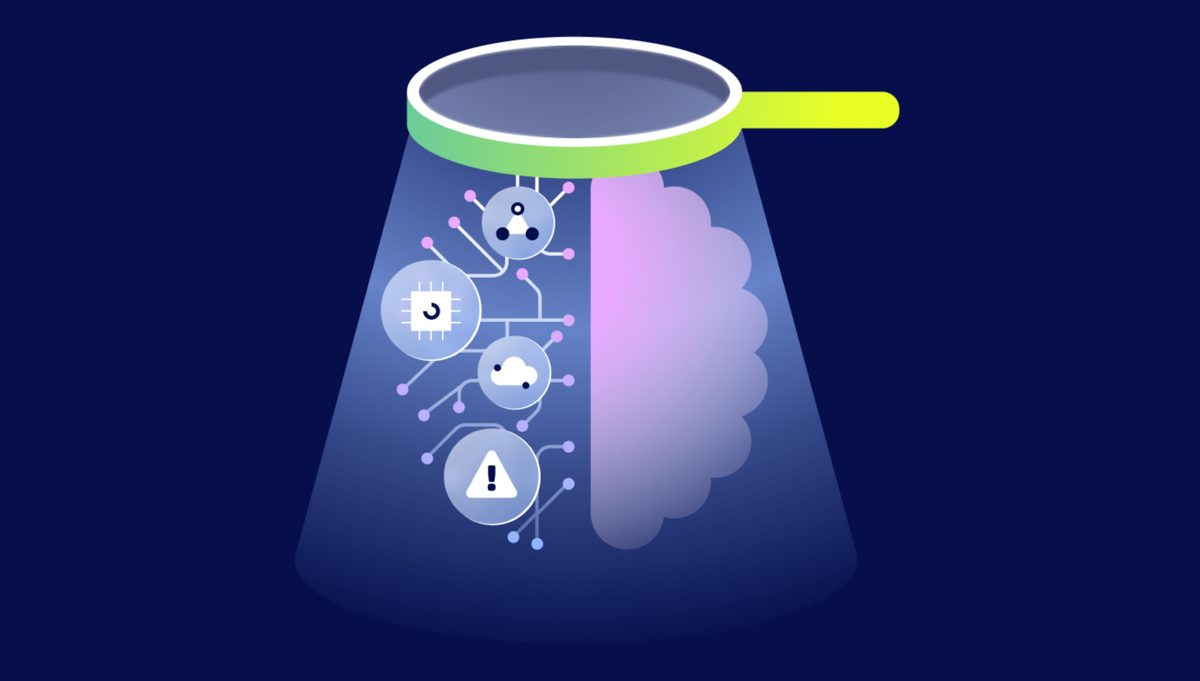
The last foundation is the one almost every new business skips, and it is the one that separates businesses that compound from businesses that plateau. Traditional analytics Google Analytics, Google Search Console, the dashboard inside your e-commerce platform cannot tell you whether ChatGPT is recommending your business, whether Perplexity cites your product pages, or whether your brand appears in Google AI Overviews. Those tools were built for a pre-AI internet.
Purpose-built AI visibility research is how you fill that gap. The research we run queries 9 AI platforms, analyzes your structured data, tests citations with 108 prompts across 12 categories per location, and delivers a prioritized action plan tailored to your business. It is the single clearest way to know where you actually stand from the beginning, rather than guessing for six months and discovering the gap too late.
Growth Techniques: Turn Foundations into Compounding Visibility
Launch foundations make you findable. Growth techniques make you chosen. These nine techniques are the highest-leverage moves available once the basics are in place, ordered roughly by impact and compounding value. They are not independent strategies they form an interconnected system where each one amplifies the others.
1. Search Engine Optimization That Accounts for AI
SEO remains the single most cost-effective growth channel. Organic traffic compounds over time, unlike paid ads that stop the moment you stop spending. But the playbook has expanded.
What this looks like in practice:
- Technical foundations first. Page speed under 2.5 seconds, mobile-first design, clean URL structures, proper canonical tags, and crawlable JavaScript. Table stakes without them, nothing else works.
- Structured data markup. JSON-LD schema tells search engines and AI agents exactly what your page offers. A comprehensive schema markup implementation directly increases your chances of appearing in AI-generated answers, not just organic results.
- Topical authority over keyword stuffing. Search engines evaluate your expertise across an entire subject area. Publishing a single post about "email marketing" does nothing. Building a topic cluster with 10 interconnected posts about email strategy, automation, deliverability, and segmentation signals genuine expertise.
For a deeper breakdown of the fundamentals, see SEO best practices that rank higher.
2. Content Marketing Built for Two Audiences
Content that only targets human readers is leaving half the opportunity on the table. In 2026, AI search engines read, evaluate, and cite web content when answering user questions. Content that earns AI citations gets a compounding visibility advantage that traditional SEO alone cannot replicate.
The practical shift is structural, not creative:
- Write citable sentences. AI systems extract and quote specific statements. Specificity beats flourish.
- Use clear heading hierarchies. H2 headings that mirror natural language questions "How does email marketing drive revenue?" match the queries AI agents process when forming answers.
- Answer questions directly. Start each section with a clear, factual answer before expanding with context and nuance. AI systems prioritize content that gets to the point.
Building a content marketing strategy that serves both audiences is no longer optional it is the baseline for competitive content operations.
3. Conversion Rate Optimization
Driving traffic to a website that does not convert is expensive. A well-run CRO program lowers your effective customer acquisition cost the return comes from converting more of the visitors you already have, not acquiring new ones.
- Reduce friction. Every additional form field, unnecessary page load, or ambiguous CTA costs you conversions. Audit every step between landing and conversion.
- Test systematically. A/B test one variable at a time. Changing everything at once tells you nothing about what worked.
- Align with search intent. The content on your landing page must match what the visitor expected when they clicked. A page ranking for "AI visibility audit" that opens with a generic company overview will lose the visitor before they scroll.
Our guide to landing page optimization covers the full framework.
4. Email Marketing and List Building
Email delivers an average return of $36 for every $1 spent, making it the highest-ROI digital marketing channel available. Unlike social media or search, email gives you direct access to your audience without algorithm interference.
- Segmentation over blasts. Segmented email campaigns drive roughly 30% more opens and 50% more click-throughs than unsegmented sends. Group subscribers by behavior (pages visited, content downloaded, purchase history), not just demographics.
- Value-first lead magnets. The era of gating a generic PDF behind an email form is over. Lead magnets must deliver immediate, specific value a free website audit, a personalized score, a benchmark comparison. The more relevant the incentive, the higher the conversion rate and the lower the unsubscribe rate.
- Automation sequences. Welcome sequences, abandoned cart recovery, and re-engagement campaigns run continuously without manual effort. Map your automation to the customer journey, not to your promotional calendar.
5. Social Media as a Distribution Channel
Social media works best when it amplifies content created for other channels rather than replacing them. The brands that treat social as their primary content platform end up building audiences they cannot reach without paying algorithm changes can cut organic reach overnight.
- Distribute, do not originate. Create your best content on your website, then extract social-native snippets short videos, quote graphics, carousel summaries for distribution across platforms.
- Choose platforms by audience, not trend. LinkedIn for B2B decision-makers. Instagram and TikTok for visual consumer brands. X for real-time industry conversations. Being everywhere dilutes effort; being excellent on two platforms compounds results.
- Drive traffic back to owned assets. Every social post should have a clear path back to your website, email list, or product page. Social engagement is a means to an end the end is conversion on your owned platform.
6. Generative Engine Optimization
GEO is the emerging discipline of optimizing content specifically for AI search engines. While traditional SEO targets Google's ranking algorithm, GEO targets the retrieval and citation mechanisms used by ChatGPT, Perplexity, Gemini, and other AI platforms.
Research from Princeton and Georgia Tech found that GEO-optimized content saw up to 40% improvement in AI search visibility compared to content optimized for traditional SEO alone.
- Include statistics and citations. AI engines prioritize content that includes verifiable data points. Adding specific numbers, percentages, and source attributions increases the likelihood of citation.
- Write in authoritative, factual prose. AI systems evaluate the confidence and specificity of content. Hedging language ("might," "could potentially," "in some cases") reduces citation probability.
- Structure content with clear question-answer patterns. AI agents process queries and look for content that directly answers those queries. Explicit Q&A structures or H2 headings that mirror questions align with how AI retrieval works.
Understanding how GEO differs from traditional SEO is critical for any business that depends on organic discovery.
7. Data-Driven Decision Making
Marketing without measurement is guessing. The shift from third-party cookies to first-party data has made this both harder and more important.
- Instrument everything. Google Analytics 4, heatmaps (Hotjar or Microsoft Clarity), and conversion tracking should be running from day one. You cannot optimize what you do not measure.
- Build first-party data assets. Email lists, customer databases, on-site behavior data, and survey responses are the new competitive moat. Businesses relying solely on third-party ad platform data are increasingly flying blind.
- Attribution modeling. Most conversions involve multiple touchpoints a blog post, then a social ad, then an email, then a direct visit. Single-touch attribution consistently undervalues content marketing and overvalues paid search. Multi-touch models distribute credit more accurately.
As PwC's 2026 AI predictions note, technology delivers only about 20% of an initiative's value the other 80% comes from redesigning how work gets done around the data.
8. User Experience and Site Performance
Performance is not just about speed. UX encompasses every interaction a visitor has with your site.
- Mobile-first design. Over 60% of web traffic is mobile. If your mobile experience is an afterthought, your rankings will reflect that.
- Intuitive navigation. Users should reach any important page within three clicks. Complex nested dropdowns and ambiguous labels create friction that directly reduces conversions.
- Accessibility. Proper heading hierarchy, alt text on images, sufficient color contrast, and keyboard navigation are not just ethical obligations they improve SEO, expand your audience, and signal quality to both search engines and AI agents.
A fast, well-structured site is the foundation every other technique builds on. Without it, traffic driven by SEO, content, or paid ads leaks out before converting.
9. Online Reputation and Trust Building
Trust is the currency that converts visitors into customers. In an era where AI search engines evaluate credibility before deciding what to recommend, reputation management is no longer a passive exercise.
- Actively collect reviews. BrightLocal's 2026 Local Consumer Review Survey found that 47% of consumers won't even consider a business with fewer than 20 reviews, and 93% have made a purchase after reading reviews. Reviews also feed structured data that AI agents use when evaluating businesses for recommendations. Learn how to build a Google review engine that AI engines trust.
- Monitor brand mentions across AI platforms. When someone asks ChatGPT or Perplexity about your industry, does your brand appear? If competitors show up and you do not, you have a visibility gap that traditional marketing metrics will not surface.
- Build authoritative backlinks. Links from trusted domains signal credibility to both search engines and AI systems. Focus on earning links through original research, data, and expertise. Our guide on building website authority for AI search covers sustainable approaches.
Surviving Year One: Keep the Business Alive Long Enough to Grow

All of the above compounds but only if the business is still operating when the compounding starts paying off. The first year is a survival exercise. Roughly 20% of new businesses fail within the first year, and the primary cause is running out of money, not a lack of customers or a bad product. Every pound and dollar spent in year one either brings you closer to sustainability or closer to closing.
The businesses that survive are not necessarily the best-funded. They are the ones that spend strategically, cut waste early, and invest in assets that compound over time exactly the opposite of the ad-first playbook most founders fall into by default.
Start with Free and Low-Cost AI Tools
AI tools have dramatically lowered the cost of running a business. Tasks that previously required freelancers or agencies writing marketing copy, generating product descriptions, creating social media content, analyzing data can now be handled with AI assistants at a fraction of the cost.
Use ChatGPT, Claude, or Gemini for drafting content, brainstorming product names, writing customer emails, and summarizing market research. Free tiers cover most early-stage needs. The trap to avoid is paying for premium AI subscriptions before you have outgrown the free versions. The real value is not replacing human thinking it is eliminating the hours spent on repetitive tasks that drain your budget through outsourcing costs or lost productivity.
Build Your Online Presence Right the First Time
Rebuilding a website is one of the most expensive mistakes a first-year business makes. Many owners rush to get something live, then spend months fixing poor structure, broken navigation, and missing technical foundations. A well-built site on day one eliminates the costly rebuild that hits most businesses around month six and it happens to be the same investment that drives AI visibility, so you save money and build compounding discoverability in one move.
Skip the Agency Learn the Fundamentals Yourself
Marketing agencies typically charge anywhere from $2,000 to $10,000 per month. For a year-one business, that is an enormous burn rate for results you cannot guarantee. Invest ten hours learning the fundamentals of search visibility, content marketing, and social media then execute it yourself.
The AI search engine optimization guide covers the core principles of how AI engines evaluate and recommend businesses. Understanding these fundamentals lets you make informed decisions about where to spend your limited marketing budget rather than trusting an agency to prioritize for you. Once you have revenue and a clear understanding of what works, you can hire specialists for specific tasks rather than blanket retainers.
Negotiate Everything Especially Software Subscriptions
SaaS tools are one of the fastest-growing expenses for new businesses. Email marketing, accounting, CRM, project management, design tools individual costs seem small but compound quickly. A typical small business can easily spend $200 to $2,000 per month on software before making a single sale.
Three rules for year one: use free tiers until you genuinely need to upgrade; pay annually for tools you are committed to (most offer 20 to 40% discounts); and email support teams to ask for startup discounts. Many SaaS companies offer unlisted startup pricing you just have to ask. Audit your subscriptions monthly. If you have not logged into a tool in two weeks, cancel it.
Use Content Marketing Instead of Paid Advertising
Paid advertising requires cash upfront and constant feeding. Content marketing blog posts, guides, social media content, videos costs time instead of money and builds compounding value. A blog post published today continues driving traffic for months or years. A paid ad stops the moment your budget runs out.
The businesses that survive year one typically prioritize organic discovery over paid channels. Write one high-quality blog post per week that answers a question your ideal customer is asking. This single habit builds authority, drives organic traffic, and gives AI engines content to cite all for zero direct cost.
Automate Repetitive Tasks Early
Time is the most expensive resource in year one because you are doing everything. Every hour spent on bookkeeping, invoicing, social media scheduling, or email follow-ups is an hour not spent on revenue-generating activities.
Set up automation early: automatic invoicing with tools like Wave or Xero, social media scheduling with Buffer's free tier, email sequences with Mailchimp's free plan, and basic bookkeeping rules that categorize transactions automatically. The upfront investment of a few hours saves hundreds of hours over the year.
Validate Before You Invest
The most expensive mistake in year one is building something nobody wants. Before committing serious money to a product line, marketing campaign, or business pivot, validate demand with minimal investment.
Run a pre-sale landing page before manufacturing inventory. Test a service offering with five customers before hiring staff. Ask 50 potential customers whether they would pay for your product before spending months building it. The lean startup methodology exists because the cost of building the wrong thing is catastrophic for early-stage businesses.
Control Your Fixed Costs Ruthlessly
Fixed costs rent, insurance, subscriptions, loan payments are what kill businesses during slow months. Variable costs flex with revenue. In year one, shift as many expenses as possible from fixed to variable.
Work from home or a co-working space with a flexible membership instead of signing a lease. Use contractors instead of hiring employees until revenue is predictable. Choose pay-as-you-go services over annual contracts where possible. The goal is to ensure your minimum monthly burn rate is as low as possible, so you survive the inevitable months where revenue dips.
Invest in Visibility That Compounds
Not all marketing spend is equal. Some channels produce diminishing returns the moment you stop spending, the traffic stops. Others build compounding visibility that grows over time without proportional ongoing investment.
AI search visibility is a compounding investment. Structured data, entity signals, and well-structured content continue to influence AI recommendations long after the initial work is done. Businesses that establish strong AI visibility early find themselves being recommended by ChatGPT, Perplexity, and Gemini without any ongoing cost per recommendation.
Track Every Metric That Matters Ignore the Rest
Data-driven decisions save money. Gut-feel decisions cost money. But tracking everything is as wasteful as tracking nothing because it dilutes focus and consumes time.
In year one, the metrics that matter are: monthly burn rate, customer acquisition cost, revenue per customer, and months of runway remaining. For online businesses, add organic traffic growth, conversion rate, and whether AI search engines are citing your business. Everything else is a vanity metric until you have the fundamentals under control.
Bringing It All Together
These three phases launch foundations, growth techniques, and year-one survival are not separate strategies. They form an interconnected system where each layer amplifies the others.
- Launch foundations give AI engines something to recognize and cite, which makes every subsequent content investment compound faster.
- Growth techniques build traffic, trust, and conversion infrastructure on top of that foundation SEO drives organic traffic to content, content captures email subscribers, email nurtures subscribers toward conversion, CRO extracts more value from every visitor, GEO ensures AI citations reinforce authority.
- Year-one survival discipline keeps the runway long enough for the first two layers to pay off. It is the reason the businesses that survive year one and reach year two do not look like the ones that burned out they invested in assets that continued working while they slept.
The businesses that will dominate their categories over the next few years are being built right now with AI visibility as a core principle, not an afterthought. Whether you are launching a SaaS product, an e-commerce store, a professional service, or a content-driven media business, the question is no longer just "will Google find me?" it is "will AI recommend me?"
The signals driving AI visibility structured data, content clarity, entity consistency, authoritative backlinks overlap heavily with good digital marketing practice across every channel. Businesses that execute well across all channels naturally build the foundation for AI citability. The gap is awareness: most businesses do not know whether AI systems recommend them, and they are not measuring it. Closing that gap is the single highest-leverage move a new online business can make in 2026.
Frequently Asked Questions
What is the most important thing to do on launch day for AI visibility?
Implement JSON-LD structured data on every key page Organization, Product or Service, and FAQ schemas at minimum. Structured data is how AI engines categorize and retrieve your information. Without it, AI platforms must guess what your business is, which typically means they skip you entirely. Structured data is also the single clearest compounding investment you can make on day one, because AI agents tend to cite sources they have successfully extracted structured information from before.
Can a brand-new business get cited by AI platforms?
Yes, but it requires deliberate effort. New businesses should focus on three things: structured data on their own website, consistent brand information across directories and business profiles, and third-party mentions through guest articles, community participation, and industry listings. Community platforms capture over half of all AI citations, so building presence beyond your own domain is essential.
How long does it take for AI engines to start recommending a new business?
There is no fixed timeline. Businesses with strong structured data and clear entity signals can appear in AI responses within weeks of launch, particularly in platforms like Perplexity that use real-time web retrieval. Training data-based visibility in ChatGPT takes longer, as it depends on the model's knowledge cutoff and your brand's presence in its training sources. Monitoring AI visibility from the start is how you know when the work is paying off.
How is AI search visibility different from traditional SEO?
Traditional SEO targets keyword rankings in Google's list of results. AI search visibility ensures your brand appears when someone asks ChatGPT, Perplexity, or Gemini a relevant question. AI systems evaluate structured data, content clarity, entity consistency, and citation patterns not just keyword relevance and backlinks. A business can rank on page one of Google and still be completely invisible to AI assistants.
Where should a small business start with digital marketing?
Start with SEO and content marketing for compounding returns, plus one paid channel for immediate results. Ensure your website has proper structured data, fast load times, and content structured for both human readers and AI retrieval. Build an email list early email delivers around $36 for every $1 spent. Then expand into GEO and AI visibility as your foundation strengthens.
What is the biggest financial mistake small businesses make in year one?
Building something nobody wants. Committing serious money to a product line, marketing campaign, or business pivot without validating demand first is the most expensive mistake. Pre-sale landing pages, service testing with a handful of customers, and direct customer interviews cost almost nothing and prevent catastrophic waste.
Should a first-year business hire a marketing agency?
Generally, no. Marketing agencies typically charge $2,000 to $10,000 per month, which is an enormous burn rate for unproven results. Invest ten hours learning search visibility, content marketing, and social media fundamentals, then execute yourself. Once you have revenue and understand what works, hire specialists for specific tasks rather than paying blanket retainers.
How can a new business build visibility without spending on ads?
Content marketing and AI search visibility are the highest-ROI channels for year-one businesses. One high-quality blog post per week that answers a question your ideal customer is asking builds authority, drives organic traffic, and gives AI engines content to cite all for zero direct cost. Combine this with proper structured data and schema markup from day one.
Which website marketing technique has the highest ROI?
Email marketing delivers the highest direct ROI at around $36 for every $1 spent. However, SEO and content marketing offer the strongest compounding returns organic traffic grows over time without ongoing ad spend, and AI-citable content earns visibility across both traditional search and AI platforms simultaneously.
How often should businesses review their AI visibility strategy?
Build a regular review cadence: monthly checks on website performance and AI visibility metrics, quarterly reassessment of tools and technology, and annual evaluation of positioning and digital foundation. AI models update regularly, customer preferences evolve, and competitors optimize treating strategy as a living document is essential.
Your online business is either working for you around the clock earning AI citations, capturing search traffic, converting visitors or it is sitting idle while competitors claim the visibility you are leaving on the table. For a complete analysis with live citation testing across nine AI platforms and a prioritized plan tailored to your business, request AI visibility research — and then we do the implementation work that turns launch foundations and growth techniques into measurable AI visibility.