SEO in 2026 is a dual-audience discipline. Every page you publish has to earn its place with two very different readers Google's ranking systems and the AI engines that now answer a growing share of queries before anyone sees a blue link. ChatGPT, Perplexity, Gemini, Claude, and Google's AI Overviews are not future considerations. They are already deciding which businesses get recommended to your customers and which get quietly skipped.
Most checklists still treat AI as a new column bolted onto the traditional SEO spreadsheet. That framing misses the point. The fundamentals crawlability, site speed, content quality, schema, links still matter enormously. What has changed is the why behind each one and the standard each one has to meet. A page that satisfies Google without satisfying AI models is a page that loses the half of search that is growing fastest.
This guide merges five things most SEO resources publish as separate articles a technical audit, an on-page checklist, an off-page playbook, the bad practices to stop doing, and the AI visibility layer that ties it all together into a single, opinionated plan you can actually work through. It is written for operators who already know what a canonical tag is and want a clean, current reference rather than a refresher course.
Key Takeaways
- SEO in 2026 serves two audiences simultaneously: traditional search algorithms and AI engines. The same fundamentals matter for both, but AI adds a citability layer most checklists ignore.
- Structured data is the highest-leverage signal on the list. Sites with valid, comprehensive Schema.org markup are markedly more likely to be cited in AI answers than those relying on text alone.
- Content structure is not cosmetic: pages built around self-contained, scannable sections, each with a clear declarative answer near the top, get extracted and cited far more often than dense walls of text.
- Off-page authority is now a combined signal. Backlinks still influence Google directly; brand mentions, reviews, and digital PR shape how AI engines decide who to recommend.
- The cumulative cost of bad practices has gone up. Keyword stuffing, thin content, and neglected schema do not just lower rankings they quietly remove you from AI-generated answers entirely.
Part 1: Technical SEO Foundations
Before you optimize a single page, you need to know search engines and AI crawlers can actually reach your content, render it, and index it without hitting dead ends. Technical SEO is the layer nothing else works without and in 2026 it also decides whether AI agents bother reading your site at all.
Start with crawlability. Connect Google Search Console and work through the Coverage report looking for pages blocked by robots.txt or noindex when they should be indexed, missing or conflicting canonical tags, and orphan pages with no internal links pointing to them. Then run a full crawl with Screaming Frog or Sitebulb and compare the number of pages your crawler finds against what Google has actually indexed. A large gap means crawl budget is being wasted on pages that do not matter, or important pages are being accidentally blocked.
Submit an XML sitemap through Search Console and check coverage errors weekly, not quarterly. Fix pages returning 404 or 5xx codes immediately Google has been explicit that non-200 pages can be excluded from the rendering pipeline entirely, which means AI crawlers may never see that content either.
Core Web Vitals are not optional. Google's three performance metrics remain confirmed ranking signals worth optimizing for: Largest Contentful Paint (LCP) under 2.5 seconds, Interaction to Next Paint (INP) under 200 milliseconds, and Cumulative Layout Shift (CLS) below 0.1. Test with PageSpeed Insights and fix the biggest bottleneck first usually images, render-blocking scripts, or an overloaded third-party tag stack. A meaningful share of domains still fail Core Web Vitals on at least one metric. Render-blocking resources, oversized images, and uncompressed third-party tags are the usual culprits.
Speed matters for AI too. AI crawlers have time budgets. If your page takes too long to render, AI systems may never process the content that could have earned you a citation.
Mobile is the primary experience. More than half of all global web traffic comes from mobile devices, and Google indexes mobile-first. Test tap targets, font sizes, viewport configuration and interactive elements on real devices not only in browser dev tools, which routinely miss real-world issues.
Security is a baseline, not a feature. Confirm your entire site runs on HTTPS with a valid certificate, there is no mixed content (HTTP resources loaded on HTTPS pages), and you have sensible security headers (HSTS, X-Content-Type-Options, X-Frame-Options). Redirect all HTTP to HTTPS with 301s. Mixed-content warnings can trigger browser flags that wreck your click-through rate before a ranking decision is ever made.
URL structure and architecture. URLs should be readable, hyphenated, and hierarchical. Avoid unnecessary parameters, session IDs, and deeply nested paths. Important pages should be reachable within three clicks of the homepage deeper than that and both crawlers and users lose interest. Keep browser caching and Gzip or Brotli compression enabled so repeat visits are not paying the full weight of your site every time.
Part 2: On-Page Essentials Titles, Meta, URLs, Headings
On-page SEO is the set of decisions you make on each page that shape how search engines and AI systems interpret what that page is about. Get the fundamentals right and everything downstream content quality, internal linking, schema has something to build on.

Title tags. Keep them under 60 characters, front-load the primary keyword, and make each one unique across the site. A title like "On-Page SEO Checklist: Complete Task List for 2026" works because the keyword appears first and the promise is specific. Duplicate titles split ranking signals and confuse both Google and AI models trying to identify the canonical source on a topic.
Meta descriptions. Target 120–155 characters. Meta descriptions are not a direct ranking signal, but they meaningfully shift click-through rates without changing ranking position, and AI systems parse them when deciding whether a page is worth reading further. Include the primary keyword, state the specific value the page delivers, and end on an implicit call to action.
URL slugs. Clean, descriptive, keyword-rich, and brief. /on-page-seo-checklist-2026 outperforms /the-complete-on-page-seo-checklist-you-need-for-2026. Skip dates unless the year is genuinely part of the value proposition. Every URL that could resolve in more than one form (trailing slash, www vs non-www, HTTP vs HTTPS, parameter variants) needs a single canonical version.
One H1 per page. The H1 should include the primary keyword and describe the page's topic clearly. It does not need to match the title tag exactly, but the two should be closely aligned. AI agents use the H1 as a primary signal for page topic, and mis-alignment between title and H1 is a common source of confusion in both indexes.
Heading hierarchy that actually helps. Use H2 for major sections, H3 for subsections, and do not skip levels. Each heading should signal what the section covers for readers scanning the page and for AI agents extracting specific answers. Question-format H2s like "How do title tags affect AI visibility?" outperform generic labels like "Title Tags" because they match how people actually search and prompt.
This is the part of on-page SEO that most sites still get backwards: headings are the scaffolding AI models use to decide what is worth citing from your page. A flat wall of text without clear H2/H3 structure is effectively invisible to citation algorithms, regardless of how good the writing is.
Part 3: Content That Earns Rankings and Citations
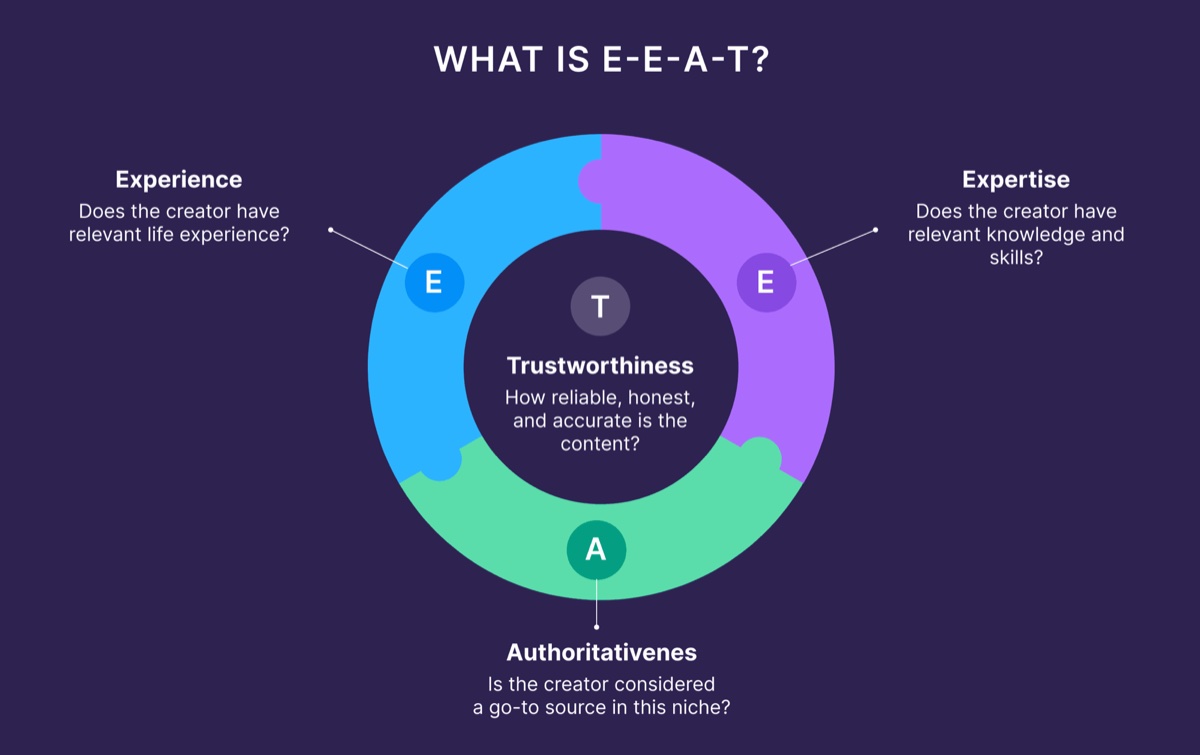
Content is where strategy meets discipline. Google's helpful-content signals, E-E-A-T criteria, and the citation decisions AI engines make all point in the same direction: reward content that demonstrates genuine expertise, freshness, and specificity and ignore content that does not.
Target one primary keyword per page. Trying to rank for multiple unrelated terms on a single page dilutes the relevance signal across all of them. Include the primary keyword in the first 100 words early content is weighted more heavily by both search engines and AI models and let closely related secondary terms appear naturally throughout the body.
Match search intent, not just keywords. Before you write a word, classify the intent behind the keyword: informational, navigational, commercial, or transactional. Informational queries need comprehensive explanations. Commercial queries need comparison structures. Transactional queries need clear calls to action and the path to conversion. A product page targeting an informational query, or a blog post targeting a transactional keyword, is one of the most invisible SEO mistakes a site can make. It quietly ranks nowhere and gets cited by no one.
Write for two audiences at once. Lead every major section with a direct, declarative answer before expanding with context and nuance. AI agents extract the first clear statement that answers a question, then decide whether the rest of the section backs it up. "On-page SEO covers 14 distinct optimization categories" is citable. "On-page SEO covers many areas" is not.
Aim for self-contained paragraphs of roughly 120 to 180 words. This is not a stylistic preference. Sections that are too short read as incomplete, and AI models struggle to extract a citable unit from them. Sections that run too long bury the answer past the point where most extraction passes look. A paragraph in the 120-to-180-word range (roughly the length of this one) gives a model a complete, quotable thought without forcing it to summarize.
Specificity beats adjectives. "Mobile devices account for more than half of global web traffic, per Statista" is citable. "Most traffic is mobile" is not. Every factual claim with a specific source or number becomes a potential citation; every vague statement becomes noise. This is also why original research, surveys, and proprietary data outperform generic commentary unique data points are the single most efficient way to earn both links and AI citations.
Content Structure, Freshness, and Readability

Self-contained sections. Each H2 should make sense independently of the rest of the article. AI agents cite individual sections, not full pages if a reader (or a model) drops into the middle of your post, the section they land on has to define its concept, explain why it matters, and give the practical takeaway inside its own boundaries.
Readability as a usability metric. Aim for a Flesch score between 60 and 70 for a business audience. Short sentences, clear vocabulary, and generous white space make content easier for humans to scan and for AI models to parse. Define industry jargon inline the first time you use it do not assume your reader (or a language model) already knows what "schema markup" or "canonicalization" means.
Freshness is a ranking and citation signal. Pages with outdated statistics, broken references, or last-updated dates from three years ago lose ground against newer content covering the same topic. Display the publication and last-modified date visibly, and mirror them in Article schema. Review your top-performing content at least every six months and refresh the parts that have actually changed statistics, screenshots, examples, recommendations. Do not reset the publish date when nothing has meaningfully moved; the opposite mistake (fake freshness) is easy to detect and erodes trust.
FAQ sections and tables of contents. For long-form content, a table of contents creates anchor links that can appear as sitelinks directly in search results. FAQ sections match the question patterns both traditional search and AI assistants handle structured with clear question headings and concise answers, they double as schema-ready content for FAQ markup.
Thin and duplicate content is a slow leak. Pages with little substance, scraped text, or near-duplicate descriptions across dozens of URLs tell search engines this site has nothing original. Google handles duplicates via canonicalization; AI search engines are harsher they need content worth quoting, and thin pages provide nothing quotable. Consolidate thin pages into comprehensive resources, and for location-based content, add genuinely unique information per location rather than swapping the city name in a template. Our canonical URLs guide covers the common mistakes that cause duplicate-content issues in the first place.
Part 4: Structured Data and Schema Markup
Structured data is the single highest-leverage on-page investment you can make in 2026, and it is the one most sites still underinvest in. It gives search engines and AI agents machine-readable context about your content who you are, what the page covers, how entities relate to each other rather than forcing them to infer it from text alone.
The pattern is consistent across the AI search visibility studies that have been published so far: sites with valid, comprehensive structured data get cited noticeably more often than sites that rely on text alone. As AI search matures, structured data is becoming the primary mechanism AI models use to identify entities, relationships, and facts on your pages.
Start with the schemas that actually apply to your content. Use the Schema.org vocabulary, implemented as JSON-LD in the <head> of each page:
- Organization on the homepage name, description, URL, logo, sameAs links to your verified social profiles. This establishes your brand as a known entity, which matters for Knowledge Graph inclusion and for AI citation decisions.
- Article on every editorial page headline, datePublished, dateModified, author, and publisher. This directly maps to the metadata AI systems use when evaluating whether to cite a source.
- FAQPage for question-and-answer content. FAQ schema is the cleanest match for how AI engines handle question-format queries; when the AI encounters a question matching your FAQ, structured data makes extraction trivial rather than inferential.
- Product and Review for commerce pages with accurate pricing, availability, aggregateRating, and individual review markup.
- LocalBusiness for any location-based business address, geo coordinates, opening hours, and phone.
Validate everything. Malformed schema is worse than no schema: it introduces conflicting signals and can disqualify a page from rich results entirely. Run every template through Google's Rich Results Test before it ships. If your implementation fails validation, fix it before anything else you are spending budget on invisible infrastructure.
Our schema markup guide covers the implementation details, including the common mistakes that cause valid-looking markup to produce zero rich results.
llms.txt the AI equivalent of robots.txt. The llms.txt protocol is an emerging standard that tells AI crawlers what your site offers and which pages matter most. It is low-effort to add a plain markdown file at the root and gives you explicit input into how AI agents prioritize your content. Confirm your robots.txt also explicitly allows AI crawlers like GPTBot, ClaudeBot, and PerplexityBot; blocking them, even accidentally, cuts off AI visibility at the source.
Part 5: Links Internal Architecture and Off-Page Authority
Links are two different signals wearing the same name. Internal links shape how search engines and AI agents understand your site's structure. External links the ones pointing at you from elsewhere on the web are one of the oldest and strongest trust signals in search, and they now shape AI recommendations in ways that go beyond the classic backlink model.
Internal Linking as Architecture
Internal links distribute authority across your site and tell crawlers which pages are central to your expertise. A page with no inbound internal links looks isolated and unimportant. A page with strategic links from related high-authority content looks like a hub.
Every important page should receive at least two to three internal links from topically relevant pages. Use descriptive anchor text that tells both readers and algorithms what the linked page covers "learn more about internal linking strategy" is a signal; "click [here]" is a wasted opportunity. Audit your internal links quarterly to fix broken links and connect new content to the existing graph instead of letting it sit orphaned.
The deeper pattern is topic clustering: pillar pages that link down to supporting content, and supporting content that links back up. When AI systems see ten interlinked pages covering different aspects of your topic, they assign your domain higher topical authority, making every page in the cluster more likely to be cited.
Off-Page Authority: Backlinks, Brand Mentions, Digital PR
Backlinks remain the single strongest off-page ranking signal. Google's own documentation confirms that links from other sites are a key factor in determining relevance and authority. The emphasis in 2026 is firmly on quality: one link from an authoritative, topically relevant publication outweighs hundreds from generic directories, and earning links at the top of the authority curve is how you increase website authority in ways AI models can actually detect.
Four tactics consistently produce the highest-quality links:
- Link-worthy content. Original research, proprietary data, comprehensive guides, and first-hand case studies are the only things that earn links without outreach. If your content contains no unique data point, framework, or insight, there is nothing for another site to cite. Our guide on how to get backlinks in 2026 covers the content formats that still earn links organically.
- Guest contributions on real industry publications. Write for publications your target audience actually reads. The link matters, but the exposure and authoritative association matter almost as much.
- Broken link building. Find pages in your niche that link to resources that no longer exist, and offer a relevant replacement. You are solving a problem for the linking site, not asking for a favor.
- Unlinked brand mentions. Search for mentions of your brand without links and ask for a link. It is the fastest off-page tactic you can run, because the publisher already considered your brand worth mentioning.
Brand mentions without links are now a signal in their own right. Google's own "implied links" patent (US8682892B1) describes references to a brand that are not express hyperlinks, and the SEO industry has long treated unlinked mentions as a quality and authority signal even where Google's stance on them is debated. AI search engines rely on them more directly: when ChatGPT or Perplexity answers "what are the best tools for X?", they draw from patterns in training data and crawled content, so brands that appear frequently in authoritative, relevant contexts get recommended, and brands that do not however good their product get overlooked.
Contributing expert commentary through journalist-source platforms like Featured (which acquired HARO from Cision in April 2025 after Connectively shut down), Qwoted, or SourceBottle is one of the most efficient ways to build brand mentions at scale. Each published quote is a mention in a high-authority source. Podcasts, expert roundups, and collaborative research with complementary brands all produce the same dual outcome: a link plus a contextual mention.
Digital PR ties it together. Newsworthy content data studies, contrarian insights, original surveys distributed to journalists who cover your space generates links, brand mentions, and social signals simultaneously. It is also the single most efficient way to improve AI visibility: AI platforms pull from news sources and high-authority publications when generating answers, and a brand that regularly appears in press coverage is much more likely to be cited than one that only appears on its own website.
Social signals are a correlated authority input. Social media links are typically nofollow and do not pass PageRank directly, but they still matter, and their importance has grown as AI platforms incorporate real-time web data into their answers. Multiple industry analyses, including a widely cited CognitiveSEO study, have found a consistent correlation between social engagement and higher search rankings. Correlation is not causation, but the pattern is a reliable proxy for content quality and relevance and AI engines like Perplexity actively crawl social discussions when generating answers. Sharing strategically (with context, tagging, and genuine engagement), participating in relevant Reddit and Quora threads, and publishing consistently on LinkedIn and X for B2B audiences all build the kind of distributed presence both Google and AI systems read as authority. If you need a structured approach, our guide on creating a social media calendar covers the planning side.
Reputation and local signals. Reviews, ratings, and consistent directory listings are off-page signals that influence both search rankings and AI recommendations especially for local businesses. Google uses review volume, velocity, and diversity as a local ranking factor, and AI platforms reference review data when recommending businesses. Claim and optimize your Google Business Profile, Bing Places, Apple Maps, and relevant industry directories; make sure NAP (name, address, phone) is identical across all of them; build a steady flow of reviews rather than chasing them in bursts; and respond to every review positive and negative because responsiveness itself is a signal AI systems read.
Building trust signals through reviews and consistent citations is often the fastest path to improved off-page authority for small businesses. Combined with a clean backlink profile and a discipline around avoiding toxic backlinks, it is the kind of compounding work that looks slow month-to-month and overwhelming in hindsight.
Part 6: The AI Visibility Layer Most Checklists Miss

Everything above is shared ground between traditional SEO and AI visibility. This is where the two diverge and where most checklists still stop.
AI platforms do not use backlinks the way Google does, and they do not rank pages in a fixed order. They evaluate the cumulative evidence of your brand's authority how often you are mentioned, where you appear, what context surrounds each mention, whether your structured data clarifies who you are as an entity. Then they decide whether to include you in an answer. It is a gate, not a ranking.
A few practices are distinctly AI-facing:
- Write citable statements, not generic commentary. Declarative sentences with specific numbers, named sources, and concrete claims are what AI agents extract. Embed them throughout the body of your content, not only in introductions or summaries.
- Build content clusters, not isolated pages. Single pages rank; content clusters earn citations. When AI systems see a coherent set of interlinked pages covering different angles of the same topic, they assign higher topical authority to the whole cluster, and every page inside it becomes more likely to be cited. For the strategy side of this, see our guide on creating content for AI search engines and our deeper treatment of generative engine optimization.
- Display and encode dates visibly. AI models check publication and modified dates. A page dated 2023 competes badly against a 2026 update on the same topic. Mirror
datePublishedanddateModifiedin Article schema and show the date on the page. - Optimize for Google AI Overviews and the BLUF pattern. AI Overviews pull from pages that give concise, authoritative answers. Structure content with the answer first and the supporting explanation second the Bottom Line Up Front pattern that LLMs consistently prefer.
- Treat prompt research as first-class alongside keyword research. Traditional keyword research tells you what people type into Google. Prompt research tells you what people ask ChatGPT, Perplexity, and Gemini. In 2026, both matter, and the best topic cluster strategies are built around both at once.
- Monitor how AI describes your brand. What ChatGPT or Perplexity says about your business shapes customer perception before anyone visits your site. Track these AI mentions regularly and when you find the model saying something inaccurate, treat it as a content and PR problem, not a technical one.
Testing is the only way to know. You can do every item on this list and still not know whether AI platforms cite your content because AI visibility is emergent from dozens of signals interacting in ways no dashboard approximates. The only way to know is to test. Use the measure-brand-presence guide for the tracking framework.
For a comprehensive view, we run 24 checks across structured data, content clarity, and technical signals, test citations live across 9 AI platforms, analyze AI Overview visibility per target market, and deliver a prioritized action plan — the same depth of research described in our complete AI search visibility guide and AI citation playbook.
Part 7: 8 Bad Practices That Destroy Both SEO and AI Visibility

Traditional SEO has always had its blacklist of tactics that quietly damage rankings. In 2026, those same tactics are worse than before because AI search engines do not just lower your ranking, they skip you entirely when deciding whom to cite. Search Engine Journal's annual State of SEO report, surveying thousands of SEO professionals, has consistently flagged low-quality content, keyword stuffing, and manipulative link building among the most damaging practices in the field. The reality in AI search is harsher: these practices do not just cost you clicks, they remove you from a growing share of answers entirely.
1. Keyword stuffing. Cramming the target keyword into headings, body, alt tags, and meta descriptions was ineffective a decade ago; in 2026 it actively damages AI visibility. Large language models evaluate content semantically they understand meaning, not just word frequency and unnatural keyword density signals low-authority content. Fix: use the primary keyword in the title, one H2, and the opening paragraph, then let semantic depth do the rest.
2. Thin and duplicate content. Pages with little substance, scraped text, or near-identical templates tell search engines your site has nothing original. AI search engines are harsher still: thin pages provide nothing quotable. Fix: consolidate thin pages into comprehensive resources; for location-based content, add genuinely unique information per location.
3. Buying or spamming backlinks. Link farms, private blog networks, and paid directories remain the fastest way to trigger a Google penalty. Even "safe" link buying creates a backlink profile AI engines interpret as manipulation, which filters your content out of AI-generated responses. Fix: build links through content that earns them original research, comprehensive guides, tools, proprietary data and focus on relevance over volume.
4. Ignoring search intent. Publishing content that does not match what the searcher actually wants is one of the most invisible mistakes in SEO. AI engines are even more intent-sensitive: a page that drifts from the user's intent gets skipped completely. Fix: classify the intent behind every target keyword before writing, then structure the content to match.
5. Neglecting structured data. Of all the items on this list, this is the most consequential. Without schema, AI systems must guess what your business is and guessing usually means silence rather than citations. Fix: implement JSON-LD schema markup on every important page (Organization, Article, FAQ, Product, LocalBusiness where applicable) and validate with the Rich Results Test.
6. Mobile and speed neglect. Mobile accounts for more than half of all global web traffic, and AI crawlers have time budgets a slow or broken mobile experience often means AI systems never finish processing your page. Fix: meet Core Web Vitals thresholds (LCP < 2.5 s, INP < 200 ms, CLS < 0.1), compress images, defer non-critical JavaScript, and test on real devices.
7. Weak internal linking. Random "related posts" widgets and footer-everywhere links do not constitute a strategy. AI engines follow internal links to understand topic relationships, and an isolated page looks unimportant regardless of how good the content is. Fix: build topic clusters with pillar pages linking down and supporting content linking up, with descriptive anchor text throughout.
8. Publishing unedited AI-generated content. AI writing tools have flooded the web with generic, surface-level drafts, and Google's helpful-content guidelines explicitly evaluate experience, expertise, authoritativeness, and trustworthiness all four of which unedited AI content typically fails. AI search engines are even more selective: they prioritize original perspectives, first-hand data, and expert analysis. Fix: use AI as a research and drafting tool, not a publishing tool. Every page should be reviewed and enhanced by someone with genuine expertise. Our guide on using AI for SEO covers where the line sits.
These mistakes rarely appear in isolation. A site that stuffs keywords usually also neglects structured data; a site that buys links usually publishes thin content to point them at. The cumulative effect is not just lower rankings it is complete invisibility in the AI search ecosystem that is growing faster than any other channel.
Part 8: Monitoring, Maintenance, and Cadence
SEO is a maintenance discipline disguised as a project. The sites that compound their visibility over years are the ones that build a cadence and stick to it, not the ones that run a big audit every 18 months and hope.
Weekly. Check Google Search Console Coverage for new crawl errors, 404s, and indexing issues. Spot-check your top five commercial pages for speed regressions. Watch your priority keywords in both traditional search and AI-generated answers for unexpected drops.
Monthly. Review Core Web Vitals against the 2.5 s / 200 ms / 0.1 thresholds. Refresh your highest-traffic content if anything material has changed (statistics, product details, recommendations). Audit new content from the previous month to confirm it has at least two to three inbound internal links. Check Google Analytics 4 conversion events are still firing correctly.
Quarterly. Run a full technical crawl with Screaming Frog, Sitebulb, or Ahrefs Site Audit. Audit your backlink profile and disavow genuinely harmful links. Check for outdated statistics and update, replacing "2024" claims with current data. Revalidate structured data on your top-50 pages malformed schema is one of the most common silent regressions. Retest AI visibility to see whether the platforms have started citing (or stopped citing) you.
Semi-annually. Run the full audit from Part 1 end-to-end. Reassess topic clusters: which pillar pages are earning citations, which are not, and why. Review your URL architecture for drift redirects accumulate, orphan pages appear, and the three-click rule quietly breaks. Update your llms.txt and sitemap if your site structure has meaningfully changed.
Annually. Revisit your keyword and prompt research from scratch customer vocabulary shifts, AI query patterns evolve, and competitors reposition. Algorithm updates (Google rolls out multiple core updates per year, and AI platforms evolve even faster) mean the playing field has almost certainly moved. Follow official channels like Google Search Central and adjust rather than react.
The point of the cadence is not to do everything all the time. It is to make sure nothing goes unmonitored for long enough to compound into a problem. SEO fires rarely start suddenly; they start with a small regression that nobody noticed for six months.
Conclusion
The short version of everything above: in 2026, SEO is not harder than it used to be it is broader. The same fundamentals still determine whether Google ranks your pages, and those same fundamentals, applied more deliberately, determine whether AI engines cite them. Clean technical foundations, on-page discipline, substantive content, valid structured data, earned authority, and a refusal to chase shortcuts that is the list. Everything else is detail.
The businesses that compound visibility over the next few years will be the ones that treat AI visibility as a first-class signal rather than a new section in an old checklist. Start with structured data (the highest-leverage fix), lock down the technical foundations, rebuild the pages where content is thin or misaligned with intent, and invest in the kind of off-page authority real publications, real data, real expertise that both Google and AI systems recognize. Then test whether it is actually working, because without testing, every assumption on this list is a guess.
If you want to know exactly where your site stands across both traditional SEO and AI visibility, request SwingIntel's AI visibility research. It tests live citations across 9 AI platforms and analyzes your visibility in every target market you sell into, working from the same signals this guide is about, and then we carry out the fixes it prioritizes.
Frequently Asked Questions
What is the single highest-impact task on this checklist?
Implementing JSON-LD structured data. Across the AI search visibility studies published so far, sites with valid, comprehensive schema markup are consistently cited more often than those without, and structured data is the primary mechanism AI engines use to identify entities, relationships, and facts on your pages. Start with Organization schema on your homepage, Article schema on editorial content, and FAQPage schema where applicable then validate with Google's Rich Results Test.
How often should I run a full SEO audit?
A full audit every six months is the right baseline for most sites. Between audits, monitor weekly (Core Web Vitals, Search Console Coverage), monthly (content freshness, internal linking on new content), and quarterly (crawl errors, backlink profile, AI visibility). The search landscape traditional and AI moves fast enough that once-a-year audits leave too much time for small regressions to compound.
How is SEO for AI search different from SEO for Google?
The fundamentals are shared: clean technical foundations, structured content, fast pages, descriptive links, valid schema. AI search adds a citability layer on top. AI agents extract individual sections rather than ranking whole pages, which means every H2 has to be self-contained, every factual claim has to be specific enough to quote, and structured data has to be strong enough for AI models to identify entities without guessing. Section length matters in a uniquely AI-facing way too: paragraphs in the 120-to-180-word range tend to be extracted cleanly, where very short or very long sections frequently are not.
Do backlinks still matter for AI visibility?
AI platforms do not use backlinks the same way Google does, but they evaluate the cumulative evidence of your brand's authority across the web how often you are mentioned, where, and in what context. Quality backlinks contribute to that evidence alongside brand mentions, reviews, and news coverage. One link from an authoritative industry publication still outweighs hundreds from generic directories, and the same is true in AI search probably more so, because AI models weight context heavily.
What is the fastest way to improve off-page SEO?
Reclaim unlinked brand mentions. Search for sites that already mention your brand without linking to you and request a link the publisher already considered your brand worth mentioning, so the conversion rate is high and the results show up in weeks rather than months. Contributing expert commentary through journalist-source platforms like Featured (which acquired HARO from Cision in April 2025) is the fastest way to build new mentions in high-authority sources.
Can AI-generated content ever rank and earn citations?
Yes, but only when a subject-matter expert edits it, enriches it with original data or perspectives, and reviews it for accuracy. The issue is not AI-generated content itself it is unedited, generic output that fails Google's E-E-A-T criteria and lacks the first-hand insight AI search engines prioritize. The businesses winning in AI search are the ones combining AI efficiency with human authority.
How quickly can fixing these issues improve AI visibility?
Technical fixes implementing structured data, removing keyword stuffing, consolidating thin content can improve AI visibility within 2 to 4 weeks. Authority-building changes like earning quality backlinks, building entity signals, and publishing expert content take 3 to 6 months to compound. The fastest results come from fixing the technical barriers first, which is also the cheapest category of work on the list.
Can I run an SEO audit without paid tools?
The technical and on-page fundamentals can be covered with Google Search Console, PageSpeed Insights, and Google's Rich Results Test all free. Paid tools like Screaming Frog, Ahrefs, or Semrush give deeper crawl analysis, backlink intelligence, and keyword tracking, and are usually worth the cost once your site is past the initial cleanup phase. For AI visibility specifically, no free tool covers it; AI visibility research tests the signals AI engines actually evaluate, and the same engagement fixes whatever falls short.