SEO in 2026 is no longer a single-audience discipline. Ranking higher now means satisfying two different systems at the same time: the Google algorithm that decides which ten blue links appear, and the AI engines ChatGPT, Perplexity, Gemini, Claude, Google AI Overviews that decide whose content is worth citing in an answer. The businesses winning organic visibility are the ones that stopped treating these as separate problems.
Google processes over 8.5 billion searches per day. AI Overviews now fire on roughly 30% of them, pushing traditional organic listings below the fold. At the same time, Google's AI Mode now reaches over 75 million daily active users through a dedicated Search tab, and external AI platforms are answering millions more without sending a click at all. Pages in the top ten traditional positions still average 1,447 words but length no longer wins on its own.
This guide brings everything together: the ranking signals that actually move the needle, the adjustments that turn rankings into AI citations, and the measurement setup (Google Search Console, plus AI-specific tracking) that tells you whether any of it is working.
Key Takeaways
- Google AI Overviews now appear in roughly 30% of searches and AI Mode has reached 75M+ daily active users ranking higher in 2026 requires satisfying both traditional algorithms and AI systems.
- Content quality and E-E-A-T is the single most important signal, cited by 66% of SEO professionals as having the most positive ranking impact in 2026.
- High-quality backlinks remain a top-three ranking factor, and sites with over 32,000 referring domains are 3.5x more likely to be cited by ChatGPT.
- Core Web Vitals targets for 2026 are LCP under 2.5 seconds, INP under 200 milliseconds, and CLS under 0.1.
- JSON-LD schema markup is the single most impactful technical change for AI visibility it gives AI systems a machine-readable layer of meaning they can parse without guessing.
- Refreshing existing content with current data and stronger examples can produce significant organic traffic lifts, and freshness signals matter even more for AI citations.
- Google Search Console is the only free tool that shows how Google actually sees your site including AI Overviews and AI Mode impressions but there is still no native filter to separate AI traffic from traditional organic.
Why SEO in 2026 Has Two Audiences
Traditional SEO advice write good content, build links, tidy your meta tags still works. It is no longer sufficient on its own. AI has changed how search engines present information, and the brands that adapted fastest are the ones capturing visibility across both the old and new models.
When an AI Overview fires on a query, the top organic result gets pushed below the fold. If your content is not structured, cited, and optimized for how AI systems read it, you lose ground even when your traditional rankings are strong. The good news: the signals that earn Google rankings overlap heavily with the signals that earn AI citations. You are rarely building two strategies. You are executing the fundamentals at a higher standard and layering AI-specific signals on top.
The 8 Ranking Signals That Actually Matter in 2026
Google reportedly uses over 200 ranking factors. In practice, a handful of them drive almost all the movement and those same factors now shape whether AI engines cite your brand. Here are the eight that compound hardest, with the how-to-optimize detail for each.
1. Align Every Page with Search Intent
Keyword targeting still matters, but intent matching matters more. Google's systems and every major AI search engine evaluate whether your page actually answers the question behind the query, not just whether it contains the right words. A page that ranks for the wrong intent is worse than one that does not rank at all: high impressions with low clicks signal to Google that your result is not useful.
Search intent falls into four familiar categories:
- Informational the searcher wants to learn something ("what are ranking factors")
- Navigational the searcher wants a specific site ("Google Search Console login")
- Commercial the searcher is comparing options ("best SEO tools 2026")
- Transactional the searcher is ready to act ("buy SEO audit")
A product page targeting an informational query will not rank. A how-to guide targeting a transactional one will not convert. The format must match the intent.
How to optimize: Before creating or updating any page, search the target keyword and study what currently ranks note the format (listicle, guide, video, comparison), depth, and angle. Then create something that matches the intent format while being measurably better. Pages that nail intent precisely earn longer engagement, lower bounce rates, and critically are more likely to be cited in AI-generated answers. AI engines extract the response that most directly answers the question. If your page answers it clearly in the first two paragraphs, you are in a strong position. For a deeper walkthrough, see our guide on how to choose keywords for SEO and AI search.
2. Content Quality and E-E-A-T
Content quality is the single most important ranking factor. Google's E-E-A-T framework Experience, Expertise, Authoritativeness, Trustworthiness is the lens the algorithm uses to decide whether your page deserves to rank above the competition.
Content that ranks well in 2026 shares characteristics AI cannot easily replicate:
- First-hand experience. Original data, case studies, and specific examples.
- Depth over length. Covering a topic thoroughly enough that readers do not need to visit another site.
- Verifiable claims. Numbers, sources, and evidence that both readers and AI systems can check.
- Author credibility. Clear attribution with demonstrated expertise in the subject.
According to Search Engine Journal's State of SEO 2026 report, original content creation had the most positive impact on rankings (66% of respondents), ahead of content updates (42.6%) and technical improvements (42.3%).
How to optimize: Audit existing content for depth and originality. Every page should answer its target query better than any competing result. Include specific numbers, processes, and real-world examples. When AI engines decide which brands to recommend, they favor sources that provide direct, verifiable answers over generic overviews. For detailed tactics, see our guide on content optimization for SEO and AI visibility.
3. High-Quality Backlinks
Backlinks remain one of Google's top three ranking factors. They function as votes of confidence each link from a credible, relevant source tells Google your content is worth recommending. The emphasis in 2026 is firmly on quality over quantity: a single link from a high-authority, topically relevant site carries more weight than hundreds of links from low-quality directories.
Backlinks also influence AI visibility. AI systems factor in source authority when deciding which content to cite, and backlink profiles are a major component of how authority is measured across the web. SE Ranking's analysis of 129,000 domains found that sites with over 32,000 referring domains are 3.5x more likely to be cited by ChatGPT than sites with 200 or fewer referring-domain count was the single strongest predictor of citation likelihood in the study.
How to optimize: Create content worth referencing original research, industry benchmarks, comprehensive guides, and tools that solve real problems. Avoid toxic backlinks from spammy, irrelevant, or manipulative sources that can hurt your rankings more than help them. Audit your backlink profile regularly with tools like Ahrefs or Google Search Console, and disavow links that pose a risk. For practical link-earning tactics, read our guide on how to get backlinks in 2026.
4. On-Page Optimization: Titles, Meta, and Headings
On-page SEO title tags, meta descriptions, headings remains one of the most controllable ranking levers. These elements tell Google exactly what your page is about and how it relates to the rest of your site.
- Title tags. The single strongest on-page signal. Research from Backlinko's analysis of 4 million Google search results shows that titles between 40 and 60 characters achieve roughly 8.9% higher click-through rates than those outside that range. Place the primary keyword near the beginning, keep each title unique across your site, and write copy that makes searchers want to click.
- Meta descriptions. Not a direct ranking signal, but they influence CTR and CTR is a signal Google uses to calibrate results. Write descriptions that summarize the page's value in 150–160 characters and give a reason to click.
- Heading structure. Use one H1 per page containing your primary keyword. Organize sections with H2s and H3s that map to the subtopics your page covers. This structure is also what AI systems parse when extracting answers.
How to optimize: Review every page systematically and audit titles, meta descriptions, and heading structure across your highest-traffic pages. Pay special attention to title tags small rewrites here often produce the fastest measurable lift.
5. Internal Linking and Topical Authority
Internal links do three things: they help search engines discover and crawl your pages, they distribute ranking authority across your site, and they guide users toward related content that keeps them engaged. Every new page you publish should link to 3–5 relevant existing pages, with descriptive anchor text that tells both readers and search engines what the target covers "learn more" tells them nothing; "how to reduce bounce rate" tells them everything.
But individual pages are only half the story. Topical authority the perception that your site comprehensively covers a subject is what earns sustained visibility across dozens of related queries. A content cluster works like this: one pillar page covers a broad topic in depth, and multiple supporting pages cover specific subtopics, all interlinked. A business targeting "email marketing" might have a pillar page on strategy, supported by pages on subject lines, automation, deliverability, list building, and A/B testing. Each page strengthens the others.
For AI search, topical authority is even more important. AI platforms build an internal model of which sources are authoritative on which subjects. A site with 20 interconnected articles on AI search optimization is more likely to be cited than a site with one comprehensive guide and nothing else. Depth and breadth together signal expertise.
How to optimize: Map your content into clusters before writing anything new. Every publish should strengthen an existing cluster or establish a new pillar. Our internal linking strategy guide covers the mechanics in detail.
6. Technical SEO and Core Web Vitals
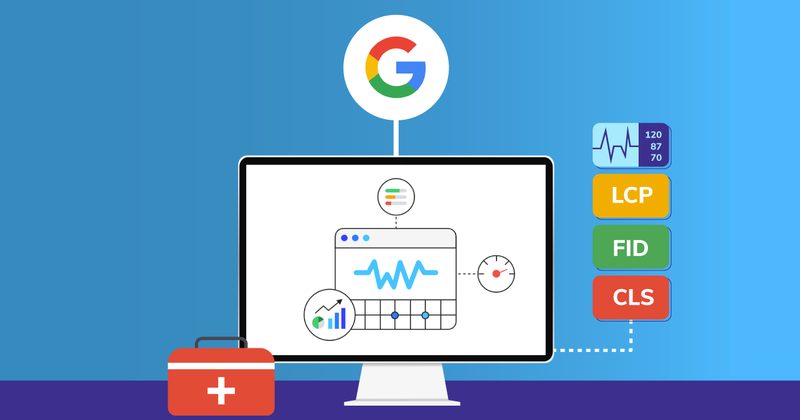
Technical SEO is the infrastructure that makes everything else work. If search engines cannot crawl, render, and index your pages efficiently, no amount of great content will rank.
Google's Core Web Vitals are confirmed ranking signals. The thresholds that matter in 2026:
| Metric | Target | What It Measures |
|---|---|---|
| Largest Contentful Paint (LCP) | Under 2.5 seconds | How fast the main content loads |
| Interaction to Next Paint (INP) | Under 200 milliseconds | How quickly the page responds to user input |
| Cumulative Layout Shift (CLS) | Under 0.1 | How stable the visual layout is during loading |
Beyond Core Web Vitals, the fundamentals include mobile-first design (Google indexes the mobile version of your site), HTTPS security, a current XML sitemap, a properly configured robots.txt, and a site architecture that keeps every important page within three clicks of the homepage.
For AI search visibility specifically, technical factors matter in a slightly different way. Many AI crawlers need to access your content without executing JavaScript. If your site relies heavily on client-side rendering, key content may be invisible to AI systems that do not run JS. Server-side rendering or static generation ensures both traditional crawlers and AI agents can read your pages.
How to optimize: Run a complete SEO audit to identify technical gaps. Prioritize Core Web Vitals fixes they tend to have the highest impact-to-effort ratio. Read our deep dive on how technical SEO factors impact AI search visibility for the AI-specific angle.
7. User Experience and Engagement Signals
Google measures how users interact with your site to decide whether it actually delivers on the promise of the search result:
- Click-through rate (CTR). A high CTR from the SERP tells Google your page is relevant. Compelling titles and meta descriptions drive this.
- Dwell time. How long users stay before returning to search results. Longer dwell time signals the content is satisfying the query.
- Bounce rate. A high bounce rate can signal poor relevance though context matters, since quick-answer pages naturally bounce more.
- Mobile usability. With over 60% of searches happening on mobile, a broken mobile experience hurts rankings directly.
How to optimize: Design every page to deliver value immediately. Clear headings, short paragraphs, visual elements that keep readers moving. Make the mobile experience equal to or better than desktop not a cut-down version.
8. Structured Data and Schema Markup
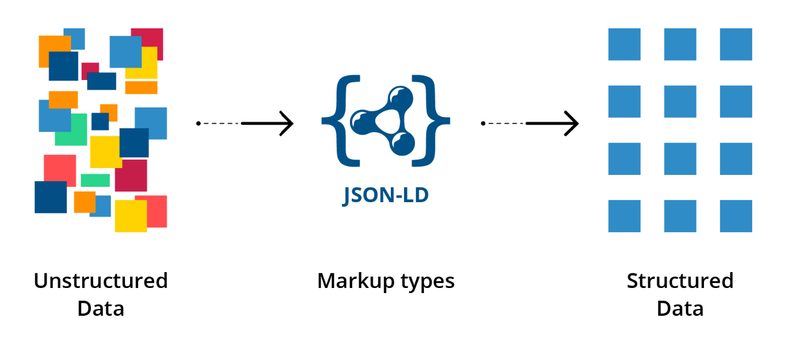
Structured data is the single most overlooked SEO lever for businesses that want visibility in both traditional and AI search. Schema markup using the Schema.org vocabulary tells search engines exactly what your content represents: a product, an FAQ, a how-to guide, a local business, a review.
In traditional search, structured data unlocks rich snippets star ratings, FAQ dropdowns, product pricing that lift click-through rates by 20–30%. In AI search, structured data gives AI systems a machine-readable layer of meaning they can parse without guessing. A page with FAQPage schema and clear question-answer pairs is far more likely to be cited by ChatGPT or Perplexity than the same content without markup. Sites with properly implemented schema get cited in AI responses significantly more often than those without.
How to optimize: Start with the schema types most relevant to your business Organization, Article, Product, FAQPage, HowTo, and LocalBusiness are the highest-impact starting points. Validate with Google's Rich Results Test and ensure the markup matches the actual content on each page. You can check whether your current site has any structured data and whether AI engines can read it with AI visibility research. If the markup is missing or broken, we write and ship it for you.
Optimizing for AI Search Engines
Everything above earns rankings. These next adjustments are what turn rankings into citations. Generative Engine Optimization (GEO) is the discipline of making your content visible and citable to AI-powered search platforms. It builds on traditional SEO but adds its own signals.
AI search engines do not rank pages in a list. They generate answers by synthesizing information from multiple sources and citing the most relevant ones. To earn those citations, three qualities matter most:
Direct, citable answers. Write clear, factual sentences that can stand on their own. AI systems prefer content that states facts plainly, attributes claims to sources, and structures information in a way that can be extracted without rewriting. Write as if an AI is quoting you because it might be. Practical moves: self-contained sections under descriptive H2 headings, industry terms defined inline rather than assumed, every key claim backed by a specific number or source.
Content freshness. AI platforms weight recency heavily. In a widely cited Backlinko case study, refreshing an existing article with current data and stronger examples produced large organic traffic lifts within months, and the effect on AI citations is similar. A page with a 2024 publish date and outdated statistics is less likely to be cited than a competitor's page updated this month. Add lastModified dates to your content, republish with visible update markers, and make quarterly content reviews part of your publishing process.
Entity recognition. Build a consistent brand presence across your website, social profiles, knowledge bases, and third-party mentions. The more consistently AI systems encounter your brand in credible contexts, the more likely they are to cite you. JSON-LD schema is the single most impactful technical change here it explicitly connects your pages to the entities they describe.
If traditional SEO is about earning a position on the results page, AI search optimization is about earning a position in the answer itself. For a broader look at how AI has reshaped the SEO landscape, read our analysis of what has changed in SEO since AI.
Measuring Success with Google Search Console
You cannot improve what you do not measure. Google Search Console (GSC) is the single most important free tool for understanding how your website performs in Google Search including, as of 2026, how your site appears in AI Overviews and AI Mode results. Despite being free, most businesses either ignore it entirely or check it once and never return. That is a mistake. The data inside GSC is not available anywhere else not in Google Analytics, not in paid SEO tools, not in any third-party platform. It is the only direct line between you and Google's search engine.
Setting Up Search Console
Setting up GSC takes about ten minutes. You need a Google account and access to your website's DNS, hosting, or analytics.
Step 1 Add your property. Go to search.google.com/search-console and sign in. Choose between two property types:
- Domain property covers all subdomains and protocol versions (http, https, www, non-www). Recommended for most businesses because it captures all traffic in one place. Requires DNS verification.
- URL prefix property tracks a specific URL path only (e.g.,
https://www.example.com). Offers more verification methods but only covers that exact prefix.
For most sites, choose the domain property.
Step 2 Verify ownership. Google needs to confirm you control the site. Options include:
- DNS TXT record (domain properties) add a TXT record through your registrar (Cloudflare, Namecheap, GoDaddy, etc.). Propagation takes minutes to an hour.
- HTML meta tag paste a meta tag into your site's
<head>. - Google Analytics if GA4 is installed on the same Google account, GSC can verify automatically.
- HTML file upload upload a small HTML file to your site's root directory.
Once verified, GSC starts collecting data. It typically takes 48 to 72 hours before meaningful data appears and GSC does not backfill historical data from before verification.
Step 3 Submit your sitemap. Navigate to the Sitemaps section in the left sidebar and submit your sitemap URL (usually https://yourdomain.com/sitemap.xml). This tells Google where to find all your pages and helps ensure complete indexing.
The Performance Report
The Performance report is where you will spend most of your time. It answers the fundamental question: which searches bring people to your site, and how effectively?
The four core metrics:
- Clicks how many times someone clicked through to your site from a search result. Your actual search traffic.
- Impressions how many times your pages appeared in results, even if nobody clicked. High impressions with low clicks means your listings are visible but not compelling.
- CTR (click-through rate) clicks divided by impressions. Useful for identifying pages where a better title or meta description could lift traffic without improving rankings.
- Average position the average ranking of your pages for a given query. Position 1 is the top of the page. A position of 5 could mean you consistently rank fifth, or that you rank first sometimes and twentieth other times treat averages with suspicion.
Patterns worth acting on:
- High impressions, low CTR your page ranks but people are not clicking. Rewrite your title tag and meta description.
- High position, declining clicks you rank well but traffic is dropping. This often indicates that AI Overviews are capturing the click above your listing.
- Rising impressions on new queries Google is starting to associate your content with new search terms. Double down on these topics.
- Queries where you rank on positions 5–15 close to the first page, often needing only a title rewrite, stronger internal links, or a content refresh to break through. The fastest wins usually live here.
Indexing, Coverage, and Core Web Vitals
The Pages report (formerly Coverage) shows which of your pages Google has successfully indexed and which it has not. A page that is not indexed cannot appear in search at all. Common issues:
- Crawled but not indexed Google found the page but decided not to add it. Usually means thin content, duplication, or lack of usefulness. Improve or consolidate.
- Not found (404) the page does not exist. If these URLs still receive backlinks, set up 301 redirects to relevant pages.
- Blocked by robots.txt your robots.txt is blocking pages that should be indexed. Update it.
- Server errors (5xx) Google tried but your server returned an error. Investigate reliability.
Check this report at least weekly. A sudden spike in indexing errors often signals a broken deployment, a misconfigured redirect, or a server issue.
The Core Web Vitals report shows whether your pages meet the LCP/INP/CLS thresholds covered earlier. Pages that fail are not automatically penalized, but they lose visitors and visitors who bounce are visitors AI systems never see engaging with your content.
AI Overviews and AI Mode Traffic in GSC
As of early 2026, AI Overviews and AI Mode traffic appears in the Performance report under the "Web" search type. When your site is cited in an AI Overview or appears in an AI Mode response, those impressions and clicks are included in your overall search performance data.
The challenge is that there is currently no native filter to separate AI-driven impressions from traditional organic impressions. This is the single most requested feature from the SEO community, and for good reason as AI Mode reaches 75 million daily users, understanding how much of your traffic comes from AI surfaces versus traditional listings becomes increasingly important.
Until Google adds a dedicated AI filter, you can identify AI traffic patterns by looking for:
- Queries with high impressions but unusually low CTR in positions 1–3 often indicates an AI Overview is capturing the click above your listing.
- Rising impressions without proportional click growth your content is being surfaced in AI responses, but users are getting their answer without clicking through.
- Long-tail, question-based queries with high impression counts these are the queries most likely to trigger AI Overviews.
If your pages appear in traditional results but not in AI Overviews for the same queries, that is a specific signal to restructure the content for AI citability clearer direct answers, better structured data, more specific factual claims.
New GSC Features for 2026
Google has shipped several upgrades in late 2025 and early 2026 that make Search Console materially more powerful:
- AI-powered configuration. Rolled out globally on February 18, 2026, this lets you configure Performance reports with natural language. Instead of clicking through dropdowns, type prompts like "Show me mobile queries with high impressions but low CTR in the last 28 days" and GSC applies the filters, comparisons, and metric selections automatically.
- Custom annotations. Add short notes directly to Performance report charts traffic drops after a site migration, spikes after a content launch. Simple feature, real problem solved: without it, traffic changes become mysteries within weeks.
- Branded queries filter. GSC now automatically separates branded and non-branded queries. Branded traffic reflects brand awareness; non-branded traffic reflects your content's discoverability including its visibility in AI-powered search results.
A Practical GSC Rhythm
Check GSC at least weekly. A sensible cadence:
- Weekly scan the Performance report for unusual drops or spikes. Check the Pages report for new indexing errors. Review Core Web Vitals for any pages that have degraded.
- Monthly compare month-over-month trends in clicks, impressions, and CTR. Identify new queries driving impressions and pages with declining traffic that need refreshes.
- After any site change whenever you deploy a redesign, migrate URLs, update the sitemap, or ship significant content changes, check GSC within 48 hours to catch indexing issues early.
Tracking AI Visibility Beyond Google
GSC shows you how Google sees your site. It does not show you how ChatGPT, Perplexity, Claude, Gemini, Grok, Microsoft Copilot, DeepSeek, or Meta AI see you. Each platform has its own citation behavior, its own sources, and its own ranking of which brands belong in an answer. A business that ranks first on Google but never appears in AI-generated answers is losing an increasingly large share of potential customers.
AI search visibility requires its own measurement approach. The questions to answer:
- Are AI platforms citing your content when users ask questions in your domain?
- Which AI engines mention your brand and which do not?
- How does your AI visibility compare to your direct competitors?
- Where is the gap widest, and which content change would close it fastest?
Traditional SEO metrics remain important, but they tell only half the story. The brands that measure both traditional and AI visibility and optimize for each are the ones building durable search presence. You can benchmark where you stand today with AI visibility research that measures your site across both dimensions.
Putting It All Together
These signals are not independent tactics they compound. Strong intent matching leads to better content. Better content earns more backlinks. More backlinks strengthen your authority. Structured data makes all of it legible to AI systems. Measurement in GSC (and beyond) tells you which levers are actually moving the numbers.
The businesses ranking highest in 2026 are not choosing between traditional SEO and AI optimization. They are doing both, because the practices that earn Google rankings are increasingly the same practices that earn AI citations. You do not need to implement everything in this guide at once start with the signal where your site has the biggest gap. If your site has no structured data, start there: it is the fastest win for both Google and AI. If your content is stale, run an audit and refresh your highest-traffic pages first. If you have never set up GSC, that is ten minutes of work that unlocks data you cannot get anywhere else.
If you are not sure where your biggest gap is, request AI Visibility Research to see how your site scores across both traditional and AI search dimensions, and to have the first fixes carried out rather than added to your backlog.
Frequently Asked Questions
What is the most important ranking factor in 2026?
Content quality and E-E-A-T (Experience, Expertise, Authoritativeness, Trustworthiness). Original content creation had the most positive impact on rankings according to 66% of SEO professionals surveyed in Search Engine Journal's State of SEO 2026 report ahead of content updates (42.6%) and technical improvements (42.3%). Content quality is the foundation that makes every other SEO tactic effective.
Do I need to optimize separately for Google and AI search?
Not entirely. The practices that earn Google rankings E-E-A-T content, strong internal linking, technical SEO, quality backlinks increasingly overlap with what earns AI citations. The main additions for AI search are JSON-LD structured data, direct citable answers, consistent entity recognition, and content freshness signals. The two strategies are complementary, not competing.
What are the Core Web Vitals thresholds for 2026?
Largest Contentful Paint (LCP) under 2.5 seconds, Interaction to Next Paint (INP) under 200 milliseconds, and Cumulative Layout Shift (CLS) under 0.1. Pages that fail these thresholds are not automatically penalized but they lose visitors and engagement signals.
Does Google Search Console show AI Overview and AI Mode traffic?
Yes. As of early 2026, AI Overviews and AI Mode traffic appears in the Performance report under the "Web" search type. However, there is no native filter to separate AI-driven impressions from traditional organic impressions this is the most requested feature from the SEO community.
How long does it take for Google Search Console to show data?
Typically 48 to 72 hours after verification before meaningful data appears. GSC collects data going forward from the time of setup it does not backfill historical data from before verification.
How does structured data help with both traditional SEO and AI search?
For traditional SEO, structured data makes pages eligible for rich snippets that lift click-through rates by 20–30%. For AI search, it tells AI systems exactly what your page represents and how entities relate the single most impactful technical change for AI visibility.
How long does it take to see results from these SEO improvements?
Google typically re-evaluates pages within four to eight weeks of changes. AI platform citation improvements can appear faster because platforms like Perplexity and ChatGPT fetch live web data. Structured data changes often show the fastest results because they immediately improve how AI systems parse your pages.
Can Google Search Console tell me if AI search engines are citing my brand?
No. GSC only shows Google-specific data. For a complete picture of how all AI search engines see you including ChatGPT, Perplexity, Claude, Gemini, Grok, Microsoft Copilot, DeepSeek, and Meta AI you need to test AI visibility directly across multiple providers.
For more ways to integrate AI into your SEO workflow, explore our guide on the AI SEO guide for marketers. For a broader view of where search is heading, read our analysis of AI search trends shaping 2026 and AI's impact on SEO. To stay current with the best thinking in the industry, check our list of the 10 best SEO tools and blogs to follow.