A landing page is a standalone page built for one thing: to get a visitor to take one specific action. No full navigation, no competing links, no alternative paths just the offer and the call to action. Simple in concept, unforgiving in practice.
In 2026, the economics of landing pages have changed. Paid traffic is more expensive than ever. Organic click-through rates on traditional search are declining as AI Overviews absorb more real estate above the fold. And landing pages now serve two audiences the humans you've always optimized for, and the AI search agents (ChatGPT, Perplexity, Gemini, Google AI Overview) that increasingly decide whether a visitor ever arrives at all. A page that converts humans but confuses AI leaves visibility on the table. A page that satisfies AI parsers but distracts humans leaves revenue on the table. The job is to do both.
Key Takeaways
- A landing page is a standalone page built for a single conversion action no full navigation, no competing links, one focused CTA.
- The median landing page conversion rate is 6.6%, with top performers exceeding 10%, according to Backlinko's landing page statistics compared to 2–3% for standard website pages.
- Five types cover most use cases: lead generation, click-through, squeeze, sales, and event/webinar (which converts at an average 22.3%).
- Bounce rate is the fastest diagnostic for a misaligned landing page slow load speed, weak headlines, and broken mobile layouts are the most common drivers, and each is fixable.
- In 2026 landing pages serve two audiences: humans who need to convert and AI agents who decide whether to recommend your business. JSON-LD structured data and citable statements serve both.
- Improving conversion from 2% to 4% doubles your return on every traffic dollar with no additional ad spend which is why LPO is the most leveraged lever in your marketing stack.
How a Landing Page Works
Every landing page follows the same basic flow. A visitor arrives usually from an ad, email, social post, or AI search result and lands on a page designed around a single call to action. There is no full navigation menu. There are no competing links pulling attention elsewhere. The page exists to answer one question and prompt one response.
This focused structure is why landing pages convert at higher rates than general website pages. Backlinko's analysis of landing page benchmarks reports median landing page conversion of 6.6%, with top performers exceeding 10%. Compare that to the 2–3% typical of standard website pages, and the case for dedicated landing pages becomes obvious.
Landing Page vs Homepage What Is the Difference?
Your homepage is a front door. It introduces your brand, links to multiple sections, and serves visitors with different intents. A landing page is a private meeting room one topic, one agenda, one outcome.
| Homepage | Landing Page | |
|---|---|---|
| Purpose | Brand introduction, navigation hub | Single conversion action |
| Navigation | Full menu, multiple links | Minimal or none |
| Audience | All visitors | Specific campaign segment |
| Content | Broad overview | Focused on one offer |
| Success metric | Engagement, time on site | Conversion rate |
The most common mistake in paid acquisition is sending ad traffic to a homepage and expecting it to convert. A homepage serves too many masters. A landing page serves one.
Types of Landing Pages
Not every landing page does the same job. The type you need depends on where the visitor is in the buying journey and what action you want them to take.
Lead Generation Landing Pages
The most common type. These pages offer something valuable a guide, a free tool, a consultation in exchange for contact information. The visitor fills out a form; the business gets a lead to nurture. Lead generation pages work best when the offer is specific and the form is short. Every additional field reduces completion rates.
Click-Through Landing Pages
These pages warm up a visitor before sending them to a transactional page. Common in ecommerce and SaaS, a click-through page explains the product benefits, builds desire, and then links to checkout or signup. There is no form on the page itself just a button that moves the visitor forward.
Squeeze Pages
A stripped-down variant of lead generation. Squeeze pages typically ask for just an email address in exchange for a single piece of content. They are short, direct, and optimized for one metric: email capture rate.
Sales Landing Pages
Longer-form pages designed to close a sale directly. These include detailed product descriptions, testimonials, pricing, objection handling, and a purchase button. Sales landing pages are common for courses, software, and high-ticket services where the visitor needs more information before committing.
Event and Webinar Pages
Built to drive registrations for a specific event. These pages include the event date, agenda, speaker information, and a registration form. According to Backlinko's landing page benchmarks, webinar landing pages achieve an average 22.3% conversion rate among the highest of any landing page type.
Anatomy of a High-Converting Landing Page
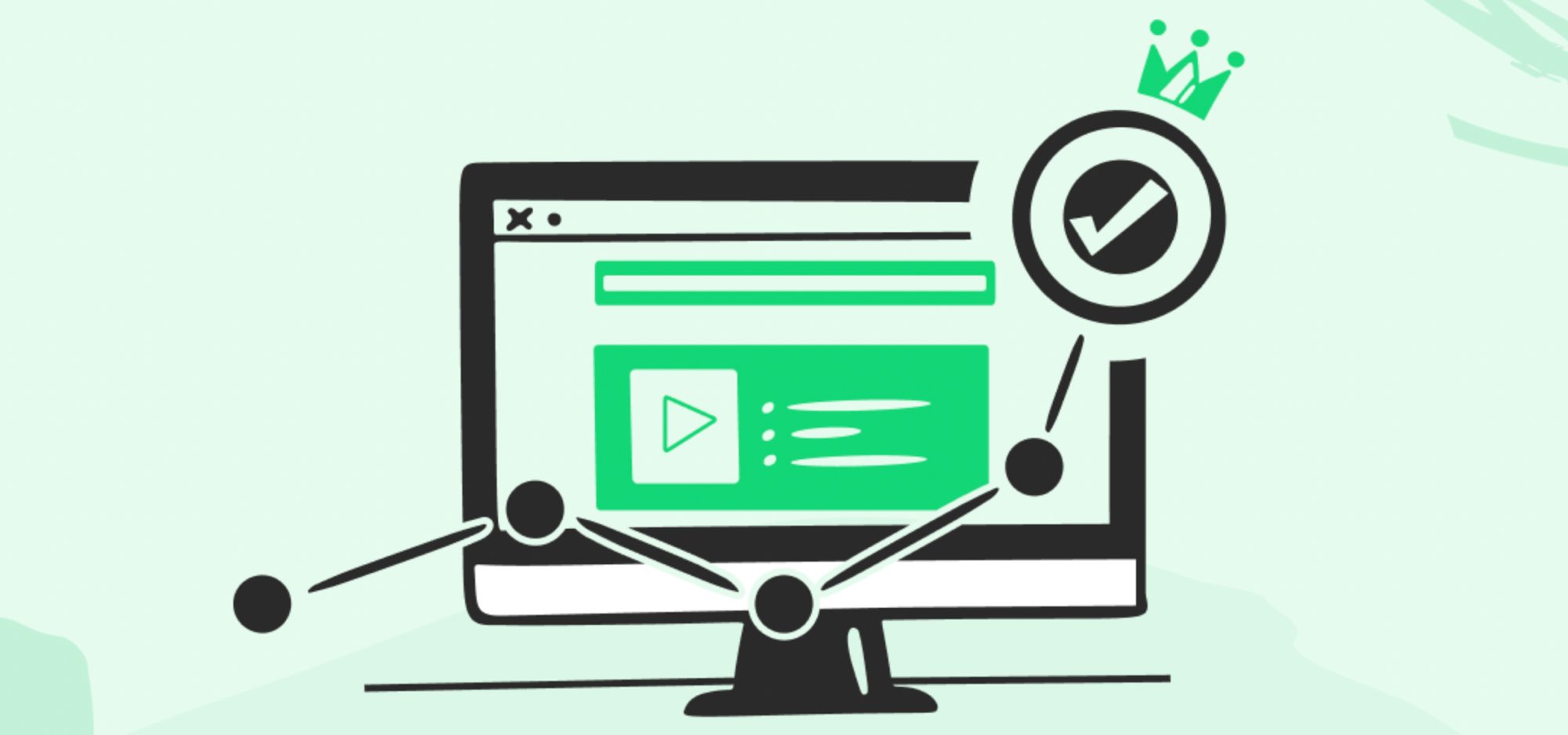
Effective landing pages share structural patterns regardless of industry or offer. The fundamentals have not changed what has changed is that each element now needs to work for two audiences at once.
A clear, benefit-driven headline. The headline is the first thing both humans and AI systems process. It must tell the visitor exactly what they get and why it matters ideally in under 10 words. Vague headlines like "Welcome to the Future" tell neither audience anything useful. A headline like "AI Visibility Research: 24 Checks, 108 Prompts Across 9 AI Platforms" communicates scope and specificity instantly — exactly the kind of self-contained, factual statement AI engines are built to extract.
A single call to action. One page, one action. If you ask visitors to do multiple things, they do nothing. Use action language ("Get Your Free Report", "Start Your Trial") rather than passive labels ("Submit", "Click Here"). Secondary CTAs should be visually subordinate not competing for attention.
Minimal navigation. Remove the main site navigation. Every link that is not your CTA is a leak in your conversion funnel. The only way off the page should be the action you want or the back button.
Semantic page structure. Proper H1, H2, and H3 tags that create a logical content hierarchy. This helps screen readers, search engines, and AI agents parse your content. Avoid putting critical information inside images or JavaScript-rendered elements that AI crawlers cannot access.
Social proof. Testimonials, client logos, case studies, review scores any evidence that other people have taken this action and benefited from it. Social proof reduces perceived risk, which is the primary barrier to conversion on any landing page. For AI agents, that same proof plus structured Review or Organization schema signals credibility.
Fast load speed. Speed shapes both conversion and ranking slow pages lose visitors before they read a single word, and search engines treat slowness as a core ranking signal. With mobile now the dominant share of website traffic, mobile speed is not optional. Aim for a Largest Contentful Paint (LCP) under 2.5 seconds, which is the "Good" threshold in Google's Core Web Vitals.
Relevant imagery or video. Visual content that reinforces the offer not stock photos that could appear on any site. Product screenshots, demo videos, or result previews build credibility faster than text alone. Just make sure the same information exists as HTML text, because AI crawlers cannot read copy embedded in hero images.
Bounce Rate The Diagnostic Signal
Before you can optimize a landing page, you need to know whether it's actually working. Bounce rate is the fastest early-warning metric you have and one of the most misunderstood.
Bounce rate is the percentage of visitors who land on a page and leave without taking any further action. In Google Analytics 4 (GA4), a "bounce" is specifically defined as a session that fails all three engagement criteria: it lasts less than 10 seconds, triggers no key event, and includes fewer than two pageviews.
That definition matters because bounce rate measures inaction, not dissatisfaction. A visitor who reads your entire article, finds exactly what they needed, and closes the tab has technically "bounced." The nuance is important when interpreting your numbers.
A blog post with a 75% bounce rate may be performing well if visitors are reading the full article and getting their answer. But a landing page with the same bounce rate likely signals a problem visitors arrived, did not engage, and left.
What Counts as a Good Bounce Rate?
There is no universal "good" bounce rate. The benchmark depends on page type, industry, and traffic source. The averages that matter in 2026:
- Ecommerce pages: 20–45%
- SaaS and B2B pages: 35–55%
- Service businesses: 15–50%
- Blogs and content sites: 70–90%
- Lead generation landing pages: 30–55%
Device type also plays a role. Desktop sessions average 48–50% bounce rates; mobile sessions reach 58–60%. If most of your traffic is mobile and your layout is not, your bounce rate will reflect that.
The key insight: compare your bounce rate to pages with similar purposes on your own site, not to industry-wide averages. A lead-gen page and a blog post serve different goals and will always have different bounce profiles.
Common Causes of High Bounce Rates
When bounce climbs above your benchmarks, the cause almost always falls into one of these buckets.
Slow page load times. Speed is the first test every visitor applies to your site, before they have read a single word. Google's Core Web Vitals defines the "Good" thresholds Largest Contentful Paint under 2.5 seconds, Interaction to Next Paint under 200 milliseconds, Cumulative Layout Shift under 0.1 and pages that miss these thresholds tend to bleed visitors before any other element of the page gets a chance to work.
Misleading titles or meta descriptions. If your page promises "10 actionable tips" but delivers vague paragraphs, visitors leave immediately. The gap between what users expect and what they find is one of the most common bounce drivers.
Poor mobile experience. Buttons too small to tap, text that requires pinching to read, or layouts that break on smaller screens all push mobile visitors away. With mobile traffic exceeding desktop in most industries, mobile optimization directly affects both bounce rate and ranking.
Weak or missing calls to action. If a visitor finishes reading and sees no clear next step no related article, no signup form, no product to explore they leave. Every page needs a logical next action.
Thin or unfocused content. Pages that try to cover too many topics without depth fail to satisfy any specific intent. A focused 800-word page almost always outperforms a scattered 2,000-word page.
A Practical Landing Page Optimization Process
You do not need a complex framework to start. Here is a four-step process you can run on any landing page, new or existing.
Step 1: Audit your current page. Measure your baseline conversion rate, load speed, mobile usability, and AI readiness score. Know where you stand before changing anything and if you want a structured starting point, work through a full on-page SEO audit checklist.
Step 2: Identify the biggest friction point. Use heatmaps and session recordings to see where visitors drop off. Check whether AI search engines can parse your content with AI visibility research, which finds the gaps in structured data, content clarity, and technical signals, and we repair the ones costing you citations. If your bounce rate is above the benchmark for your page type, treat that as the first friction point to investigate.
Step 3: Test one change at a time. A/B testing is the foundation of LPO. Change your headline, test it for two weeks, measure the result. Then move to the CTA, then the layout. Changing everything at once tells you nothing about what actually moved the needle.
Step 4: Optimize for both audiences. After each round of human-focused testing, check whether your changes maintained or improved AI readability. A visually stunning redesign that removes structured data or replaces text with images may boost short-term conversions while destroying AI visibility.
How to Optimize for AI Search Visibility
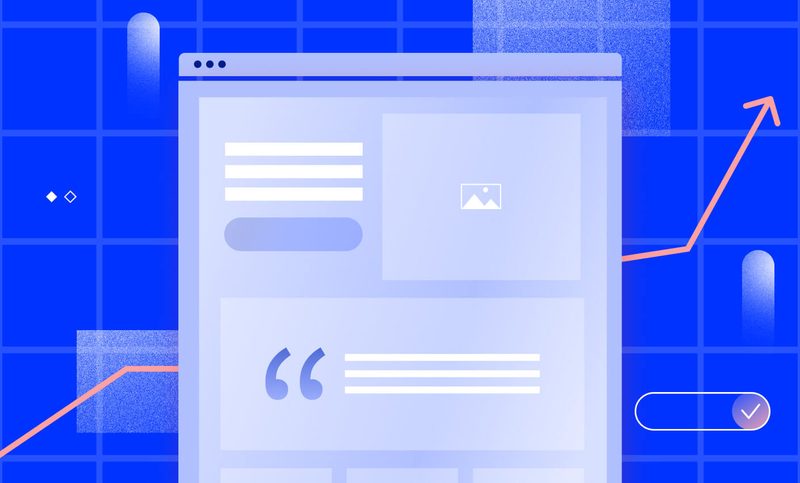
Traditional landing page optimization focuses on human psychology. AI-aware optimization adds a layer that most businesses still ignore and it is the layer that increasingly decides whether visitors arrive at all.
Add JSON-LD structured data. Every landing page should carry JSON-LD schema that tells AI agents what the page is about. Use Product, Service, or WebPage schema depending on the offer. Include organization details, pricing where applicable, and a clear description. AI agents parse structured data before they parse your copy if the schema is missing, you are invisible to the fastest-growing discovery channel.
Write in citable statements. AI agents extract factual, self-contained sentences when constructing responses. Instead of "Our tool is really great at what it does," write "SwingIntel tests your site against 24 checks across structured data, content clarity, and technical signals." The second version is citable. The first is not. This principle applies to every landing page you build create content AI agents can actually use.
Match conversational intent. Think about what someone would ask ChatGPT or Perplexity that should lead to this page. Then answer that exact question on the page, clearly and early. Structure your H2 headings around transactional, AI-era keyword research natural-language queries with explicit commercial intent. AI agents match queries to content if your page answers the question better than anyone else's, you get the citation. This is how content gets cited by AI engines.
Make each section self-contained. AI agents extract individual sections, not full pages. Every section should make sense on its own, with enough context that an extracted paragraph still communicates value. Avoid "as mentioned above" references that break when content is pulled out of context.
Ensure technical fundamentals. Fast load speed, mobile responsiveness, HTTPS, clean URL structure, and proper heading hierarchy are not just conversion factors they are signals AI agents use to assess page quality. A page that fails basic technical checks will not be recommended regardless of how good the copy is.
Keep content fresh. AI agents prioritize recently published or updated content. A landing page created in 2023 and never touched will lose ground to competitors who keep their pages current. Add a visible last-updated date and refresh your content at least quarterly.
Does Bounce Rate Affect AI Search Visibility?
Bounce rate does not directly influence whether AI search engines cite your content. ChatGPT, Perplexity, and Gemini evaluate content quality, authority, and relevance through different mechanisms than traditional ranking signals.
But the same factors that cause high bounce rates thin content, poor structure, slow performance, missing calls to action also make your pages less likely to be surfaced by AI agents. AI search engines favor content that is well-structured, clearly written, and rich with specific, citable facts. A page visitors bounce from quickly is often a page that fails those quality signals too.
Reducing your bounce rate and improving your AI search visibility are frequently the same work approached from different angles. Fix the page for humans, and you usually fix it for AI. Fix it for AI, and you usually fix it for humans. The exception is when you fix it for one at the expense of the other which is how visually stunning redesigns end up tanking rankings.
Common Landing Page Mistakes
The most damaging mistakes in 2026 are not design errors. They are visibility errors.
Too many CTAs. If your page asks visitors to sign up, follow on social, read your blog, and watch a video, you have built a homepage, not a landing page.
Hiding content in images and videos. AI crawlers cannot read text embedded in hero images or video scripts. If your value proposition only exists inside a graphic, AI search engines will never cite it. Always include the same information as HTML text.
No structured data. Your landing page might rank well in traditional search and still be completely invisible to AI agents. Without schema, AI engines have to guess what your page is about and they will guess wrong or skip you entirely.
Ignoring mobile-first indexing. Over 60% of web traffic is mobile. Google and AI agents index the mobile version of your page first. If your mobile layout hides content behind accordions or removes sections entirely, that content effectively does not exist for ranking purposes.
Generic copy. "We are a leading provider of innovative solutions" tells neither humans nor AI anything useful. Specificity converts. Specificity gets cited.
Optimizing for one audience only. Strip pages down to a single button with minimal text and you starve AI engines of content to cite. Write essay-length pages with no visual hierarchy and you overwhelm humans. The best landing pages in 2026 balance both enough structured, citable content for AI, presented in a clean design that guides humans toward action.
Building Landing Pages That Work in 2026
A landing page is still the most efficient conversion tool in digital marketing. One page, one offer, one action nothing else. Whether you are capturing leads, selling a product, or driving event signups, the mechanics are the same: remove distractions, make the value clear, make the action easy.
What has changed is the definition of "visitor." Your next 100 leads might come from humans clicking a Google ad. Or they might come from an AI agent citing your page because you structured it well enough for the AI to understand. Businesses that build for both audiences clear copy that converts humans and structured data that AI engines can parse will capture traffic from channels most competitors have not even started thinking about.
Frequently Asked Questions
What is the difference between a landing page and a homepage?
A homepage is a front door it introduces your brand, links to multiple sections, and serves visitors with different intents. A landing page is focused on a single conversion action with minimal or no navigation. Sending paid traffic to a homepage typically produces lower conversion rates because the page serves too many masters, while a landing page channels all attention toward one outcome.
What conversion rate should I expect from a landing page?
The median landing page conversion rate is 6.6%, with top performers exceeding 10%. Webinar landing pages achieve the highest average at 22.3%. Standard website pages typically convert at 2–3%. Your actual rate depends on traffic quality, offer relevance, page speed, and how well the page matches the visitor's intent.
What is a good bounce rate for a landing page?
For lead generation landing pages, 30–55% is typical. Ecommerce pages see 20–45%, SaaS and B2B sites 35–55%, and content-heavy pages 70–90%. A blog post with a 75% bounce rate may be performing well if visitors read the full article. Compare your bounce rate to pages with similar purposes on your own site, not to industry-wide averages.
Does bounce rate affect AI search visibility?
Not directly. AI search engines evaluate content through different mechanisms than traditional ranking signals. However, content that keeps visitors engaged tends to be the same content AI engines find valuable detailed answers, clear definitions, structured data, authoritative sourcing. Reducing bounce rate and improving AI visibility are often the same work from different angles.
Do landing pages need structured data to be visible to AI?
Yes. Every landing page should carry JSON-LD schema markup typically Product, Service, or WebPage schema depending on the offer. AI agents parse structured data before they parse your copy. A page without schema is invisible to the fastest-growing discovery channel, no matter how well it converts human visitors.
Can a visually stunning landing page redesign hurt AI visibility?
Yes. A redesign that removes structured data, replaces HTML text with images, or hides content behind JavaScript rendering may boost short-term conversions while destroying AI visibility. AI crawlers cannot read text embedded in hero images or video scripts. Always include the same information as HTML text and verify AI readability after every design change.
If you want to see how your current pages perform across both dimensions, request AI visibility research — it covers 24 checks across structured data, content clarity, and technical signals, and shows you exactly what AI search agents see when they look at your site. Then we make the changes ourselves the schema, the copy, and the rendering that decide whether your page is readable at all.