Marketing teams that ignore answer engine optimization in 2026 are building content AI platforms cannot cite. Gartner estimates that 25% of traditional search volume will shift to AI chatbots and answer engines by the end of this year, and the brands without AEO foundations are already losing ground to the ones that adopted earlier.
This playbook is the working document for capturing that ground. It covers the trends reshaping AI search, the best practices that produce measurable results, the SaaS-specific tactics that turn AI citations into trial signups, and the case studies with documented ROI that justify the investment. Not theory the specific changes marketing teams can implement this quarter and measure within weeks.
If your content ranks on Google but never appears in ChatGPT, Perplexity, or Google AI Overviews, this is the playbook that closes the gap.
Key Takeaways
- Answer-first content structure placing the core answer in the opening 30–60 words is the single highest-impact AEO change most pages can make
- Schema markup (JSON-LD) has moved from SEO best practice to AEO baseline: pages without structured data are increasingly invisible to AI answer engines
- Entity consistency across your website, knowledge graphs, and external profiles directly determines whether AI platforms trust and cite your brand
- AI-referred traffic converts at dramatically higher rates than traditional organic search, which means even modest citation gains produce outsized pipeline
- Documented case studies show 508% growth in AI-referred trials in 7 weeks, 63% AI citation rates through community AEO, and significant user growth at a 25% lower media spend
- AEO citation measurement is a required metric in 2026 teams that do not track it cannot prove or improve AEO performance
Part 1: The Trends Reshaping AI Search in 2026

The rules of search visibility are shifting faster than most marketing teams can adapt. Six trends now define how AI answer engines ChatGPT, Perplexity, Google AI Overviews, Gemini, Claude decide which brands to cite. Understanding them is the prerequisite for everything else in this playbook.
Answer-First Formats Are Replacing Keyword-First Thinking
The most significant AEO trend is the shift from keyword-optimized pages to answer-optimized content. Traditional SEO taught marketers to weave target keywords through a page and build topical authority over time. AI answer engines operate differently they extract the clearest, most direct response to a user's question and present it as a cited answer.
The main answer to a page's target question should appear within the first 30 to 60 words. Background context, supporting evidence, and related topics still matter, but the answer comes first. Pages that bury the answer three paragraphs in get skipped in favor of competitors that get to the point faster.
Voice Search Is Now an AEO Priority
Voice-activated search is no longer a novelty. With US voice assistant adoption continuing to grow rapidly, optimizing for how people speak not just how they type has become a critical AEO discipline. Voice queries are longer, more conversational, and almost always phrased as questions. A typed search might be "AEO best practices" while the voice equivalent is "What are the best practices for answer engine optimization that I should follow?"
Content structured around natural question phrasing earns more voice citations. Voice assistants typically read back 1–3 sentences, so the first answer block must be tight and self-contained.
Structured Data Has Moved from Best Practice to Baseline
A few years ago, schema markup gave a page an edge in search results. Today, pages without structured data are increasingly invisible to AI engines. JSON-LD has become the primary format AI platforms parse to understand what a page contains and how to extract information from it.
This trend has graduated schema from "competitive advantage" to "price of admission." The implementation details which schema types deliver the most AEO impact are covered in Part 2.
Multimodal Content Wins More Citations
Modern AI engines no longer process text in isolation. Gemini and GPT-4o analyze images, video, and audio alongside text when generating answers. A product page with descriptive alt text on images, video transcripts with timestamps, and audio metadata is more discoverable than a text-only page covering the same topic it can appear in more answer contexts because each modality creates an independent extraction opportunity.
Entity Clarity Drives Brand Recognition
AI platforms do not just read your website. They cross-reference it against knowledge graphs, business directories, social profiles, review platforms, and third-party databases. When the information matches, the AI engine trusts your brand as a citable source. When it does not, your content is deprioritized even if the page itself is well-structured.
Entity optimization ensuring AI platforms understand exactly who your business is and how it relates to your industry has become one of the most impactful AEO disciplines. The implementation playbook is in Part 2.
Social Platforms Are Becoming Answer Engines
One of the less obvious AEO trends in 2026 is the convergence of social platforms and answer engines. Reddit threads appear in Google AI Overviews. YouTube transcripts feed into Gemini's answers. LinkedIn articles surface in Microsoft Copilot's professional queries. Your website is not the only asset AI engines evaluate a comprehensive AEO strategy extends across every platform that AI engines index.
Part 2: The Best Practices Marketing Teams Must Adopt

Trends explain the terrain. Best practices are how you win on it. These are the specific changes that move AI citation rates — the ones the platforms' own behavior, and the published research on it, point to.
Lead with the Answer, Not the Setup
The most common AEO failure is burying the answer. Traditional content marketing taught teams to build context, establish the problem, and reveal the solution midway through the page. AI answer engines do not read that way. They scan for the clearest, most direct response to a query and extract it often from the first few sentences.
The fix is structural: every page targeting an informational query should place its core answer within the first 30 to 60 words. This does not mean writing shallow content. The best-performing AEO pages pair an upfront answer with deep supporting analysis below it. Lead with the conclusion, then build the case.
Practical steps:
- Audit your top 20 pages for each one, ask: "If an AI engine only reads the first paragraph, does it get the answer?" If not, restructure.
- Use answer blocks short, self-contained statements (2–3 sentences) that directly address the target query, placed immediately after the H1 or opening paragraph.
- Match query language pages using close or exact phrasing from how people ask questions ("what is," "how to," "does X work") earn more AI citations than pages using abstract or brand-led phrasing.
Every section on the page should follow the same principle. Make each section independently understandable and each key fact independently citable. AI engines do not always cite entire pages they extract specific passages. If a passage requires context from three paragraphs above to make sense, it will not be selected.
Implement Schema Markup on Every Key Page
Structured data has moved from SEO best practice to AEO baseline requirement. JSON-LD tells AI systems whether content is a FAQ, a how-to guide, a product page, or an expert article. That classification determines when and how the content surfaces in AI-generated responses.
The schema types that deliver the most AEO impact:
- FAQPage maps directly to how AI engines structure question-and-answer retrieval
- HowTo provides step-by-step structure that AI assistants can follow, cite, and present in sequential format
- Article with author and datePublished signals content freshness and expertise, strengthening E-E-A-T signals that AI platforms weight heavily
- Organization and LocalBusiness establishes entity identity, which feeds into the brand recognition systems AI engines rely on
- Product and SoftwareApplication help AI shopping assistants and comparison engines extract pricing, features, availability, and product category
Start with your highest-traffic pages and work outward. Validate every implementation with Google's Rich Results Test before publishing invalid schema is worse than no schema because it sends contradictory signals.
Build and Maintain Entity Consistency
Entity consistency means your business name, description, address, contact details, and core claims say the same thing everywhere. This sounds basic, but most businesses fail it at scale. A homepage that targets enterprise buyers while a G2 profile emphasizes SMB success stories creates conflicting signals that AI models cannot reconcile.
The entity consistency checklist:
- Google Business Profile accurate name, category, description, hours, and contact information
- Knowledge graph presence appearing in Google's Knowledge Panel signals established authority to AI engines
- Wikidata entry AI systems reference Wikidata for entity verification; if your business qualifies, an entry is worth pursuing
- Consistent author entities bylined content with author schema builds topical authority across the content library
- Social profile alignment LinkedIn, Twitter/X, and industry directory descriptions should use consistent language about what the business does
Entity building is the slowest AEO practice to show results but the most durable. Once AI platforms establish a strong entity graph for your brand, that signal compounds each citation reinforces the next.
Make Content Technically Accessible to AI Crawlers
A perfectly structured, schema-enriched page means nothing if AI crawlers cannot access it. Technical accessibility for AI crawlers is a distinct AEO discipline with requirements beyond traditional SEO crawlability.
The most common technical AEO failures:
- JavaScript-rendered content if headings, answers, or critical text load only via client-side JavaScript, many AI crawlers will not see them. Server-side rendering or static HTML for key content is essential.
- Missing or restrictive robots.txt AI crawlers from OpenAI, Anthropic, Perplexity, and others use distinct user agents. Blocking them blocks your AI visibility. Review which bots your robots.txt allows and make deliberate choices.
- No sitemap or outdated sitemap AI crawl systems use sitemaps to discover and prioritize content. An incomplete sitemap means content that AI engines never find.
- Slow response times AI crawlers operate at scale and have timeout thresholds. Pages that take more than 3 seconds to respond may be skipped entirely.
Marketing teams often lack direct control over these technical elements, but AEO success requires coordinating with engineering. A shared checklist robots.txt review, sitemap audit, render method check, llms.txt implementation ensures the technical foundation supports the content strategy.
Apply E-E-A-T Signals with AEO Intent
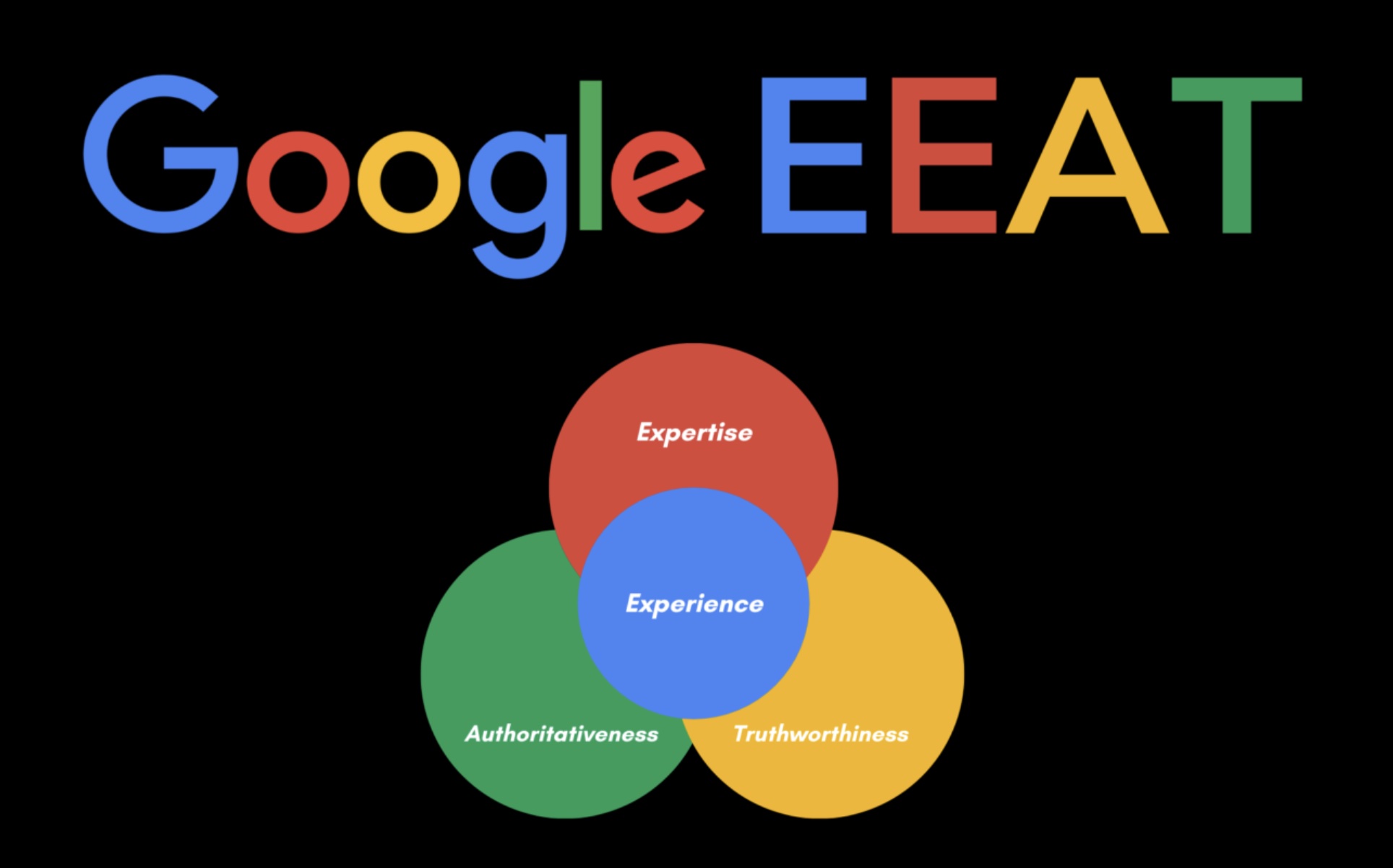
Google's E-E-A-T framework (Experience, Expertise, Authoritativeness, Trustworthiness) has always influenced search rankings. In the AEO context, these signals decide whether AI engines select your content over alternatives when generating an answer. The bar is higher than SEO, because there is typically only one or two citation slots per AI response, not ten positions on a search results page.
How to strengthen E-E-A-T for AEO specifically:
- Experience include first-hand data, original research, and case-specific examples that demonstrate direct involvement with the topic
- Expertise use author bylines with credentials, link to author pages with publication history, and mark up author entities in schema
- Authoritativeness build external citations through industry publications, press mentions, and expert roundups that AI engines cross-reference
- Trustworthiness cite sources for statistics, date-stamp content, update outdated information promptly, and display transparent methodology
Pages that demonstrate all four dimensions consistently outperform pages that are technically well-optimized but lack authority signals. Building trust through SEO foundations directly feeds into AEO citation likelihood.
Measure AI Citations as a Core Marketing Metric
You cannot improve what you do not measure, and most marketing teams are not measuring AI visibility at all. Traditional analytics track organic traffic, keyword rankings, and click-through rates. AEO adds a new dimension: whether AI platforms cite your brand when users ask questions in your domain.
The metrics that matter:
- AI citation rate how often your brand appears in AI-generated answers across ChatGPT, Perplexity, Gemini, Google AI Overviews, and other platforms
- AI-referred traffic visits originating from AI answer links (distinct from organic search in analytics)
- Citation sentiment and accuracy not just whether AI mentions your brand, but whether the information surfaced is correct and favorable
- Competitive citation share how your citation frequency compares to competitors in the same category
Setting up this measurement layer is the first AEO step for many teams because it establishes the baseline that makes every subsequent optimization provable. This is exactly what we test at SwingIntel: citation presence across 9 AI platforms, probed with 108 citation prompts per market, providing the measurement baseline that most teams cannot build internally.
Build a Cross-Platform Citation Presence
Your website is not the only asset AI engines evaluate, and the trend toward social-as-answer-engine (covered in Part 1) makes this a practice, not an optional add-on. Marketing teams should audit their brand presence across every platform that AI engines index:
- Reddit helpful, substantive responses in relevant subreddits earn AI citations when engines pull from discussion threads
- YouTube video titles, descriptions, and transcripts optimized for question-based queries feed directly into AI answers
- LinkedIn authoritative articles that demonstrate professional expertise are indexed by business-focused AI assistants
- Industry forums and review platforms Trustpilot, G2, Capterra, and industry-specific directories all contribute to the entity signals AI engines use
The brands winning in AI search are not just optimizing their websites they are building citable presence across the full information ecosystem.
Part 3: The SaaS Playbook 5 Tactics That Convert AI Citations into Trials

The best practices in Part 2 are universal. But SaaS is the vertical where AEO produces the sharpest commercial outcomes, because SaaS buying decisions start with questions "What is the best project management tool for remote teams?" or "How do I automate invoice processing?" that AI answer engines are built to resolve. When ChatGPT or Perplexity names your product, the prospect arrives at your trial page with a recommendation already made.
The five tactics below are built specifically for SaaS trial conversion. They apply the best practices above to the mechanics of turning AI citations into signups.
Tactic 1: Structure Every Product Page for AI Extraction
Independent analyses consistently find that a large share of AI citations come from the first third of a page's content. For SaaS product pages, this means leading with what the product does and who it serves not with a brand story or problem statement.
The answer-first framework for SaaS pages:
- Opening sentence state what the product is and the specific problem it solves, using the exact language prospects type into AI platforms
- Feature summary list core capabilities in a scannable format within the first 200 words
- Differentiation explain what makes your approach distinct in one to two sentences
- Supporting depth expand on use cases, integrations, and methodology below the fold
"Acme automates invoice processing for mid-market finance teams" will outperform "Revolutionizing the future of financial operations" every time.
The same principle applies to your knowledge base and help documentation. FAQs and support pages with clear headings and concise answers get extracted by AI engines even more readily than marketing pages.
Tactic 2: Implement SaaS-Specific Schema Markup
Part 2 covered the schema types every marketing team should deploy. SaaS companies have a specific advantage: the SoftwareApplication schema type maps directly to how AI platforms categorize and recommend tools.
Priority schema types for SaaS:
- SoftwareApplication product name, category, operating system, pricing, ratings
- FAQPage every FAQ section on your site should be marked up, not just your help center
- HowTo onboarding guides, setup tutorials, and workflow documentation
- Review/AggregateRating customer ratings and review counts that AI platforms reference when making recommendations
- Organization consistent brand entity information that reinforces knowledge graph presence
The compound effect matters. A product page with SoftwareApplication schema, embedded FAQ markup, and AggregateRating gives AI platforms three distinct extraction opportunities from a single URL. Each schema type answers a different class of query what the product is, how it works, and whether users recommend it.
Tactic 3: Build Entity Authority That AI Platforms Trust
AI engines do not just match keywords they evaluate entity authority. When multiple sources consistently describe your product the same way, AI platforms gain confidence in recommending it. When descriptions conflict, AI platforms hedge or skip you entirely.
For SaaS companies, entity authority has three layers:
- Knowledge graph presence. Google's Knowledge Graph, Wikidata, and Crunchbase are primary reference points for AI platforms. Ensure your company has accurate, complete entries across all three.
- Branded mention consistency. Industry analyses consistently find that branded web mentions correlate more strongly with AI visibility than raw backlink counts do. "Acme CRM" on G2, "Acme" on Capterra, and "Acme Customer Platform" on LinkedIn creates entity confusion AI platforms cannot resolve.
- Use case storytelling. AI engines favor context-rich examples over generic descriptions. Share specific customer scenarios "a 50-person fintech team reduced onboarding time by 40% using Acme's automated workflow builder" because these concrete narratives are exactly what answer engines extract when responding to queries like "what tools help fintech companies onboard faster."
Tactic 4: Build AI-Optimized Trial Landing Pages
Traditional landing page best practices minimal text, large CTAs, social proof above the fold work against you in answer engines. A landing page with a headline, three bullet points, and a signup form gives an AI engine nothing to cite. The solution is not to remove conversion elements. It is to add citation-worthy content alongside them.
AI-optimized trial page structure:
- Direct product definition in the first sentence answer "what is [product]" immediately
- Problem-solution framing that mirrors how prospects ask AI platforms about your category
- Feature comparison section using structured tables AI platforms extract tabular data reliably
- Concrete outcome statements with numbers: "Teams using Acme process 3x more tickets in the first week"
- FAQ section at the bottom covering the questions AI platforms route to your category "Is [product] free?", "How does [product] compare to [competitor]?", "What integrations does [product] support?"
- Trial CTA placed contextually rather than as the page's only purpose
This serves both channels. Human visitors get a clear, comprehensive page that builds confidence. AI platforms get extractable content that earns citations. And AI-referred visitors arrive with higher intent they do not need aggressive conversion tactics because the recommendation already happened upstream.
Tactic 5: Measure AI-Referred Conversions Separately
Part 2 covered citation measurement at the brand level. For SaaS, the conversion layer matters even more because AI-referred visitors behave differently from every other acquisition source.
What to track:
- AI referral traffic segment visitors from ChatGPT, Perplexity, Claude, Gemini, and Google AI Overviews using UTM parameters and referrer analysis
- Trial conversion rate by source AI-referred visitors convert at dramatically different rates than organic or paid traffic; blending them into a single metric hides the signal
- Citation frequency how often AI platforms mention your product when answering queries in your category. Citation testing across multiple AI providers reveals which platforms cite you and which ignore you.
- Query coverage which category-defining questions result in your product being recommended, and which result in competitor recommendations
- Time to conversion AI-referred visitors typically convert faster because the recommendation reduces evaluation time
Most analytics platforms were not designed for AI referral tracking. Google Analytics captures some referrer data, but dedicated AI visibility monitoring provides the granularity SaaS companies need.
Part 4: The Proof Case Studies with Documented ROI
Every marketing team has heard the pitch: optimize for AI search and watch your visibility grow. The claim is easy to make. The evidence is harder to find. This section is the evidence real companies that invested in AEO and tracked what happened next.
Case Study 1: B2B SaaS 508% Increase in AI-Referred Trials in 7 Weeks
Agency: Discovered (organic search agency) Timeline: 7 weeks Investment: AEO content program + technical SEO
Working with an unnamed B2B SaaS client that generated 575 AI-referred trials per month before the program, Discovered's AEO strategy focused on three interventions: technical SEO fixes to improve crawlability for AI systems, 66 AEO-optimized articles published in the first month, and strategic Reddit community seeding to build the kind of third-party discussion signals LLMs weight heavily.
Results after seven weeks:
- AI-referred trials grew from 575 to 3,500+ monthly a 508% increase
- Citation rates across ChatGPT, Claude, and Perplexity rose sharply over the same period
- High-intent keyword rankings improved on traditional search as a side effect
- Reddit posts achieved #1 rankings for key discussion threads
The timeline is the most compelling detail. Seven weeks is not a multi-quarter transformation program. It is a sprint that delivered measurable pipeline before most companies finish their AEO strategy documents.
Case Study 2: Sales Intelligence 63% AI Citation Rate Through Community AEO
Company: Apollo.io Timeline: 5+ months Investment: Reddit-focused AEO program
Apollo.io approached AEO from an unconventional angle. Rather than optimizing their own website for AI citations, they focused on building a presence in the community spaces that AI models pull from most frequently. The strategy centered on Reddit: the team built r/UseApolloIO into an active community and created content specifically designed to surface in LLM training and retrieval pipelines.
Results:
- 63% brand citation rate when AI platforms answered awareness-level prompts about the category
- 36% citation rate on broader category prompts where Apollo.io was one of many possible recommendations
- Community grew to 1,100+ members generating 33,400+ content views
- A single new Reddit thread displaced older, outdated threads about Apollo and gained over 3,000 citations across key LLM prompts within a week
For context, most brands in competitive categories have a citation rate below 10%. Nearly two out of three times someone asked an AI "What's a good sales intelligence tool?", Apollo.io appeared in the answer.
Case Study 3: Automotive User Growth While Cutting Ad Spend 25%
Company: Banner Chevrolet (New Orleans) Timeline: 12 months Investment: AEO + AI visibility program
Automotive dealerships operate in one of the most competitive local search environments. Banner Chevrolet's results, documented by Demand Local, demonstrate that AEO works not just for tech companies with global audiences but for location-based businesses competing in dense local markets. The dealership implemented answer engine optimization alongside AI-focused content strategies while simultaneously reducing paid media spend.
Results:
- 838% year-over-year increase in verified users
- 25% reduction in media spend over the same period
- 340% increase in Vehicle Detail Page (VDP) views
- Sub-1.5s mobile LCP achieved through technical SEO improvements that supported AI crawler accessibility
The combination of scaling users while cutting spend illustrates the core AEO value proposition: AI recommendations carry inherent trust that paid advertising cannot replicate. When ChatGPT or Google's AI Overview recommends a dealership, the visitor arrives with a level of pre-qualification no display ad delivers. A second regional dealership in the same program saw a 65% rise in AI mentions and doubled its traffic from AI search engines within three months.
Case Study 4: The B2B Technology ROI Model Payback in Months, Not Years
Not every company publishes case studies, but published ROI models built from real engagement data tell a consistent story.
Typical model inputs:
- ~120,000 monthly searches in the category
- ~20% of those searches happening through AI platforms
- Citation rate improving from 0% to roughly a third over the first quarter
- Monthly program cost in the mid-four-figure range
Across conservative, moderate, and aggressive scenarios, modeled 90-day ROI lands in the multiple-hundred-percent range, with payback periods measured in months typically two to four, depending on how aggressively the program is resourced. Practitioner models consistently show AEO-referred leads costing meaningfully less per qualified conversion than leads from traditional SEO channels. The efficiency gain comes from conversion quality: visitors who arrive via an AI recommendation are already educated on what the product does and why it was recommended, compressing the sales cycle.
Why AEO Converts Dramatically Better Than Traditional Search
The case studies above share a common thread: AI-referred traffic converts at dramatically higher rates than any other digital channel. Ahrefs' internal data showed that AI traffic drove 12.1% of their signups while representing only 0.5% of total traffic a dramatic over-indexing on conversion relative to volume. The 2026 HubSpot State of Marketing report found that 58% of marketers now confirm that visitors referred by AI tools convert at higher rates than traditional organic traffic.
This conversion advantage exists because AI recommendations function as trusted endorsements. When ChatGPT tells a user "Apollo.io is a strong choice for sales intelligence because..." that user arrives on the website with context, confidence, and intent that no search snippet provides. The AI has already done the convincing. The website just needs to close.
Industry Benchmarks: Where AEO Stands in 2026
The Conductor AEO/GEO Benchmarks Report for 2026 provides the broadest view of AEO adoption across industries:
- AI referral traffic share: 1.08% of total website visits across ten industries small in absolute terms but growing at approximately 1% month-over-month
- ChatGPT dominance: 87.4% of all AI referral traffic comes from ChatGPT
- Top-performing sectors: IT (2.8% AI referral share), Consumer Staples (1.9%)
- AI Overview trigger rate: 25.11% of analyzed Google searches now generate AI Overviews
- Healthcare AI Overviews: 48.75% trigger rate nearly half of all healthcare searches show an AI-generated answer
The sector variation matters. A healthcare brand ignoring AEO is invisible in nearly half its potential search interactions. An IT company without an AEO strategy is missing the sector with the highest AI referral traffic. The gap between optimized and non-optimized brands widens every month as AI platforms increasingly favor sources they have successfully cited before.
Part 5: Calculate Your AEO ROI and Prioritize Your Investment
The case studies make the opportunity concrete. This section turns it into a number you can defend in a budget meeting.
The AEO ROI Formula
AEO ROI = [(Projected Value from AI Citations − AEO Program Cost) / AEO Program Cost] × 100
The variables you need:
- Monthly search volume for your category keywords
- AI search share the percentage of those searches happening through AI platforms (20% is a conservative baseline for 2026)
- Target citation rate 20% is conservative, 35% is aggressive
- AI-referred conversion rate use your existing organic conversion rate with a substantial uplift multiplier, based on the higher rates reported for AI-referred traffic across industries
- Customer lifetime value to translate conversions into revenue
Even conservative assumptions a modest citation rate, a realistic conversion uplift, and a payback period of a few months clear the investment threshold for most marketing budgets. The question is not whether AEO delivers ROI. The question is how quickly you start capturing it.
The Compounding Effect Most ROI Models Miss
Static ROI models undercount AEO returns because they miss the compounding dynamic. AI models develop citation preferences over time. A brand that earns consistent citations across ChatGPT, Perplexity, and Google's AI features builds a reinforcing cycle: each citation strengthens the brand's authority signal, which increases future citation probability, which generates more AI-referred conversions.
The brands investing in AEO now are building a competitive moat that late entrants cannot shortcut. With a majority of B2B decision-makers already using generative AI tools for supplier and vendor research, the first-mover advantage in AI citation history is substantial. The dynamic is even sharper for early-stage operators a playbook for founders building AI-era businesses compounds far faster when the citation graph for the brand starts empty rather than being retrofitted onto years of legacy content.
Where to Start: The AEO Priority Matrix
Not every practice carries equal weight. For marketing teams starting or accelerating their AEO program, this is the priority order based on impact and implementation speed:
- Answer-first content restructuring highest impact, fastest to implement on existing content
- Schema markup on top pages high impact, moderate implementation effort
- AI citation measurement setup essential for proving ROI and guiding future investment
- Entity consistency audit medium-term effort with compounding returns
- Technical accessibility review coordinate with engineering, fix blockers first
- E-E-A-T signal strengthening ongoing, builds authority over time
- Voice and conversational optimization layered on top of existing content structure
- Cross-platform presence building longest timeline, most durable advantage
For the complete picture across 9 AI platforms, request a consultation and we'll run our AI visibility research on your site — it pinpoints exactly which of these practices will move the needle for your business, and then we do the work to put them in place.
Frequently Asked Questions
What is answer engine optimization (AEO)?
Answer engine optimization is the practice of structuring and enhancing website content so that AI-powered search platforms including ChatGPT, Perplexity, Google AI Overviews, and Gemini select it as a cited source when generating answers. AEO focuses on clarity, structure, and authority rather than traditional keyword density.
How does AEO differ from traditional SEO?
Traditional SEO optimizes for search engine rankings using keywords, backlinks, and technical signals. AEO optimizes for AI citations by structuring content as clear, extractable answers with schema markup, entity consistency, and conversational formatting. Strong SEO fundamentals support AEO, but the two disciplines have distinct priorities, workflows, and measurement models.
How long does AEO take to show results?
Content restructuring and schema markup changes can produce measurable citation improvements within weeks. Entity building and authority signals take 2–6 months to compound. Real-world case studies show businesses implementing comprehensive AEO strategies see significant ROI within 90 days, with results accelerating as AI platforms develop citation preferences for trusted sources.
Do I need special tools to implement AEO?
Basic AEO practices answer-first content, schema markup, entity consistency can be implemented with existing content management tools. Measuring AI citations across multiple platforms requires specialized tooling, as standard analytics platforms do not track AI-referred traffic or citation rates. SwingIntel's AI visibility research provides this measurement across 9 AI platforms, running 108 citation prompts in every market you serve, and then carries out the fixes it points to.
Can AEO work alongside my existing SEO strategy?
Yes AEO and SEO are complementary. Strong SEO foundations (fast pages, clean HTML, authoritative backlinks) support AEO performance, and most AEO best practices also improve traditional search rankings. The key is running them as coordinated but distinct workstreams with separate metrics, since optimizing for one does not automatically optimize for the other.
What are the biggest AEO trends in 2026?
The six most impactful trends are answer-first content formats, voice search optimization, structured data as a baseline requirement, multimodal content optimization, entity-based brand recognition, and the rise of social platforms as answer engines. Together, these trends are reshaping how businesses earn visibility in AI-generated responses.
AEO is not a future consideration. It is a present requirement. The marketing teams implementing these practices now are building the AI citation presence that compounds over time. The ones waiting are building content that AI platforms cannot see, cannot parse, and will not cite. The case studies in this playbook are early examples the companies that act on this data in 2026 will be the case studies others reference in 2027.