
Traditional ecommerce search optimization was built around rankings. You targeted a keyword, optimized a title tag, wrote a meta description, built backlinks, and hoped Google placed you on page one. It worked when the only path to purchase ran through a list of ten blue links.
AI search engines don't rank pages. They read them, evaluate them, and either recommend your products by name or recommend someone else's. When a shopper asks ChatGPT "what's the best espresso machine under £300 for a small kitchen?", the AI doesn't return a results page. It returns an answer with specific product names, specific reasoning, and often a specific purchase recommendation. Adobe Analytics reported that generative AI-powered shopping traffic to U.S. retail sites surged 4,700% year-over-year in July 2025. Semrush's clickstream analysis found that outbound referral traffic from ChatGPT to the rest of the web grew 206% in 2025. And Capgemini Research Institute found 58% of consumers now say they have replaced traditional search engines with generative AI tools for product and service recommendations.
The ecommerce brands winning that traffic aren't just doing better SEO. They're doing something fundamentally different. This is the complete playbook how AI discovery actually works, what each platform prioritizes, and the store-wide, product-page, technical, and localization changes that decide whether AI agents recommend you or your competitor. For the broader strategic picture of how ecommerce in the AI era is reshaping channels and economics, that companion guide pairs with this one and the ecommerce growth playbook for 2026 is the strategic counterpart to the tactical optimization work below.
Key Takeaways
- AI search engines discover ecommerce brands through a multi-source pipeline training data, real-time web retrieval, structured product data, and merchant program feeds not traditional keyword rankings.
- Structured data is the single signal that works across every AI platform pages with schema are cited 3.1x more frequently in Google AI Overviews and appear in 65% of Google AI Mode citations.
- Each AI platform weights signals differently: ChatGPT leans on natural language and editorial authority, Perplexity weights schema and real-time accuracy, Gemini queries Google's Shopping Graph, Claude leans on training data and third-party coverage.
- Product pages win AI recommendations when they lead with use-case-first descriptions, expose specifications as structured properties, surface reviews server-side, and stay consistent with feeds across every retailer the AI cross-references.
- Cross-source consistency across your site, your Merchant Center feeds, and third-party listings is the fastest way to either gain or lose AI visibility any mismatch in price, availability, or GTIN causes AI agents to drop your products entirely.
- Multi-language stores need reciprocal hreflang, per-locale structured data, and matching GTINs/MPNs across language versions, or AI agents will fragment your brand into weaker per-locale entities.
- Monitoring AI citations across platforms is as essential as monitoring organic rankings without it, you're optimizing blind.
How AI Search Actually Discovers Ecommerce Brands
Traditional search discovery is straightforward: Google crawls your page, indexes it, and ranks it against competitors for a query. AI search discovery is a multi-layered pipeline, and understanding each layer is what separates brands that get recommended from brands that don't.

Layer 1: Training Data
Every large language model has a knowledge cutoff a date beyond which it has no training data. If your brand, products, or category information existed in publicly available web content before that cutoff, the AI has baseline awareness of you. This includes your website content, Wikipedia entries, review sites, forum discussions, and news coverage.
This layer matters because it forms the AI's "gut instinct" about your brand. When a shopper asks about a product category, the AI's training data determines which brands come to mind before it even starts searching the live web. Brands with a strong, multi-source web presence before mid-2025 have an embedded advantage; brands that launched recently or have thin third-party coverage need to compensate through the other layers.
Layer 2: Real-Time Web Retrieval (RAG)
Retrieval-Augmented Generation is the mechanism that makes AI search current. Instead of relying solely on training data, AI platforms search the live web at query time and incorporate fresh results into their answers. Every major AI platform uses RAG for shopping queries, but each one does it differently:
- ChatGPT browses via OAI-SearchBot its web crawler and prioritizes content authority, brand mentions across the web, and product data completeness.
- Perplexity performs real-time web search as its core architecture, meaning every response is grounded in live web data. It heavily weights structured data and source authority.
- Gemini queries Google's Shopping Graph alongside the full Google index, giving it access to product feeds, pricing data, and availability information that other platforms can't match.
- Google AI Overview synthesizes answers from the same index that powers traditional Google Search, but filters for content that directly answers the query rather than content that simply ranks for it.
The RAG layer is where most ecommerce brands have the biggest gap. Your product pages might rank well in traditional search, but if they're not structured for AI extraction if the critical product data is buried in JavaScript tabs, marketing copy, or image-only content RAG retrieval will skip right past them.
Layer 3: Merchant Program Feeds
This is the layer most ecommerce brands don't know about yet, and it's the most direct path to AI visibility. Major AI platforms now accept structured product feeds directly:
- ChatGPT Merchant Program register at chatgpt.com/merchants to submit your product catalog directly to OpenAI, the same pipeline that powers ChatGPT shopping carousels and ACP.
- Perplexity Merchant Program a free program that gives your products priority visibility in Perplexity's shopping results.
- Google Merchant Center feeds submitted here power both traditional Google Shopping and AI-generated recommendations in Gemini and Google AI Overview.
- Microsoft Merchant Center feeds your product data into Microsoft Copilot's shopping recommendations.
These programs work because they eliminate the biggest bottleneck in AI discovery: data quality uncertainty. When an AI system crawls your website, it has to parse, interpret, and validate your product data. When it receives a structured feed directly, it has verified, complete product information it can recommend with confidence.
Layer 4: Content Authority Signals
AI systems don't just find your product data they evaluate whether your brand is trustworthy enough to recommend. Authority signals are weighted more heavily in AI search than in traditional search:
- Editorial coverage reviews and mentions in publications like Wirecutter, TechRadar, or industry-specific outlets signal quality. A product mentioned positively across multiple trusted sources gets a confidence boost.
- Customer reviews volume, recency, and sentiment across platforms (your site, Amazon, Trustpilot) directly influence recommendation confidence. AI systems parse review text, not just star ratings.
- Expert recommendations content from recognized experts (YouTube reviews, industry blogs, comparison articles) serves as third-party validation.
- Brand mention consistency AI systems cross-reference your brand name, product names, and claims across multiple sources. Inconsistent information reduces confidence and can suppress recommendations entirely.

What Each AI Platform Prioritizes
Understanding that each platform has different priorities is critical. Optimizing for one doesn't automatically cover the others.
ChatGPT prioritizes content authority and natural language product descriptions. Rich, descriptive product content that explains what a product does, who it's for, and how it compares outperforms specification-heavy pages. ChatGPT also heavily weights editorial coverage and customer reviews. Register for the ChatGPT Merchant Program, ensure your descriptions answer "why should I buy this?" in natural language, build editorial coverage through PR, and make sure OAI-SearchBot can crawl your site.
Perplexity prioritizes structured data and real-time accuracy. Schema.org Product markup with complete GTIN coverage, accurate pricing, and real-time availability are the primary signals. Perplexity's system also factors source authority heavily, favoring products referenced by trusted review sites. Implement comprehensive Product schema with every available attribute not just name and price, but specifications, GTINs, availability, condition, and aggregate ratings and join the Perplexity Merchant Program.
Google AI Overview and Gemini have the deepest ecommerce data access through the Shopping Graph. They prioritize product feed completeness, pricing competitiveness, and traditional E-E-A-T signals (Experience, Expertise, Authoritativeness, Trustworthiness). Optimize your Google Merchant Center feed with complete product data, ensure server-side rendered content (many AI crawlers cannot execute JavaScript), and invest in E-E-A-T signals author expertise, brand authority, and transparent business information.
Claude and other AI assistants rely more heavily on training data and web content quality than on merchant feeds. They evaluate content clarity, factual density, and the breadth of third-party coverage. Focus on authoritative content across multiple platforms, make sure your brand appears in comparison articles, buying guides, and industry publications, and maintain consistent product information across every touchpoint.
The core optimizations structured data, content clarity, feed accuracy, entity signals work across all of them. Each platform weights those signals slightly differently, but the fundamentals are universal. A store optimized broadly for AI readiness will perform well across platforms without needing per-platform strategies.
The Foundation: Store-Wide Structured Data
Structured data is not a product-page-only concern. AI search engines rely on machine-readable markup across your entire store to understand your brand, navigate your catalog, and verify facts before making recommendations. 65% of pages cited by Google AI Mode include structured data, and pages with schema markup are cited 3.1x more frequently in AI Overviews.

Start with three foundational schema types. Organization schema establishes your brand identity name, logo, contact information, and sameAs links to your social profiles so AI agents can confirm you are a legitimate business. BreadcrumbList schema on every page gives AI systems your site hierarchy, making it easier to understand how products relate to categories. A breadcrumb trail of "Home > Audio > Headphones > Noise-Canceling > Over-Ear" gives the AI a structured taxonomy that pure navigation links don't provide. Product schema with complete attributes price, availability, GTIN, specifications, aggregate ratings goes beyond the basics most stores implement.
Then layer on FAQ schema for category pages and buying guides. When a shopper asks an AI assistant a question your FAQ already answers, the AI has a ready-made, structured response to cite. This is one of the highest-ROI schema implementations for ecommerce because it directly maps to how AI search queries work.
If your store already has product-level markup, our complete guide to structured data and schema markup covers every schema type in detail and explains what AI agents actually parse.
Product Page Excellence: What Actually Gets You Recommended
Store-wide structured data opens the door. Product pages are where the recommendation is won or lost. The typical ecommerce product page was designed for human browsers who are already comparison-shopping. It assumes the visitor arrived via search, knows the product category, and wants to evaluate options visually. That creates several blind spots when AI agents try to use the same page as an information source.

Complete Product Schema Markup
Use JSON-LD format for your Product schema and include every available property:
- name, description, brand the basics
- offers price, priceCurrency, availability, priceValidUntil
- aggregateRating reviewCount and ratingValue
- sku, gtin, mpn product identifiers AI agents use to cross-reference across retailers
- additionalProperty specifications like dimensions, weight limits, materials, and compatibility
The gap most ecommerce stores miss is additionalProperty. If your standing desk supports up to 300 pounds, that weight limit needs to be a structured property not buried in a paragraph of marketing copy. An AI agent answering "standing desk for heavy monitors" cannot extract that from prose, but it can from schema.
For a deeper look at structured data and its role in AI discovery, see our 22-item visibility checklist.
Use-Case-First Descriptions
AI agents match products to intent, not keywords. When someone asks Perplexity for "a quiet air purifier for a baby's room", the AI is looking for a product page that explicitly addresses that use case not one that lists 47 technical specifications and hopes the shopper connects the dots.
Lead your product description with the primary use case. Then support it with specifications. A single well-defined use case does more for AI visibility than a generic feature list.
Weak: "The XR-500 Air Purifier features a 3-stage HEPA filtration system, 22dB noise level, covers up to 400 sq ft, and includes an auto mode with air quality sensor."
Strong: "Designed for nurseries and bedrooms where silence matters, the XR-500 operates at just 22dB quieter than a whisper. Its 3-stage HEPA system covers rooms up to 400 sq ft, removing 99.97% of airborne particles while your baby sleeps."
Both contain the same facts. The second one gets recommended because it answers the question the AI is actually processing. Creating content that AI agents can cite requires thinking in questions and answers, not keywords and rankings.
Machine-Readable Specifications
AI agents need clearly stated, structured specifications to match products to queries with specific requirements. If a shopper asks for "an airline-friendly crate for a 115-pound dog", the AI must see the maximum weight limit as a distinct, extractable data point.
Do not hide specifications behind JavaScript tabs, accordions, or "click to expand" elements. Many AI crawlers cannot execute client-side JavaScript. Render all product data server-side and present specifications in a clean HTML table or definition list that both crawlers and schema parsers can read. This is the same principle behind content chunking for AI self-contained, extractable sections that AI engines can parse without guessing.
Factual Descriptions Over Marketing Language
"Experience unparalleled audio quality" tells an AI agent nothing. "40dB active noise cancellation with 30-hour battery life and Bluetooth 5.3 multipoint connectivity" tells it everything it needs to recommend the product for a commuter who wants wireless headphones that last a full work week. Vague superlatives "industry-leading," "best-in-class," "premium quality" provide no verifiable signal and contribute nothing to recommendation confidence. State verifiable specifications, certifications, and test results so AI agents can cross-reference them.
Reviews and Q&A as AI Signals
Customer reviews are not just social proof for human shoppers. AI search engines synthesize review data into their recommendations. A product with 200 reviews mentioning "comfortable for long runs" will surface for "most comfortable running shoes for marathons" even if the product description never uses that exact phrase. When hundreds of reviews for a skincare product repeatedly mention "sensitive skin" or "no irritation", the AI synthesizes those signals into a recommendation even if the product description never uses those phrases.
Implement review schema markup so AI agents can parse individual reviews, aggregate ratings, and reviewer credentials. Encourage detailed reviews that describe specific use cases, not just star ratings post-purchase emails asking "how are you using this product?" generate review content AI engines can work with. Add a Q&A section and answer specifically: when a customer asks "does this fit a 15-inch laptop?" and you respond precisely, that question-answer pair becomes a citable data point for AI agents fielding the same question from future shoppers.
If your reviews are locked behind JavaScript tabs or paginated widgets that require interaction to load, AI crawlers cannot access them which means that social proof effectively does not exist for AI search.
Entity Authority Around Your Brand
AI platforms recommend brands they can identify as entities distinct, verified things in the world with attributes the AI can confirm. Your brand's presence in the Knowledge Graph, Wikidata, and across authoritative third-party sources determines whether AI agents trust you enough to recommend your products.
For product pages specifically, this means your brand schema should be consistent across every page, your Organization schema should link to your official social profiles and Wikipedia page (if applicable), and your brand name should appear consistently across all external mentions. Entity authority is the foundation. Without it, even perfectly optimized product pages won't surface because the AI doesn't have enough independent signals to verify your brand is real and trustworthy.
Server-Side Render Everything Critical
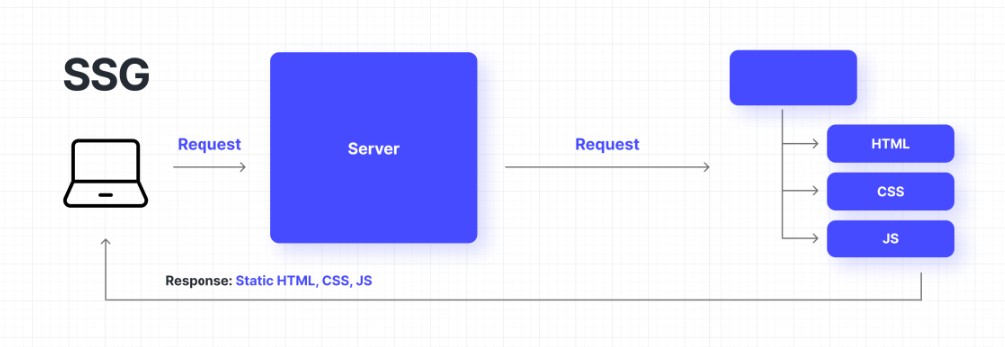
Many AI crawlers including OpenAI's OAI-SearchBot cannot execute client-side JavaScript. If your product data, specifications, reviews, or pricing load via JavaScript after the initial page render, AI agents see an empty shell. Server-side render all critical product information:
- Product descriptions and specifications
- Pricing and availability
- Customer reviews (at least the first page)
- FAQ content
- Structured data (JSON-LD in the
<head>, not injected via JS)
This is especially critical for single-page applications and headless commerce setups. If you're running a JavaScript-heavy storefront, implement server-side rendering or pre-rendering specifically for product pages.
Add Comparison Context
This is counterintuitive for traditional ecommerce: mentioning how your product compares to alternatives can actually increase AI recommendations. When someone asks "what's better for home use, an air fryer or a convection oven?", the AI looks for content that addresses the comparison directly. A product page that includes a section like "Air Fryer vs Convection Oven: When This Product Is the Better Choice" gives the AI exactly what it needs.
Cross-Source Consistency and Merchant Programs
AI shopping agents don't trust a single source. They cross-reference your product page data against your Google Merchant Center feed, third-party review sites, Amazon listings, and price comparison platforms. If your page shows a product at $199 but your feed still lists $219, the AI detects the inconsistency and drops the recommendation entirely. It doesn't pick one source over the other it picks a competitor whose data is consistent.
Real-time feed accuracy is the single fastest way to either gain or lose AI visibility. Audit your feed integration to confirm that pricing, availability, and product specifications sync within minutes of changes not hours or days. This includes variant-level accuracy: if a specific size or color is out of stock, the feed must reflect that immediately.
Pay special attention to product identifiers. GTIN, MPN, and brand fields in your structured data must match your feed exactly. AI agents use these identifiers to cross-reference your products across the web. A mismatch doesn't just lose you one recommendation it signals unreliability that affects your store's overall trust score across AI platforms.
Treat your product feed as a core asset, not an advertising operations afterthought. Automate price and availability syncs. Audit cross-source consistency at least monthly. This single discipline protects more AI visibility than any content optimization.
Then, submit your product feeds to every merchant program that matters: ChatGPT's Merchant Program, Perplexity's Merchant Program, Google Merchant Center, and Microsoft Merchant Center. This is the single highest-ROI action because it provides verified product data directly to AI systems bypassing the uncertainty of web crawling entirely.
Content Hubs That Get Cited
Product pages alone are not enough. AI shopping agents increasingly answer broad, intent-driven queries "best running shoes for flat feet", "which espresso machine is easiest to clean", "standing desk vs. sit-stand converter for small apartments" and they pull answers from content that directly addresses these questions.

Buying guides, comparison pages, and use-case articles create content hubs that AI agents reference when answering conversational queries. The key difference between content that gets cited and content that gets ignored is specificity. A buying guide that says "consider your needs and budget" is useless to an AI agent. A guide that states "the Breville Barista Express uses a 54mm portafilter, produces 15 bars of pressure, and costs $329 making it the best option for beginners who want manual control without commercial complexity" gives the AI exactly what it needs to cite.
Structure each content hub around a specific purchase decision. Link related guides to the relevant product pages, and link those product pages back. This internal linking pattern signals topical authority to both traditional and AI search engines and it gives AI crawlers a clear path through your entire catalog.
Technical Crawlability and AI Discovery Protocols
Content and structured data matter most, but technical implementation determines whether AI agents can access that content reliably.
Server-side rendering or static generation for all product and category pages is non-negotiable. Many ecommerce stores rely heavily on client-side JavaScript to render product listings, filter results, and display specifications. Most AI crawlers cannot execute JavaScript. If your product data loads dynamically via React, Angular, or Vue without server-side rendering, AI agents see an empty page.
Robots.txt must explicitly allow AI crawlers check for overly restrictive rules that may block GPTBot, ClaudeBot, PerplexityBot, OAI-SearchBot, or GoogleOther. Your XML sitemap should include every product URL, every category page, and every content hub article, with accurate lastmod dates.
Clean, crawlable product URLs matter too. AI agents follow links and build knowledge graphs from the pages they access. Product URLs with session IDs, tracking parameters, or dynamic query strings are harder for AI systems to canonicalise and may result in duplicate or fragmented product profiles.
Internal linking architecture helps AI agents discover content. Ensure navigation exposes all major categories, product pages link to related products and relevant buying guides, and category pages link up to broader content hubs. A well-connected internal link structure helps AI agents build a complete picture of your catalog and increases the probability of any single page being crawled and cited.
Site speed and reliability. AI agents may timeout on slow-loading pages or skip pages that return intermittent errors. The same performance standards that affect traditional search apply here but with AI agents, the penalty isn't a ranking drop. It's total invisibility.
Beyond traditional SEO signals, a new layer of technical protocols helps AI agents discover and understand your store. The llms.txt protocol is a machine-readable file similar to robots.txt that tells AI agents which pages on your site are most important and how your content is organized. For ecommerce stores, an effective llms.txt file should point to your top-selling products, flagship categories, buying guides, and your about or trust page. This gives AI agents a curated entry point instead of forcing them to discover your entire catalog through crawling alone. Catalog queries from AI agents increasingly rely on semantic matching, which is where NLWeb and semantic search fit in: exposing your products through a conversational, vector-indexed interface lets AI agents resolve intent-driven queries against your catalog directly.
Multi-Language Stores: Localization That AI Agents Actually Read
Most ecommerce businesses treat localization as a translation project. Translate product descriptions, swap the currency symbol, and move on. But AI search agents don't browse your store the way humans do they parse structured data, evaluate language signals, and match entity information across locales. When your localization settings are misconfigured, AI agents can't connect your German product page to your English one, and your store becomes invisible in markets where you've already invested in translation.

When a shopper in Munich asks ChatGPT to recommend a running shoe, the AI agent doesn't open your German storefront and browse. It looks for structured signals: hreflang tags that map language variants, JSON-LD product markup in the correct locale, and URL patterns that indicate language targeting. If those signals are missing or contradictory, the AI agent treats each language version as a separate, lower-authority entity rather than one strong brand.
AI search visibility varies dramatically by country. A recent analysis of AI search behavior across markets shows that the same brand can rank completely differently depending on which language and location the AI agent queries from. For multi-language stores, this means your English pages might be well-optimized while your French or Spanish versions are invisible to AI agents entirely. The core problem is entity fragmentation. When Google's Knowledge Graph or an LLM's training data can't connect your example.com/en/product page to example.com/de/product, it sees two weak pages instead of one strong product entity. According to CSA Research, 76% of online shoppers prefer to buy products with information in their native language, and 40% will never purchase from websites in other languages but if AI agents can't recognize your translated pages as the same entity, those shoppers won't find you through AI search either.
Localization Settings That AI Agents Actually Read

Hreflang tags are the foundation. Every page variant needs a self-referencing hreflang tag plus references to all other variants, including an x-default fallback. Google's documentation on localized versions confirms that incorrect hreflang implementation is one of the most common international SEO failures and AI agents inherit this confusion directly.
Structured data in every locale is equally critical. If your English product page has JSON-LD markup with the product name, price, availability, and reviews, but your German page has no structured data or only partially translated markup, AI agents will always prefer the English version. Each locale needs complete, language-appropriate JSON-LD including translated product names, localized pricing with the correct currency code, and region-specific availability.
URL structure signals intent to AI agents. The three common patterns are subdirectories (/en/, /de/), subdomains (en.example.com), and country-code TLDs (.de, .fr). Subdirectories consolidate domain authority and make it easier for AI agents to recognize all variants as one entity. Whatever pattern you choose, consistency matters more than the specific approach mixing patterns across locales is the fastest way to confuse AI crawlers.
Canonical tags per locale prevent AI agents from treating translated pages as duplicate content. Each language version should declare itself as canonical, not point back to the "main" language. A German product page that canonicalises to the English version tells AI agents to ignore the German page entirely.
Localized Product Data for AI Shopping Agents
The rise of agentic shopping adds another layer of complexity. AI shopping agents don't just retrieve information they compare products, evaluate pricing across markets, and make purchasing recommendations based on structured product data.
When an AI shopping agent compares products across regions, it relies on consistent entity identifiers. GTINs, MPNs, and SKUs must match across all language versions of a product page. If your English page lists a product with GTIN 0123456789012 but your French page omits it, the AI agent may treat them as different products and split your review signals, pricing comparisons, and availability data across two separate entries.
Currency and pricing localization also affect how AI agents evaluate your store. A product priced at $49.99 on the English page should appear as €45.99 on the German page with the correct priceCurrency field in your JSON-LD markup. AI agents that compare ecommerce economics across stores use this structured pricing data to determine which store offers the best value in each market missing or incorrect currency data means your store gets excluded from those comparisons.
Shipping and availability signals per region round out what AI agents need. A product marked as "in stock" globally but with no region-specific shipping data tells AI agents less than a product with explicit delivery estimates for Germany, France, and Spain. The more granular your localized structured data, the more confidently AI agents can recommend your store to shoppers in each market.
Common Localization Mistakes That Kill AI Visibility
Translating content but not metadata is the most frequent mistake. Product descriptions get translated, but page titles, meta descriptions, Open Graph tags, and structured data remain in English. AI agents weight metadata heavily an untranslated og:title on a German page signals that the page isn't truly localized content.
Missing or circular hreflang references create problems for AI crawlers. Every hreflang declaration must be reciprocal: if your English page points to a German variant, the German variant must point back. Orphaned references break the entity connection that AI agents depend on to understand your multi-language store as one brand.
Using automatic translation without review can produce content that AI agents recognize as low-quality. Raw machine translations frequently mistranslate technical specifications, product attributes, and use-case framing in ways that break the structured signals AI agents rely on. AI search agents evaluate content quality signals poorly translated pages get cited less frequently than well-written, human-reviewed localized content.
Ignoring right-to-left languages in your technical implementation signals to AI agents that your store doesn't genuinely serve those markets. If your Arabic or Hebrew pages render with broken layouts or missing structured data, AI agents deprioritize them in recommendations for those regions.
What Brands Get Wrong
The most common mistake ecommerce brands make is treating AI search as an extension of SEO. It isn't. Here's what that misconception leads to:
Optimizing for keywords instead of answers. AI search engines don't match keywords they answer questions. A product page optimized for "best running shoes" won't get cited if the AI can't extract specific reasons why your shoes are the best for a particular use case.
Ignoring platforms beyond Google. A strong Google ranking doesn't mean ChatGPT or Perplexity will recommend you. Each platform has independent discovery mechanisms. You can rank #1 on Google and be invisible on ChatGPT.
Relying on marketing copy instead of factual content. AI systems parse content for extractable facts, not persuasive messaging. "Revolutionary performance technology" tells an AI nothing. "Vibram outsole with 4mm lugs, 300g per shoe, waterproof to 20cm submersion" tells it everything.
Neglecting product data quality. Incomplete product feeds, inconsistent brand names across marketplaces, and missing GTINs cause AI systems to skip your products entirely. AI platforms operate on confidence scores incomplete data reduces confidence below the recommendation threshold.
Specifications buried in tabs or accordions. Human shoppers might click to expand a specs tab. AI agents often cannot or the content loads dynamically via JavaScript and never reaches the AI's parser. Critical product data hidden behind interaction patterns is invisible data.
No use-case framing. Most product descriptions answer "what is this?" without answering "who is this for?" AI agents are almost always matching products to specific needs expressed in natural language. A product page that explicitly states its ideal use cases "designed for home offices under 10 square meters" or "rated for daily runs on pavement, not trails" gives the AI a direct match path that competing products without this framing simply cannot provide.
Monitor and Measure Your AI Visibility
You cannot optimize what you do not measure. Most ecommerce brands have no idea whether ChatGPT recommends their products, how Claude describes their brand, or if Perplexity mentions them in shopping queries. This blind spot is the single biggest strategic risk in ecommerce marketing today.
AI visibility monitoring means systematically querying AI platforms with the questions your customers ask "best [product category] for [use case]", "which [brand] products are worth buying", "[product] vs [competitor product]" and tracking whether your brand appears in the responses. Track citation frequency, sentiment, and accuracy across platforms over time.
Start with a baseline. Run your brand through the queries that matter most to your revenue and document which AI platforms mention you, which recommend competitors, and where you are completely absent. That baseline becomes your optimization roadmap every change you make should move these numbers.
For the complete picture across every market and platform, what we test covers citation across 9 AI platforms with 108 citation prompts per market, and support for up to 3 target markets per order. Each market gets its own set of AI Overview queries and LLM Mentions analysis, so you can see exactly where your localization is working and where AI agents are dropping your non-English pages.
Where to Start
If you haven't audited your store for AI search readiness, the priority order is clear:
- Audit your current AI visibility run your brand through the queries that matter to your revenue across ChatGPT, Perplexity, Gemini, Claude, and Google AI Overview. Document the gaps.
- Register for every merchant program ChatGPT Merchant Program, Perplexity Merchant Program, Google Merchant Center, Microsoft Merchant Center. Highest-ROI single action.
- Implement complete structured data Organization, BreadcrumbList, Product (with specifications as
additionalProperty), aggregate ratings, and FAQ schema on category pages and product pages. - Rewrite product descriptions to lead with factual, use-case-specific information that directly answers the questions AI agents receive.
- Ensure server-side rendering for all product data, reviews, pricing, and structured data.
- Fix cross-source consistency price, availability, and specifications must match across your site, feeds, and third-party listings in real time.
- Build content hubs buying guides, comparison pages, and use-case articles that answer the conversational queries AI agents receive.
- Add AI discovery protocols robots.txt permits for AI crawlers, comprehensive XML sitemap, and a curated llms.txt file.
- Build third-party authority editorial coverage, detailed customer reviews, expert recommendations, and consistent brand mentions.
- Fix localization reciprocal hreflang, per-locale structured data, matching GTINs/MPNs, translated metadata, and localized pricing with correct currency codes.
- Set up ongoing monitoring citation frequency, sentiment, and accuracy across every AI platform and every target market.
The Compounding Advantage
AI search discovery has a compounding dynamic that traditional search doesn't. When an AI platform recommends your product, that recommendation generates traffic, reviews, and third-party mentions which in turn strengthen the authority signals that make future AI recommendations more likely.
Brands that establish AI visibility now build a moat that becomes harder for competitors to cross over time. The training data advantage accumulates. The authority signals compound. The merchant program data feeds become more complete. The brands that wait until AI search is "mature" will find themselves competing against entrenched competitors who've been accumulating these compounding advantages for years.
Frequently Asked Questions
Why do ecommerce stores need different optimization for AI search?
Traditional SEO ranks pages competitively based on keywords, backlinks, and engagement. AI search engines evaluate pages contextually they need enough structured, unambiguous information to confidently recommend a specific product to a specific person with a specific need. A page that ranks well on Google may give AI agents nothing to work with if it relies on marketing language instead of factual specifications and complete structured data.
What structured data should every ecommerce page have?
At minimum: Organization schema sitewide, BreadcrumbList schema on every page, Product schema with complete attributes (name, description, brand, SKU, GTIN, price, specifications as additionalProperty), AggregateRating and Review schema, and FAQ schema on category pages and product pages. The key is making specifications machine-readable as discrete data points, not embedded in unstructured text.
Does my ecommerce store need different optimization for each AI platform?
The core optimizations structured data, content clarity, feed accuracy, and entity signals work across all major AI platforms including ChatGPT, Perplexity, Gemini, Claude, and Google AI. Each platform weights signals slightly differently, but the fundamentals are universal. A store optimized for AI readiness broadly will perform well across platforms without needing per-platform strategies.
How quickly can AI search optimization changes improve visibility?
Technical changes like structured data implementation and feed accuracy improvements can affect AI visibility within days, as AI crawlers re-index your pages. Content-driven changes new buying guides, expanded product descriptions, review accumulation typically take two to six weeks to influence AI recommendations. The fastest wins come from fixing structured data errors that currently prevent AI agents from parsing your product information at all.
Can small ecommerce stores compete with large retailers in AI search?
Yes. AI search agents evaluate content quality and information accuracy, not domain authority or ad spend. A specialist store with comprehensive Product schema, detailed buying guides for its niche, and genuine customer reviews can outperform a major retailer with thin product pages and inconsistent feed data. AI agents reward depth of information over breadth of catalog.
Is AI search optimization replacing traditional ecommerce SEO?
No it complements it. Transactional product keywords still drive significant revenue through Google's standard results. The correct strategy is dual-channel: maintain rigorous product page SEO for transactional queries while building AI-optimized content and structured data for the conversational, intent-driven queries that AI agents handle. Both channels are growing, and brands that optimize for only one are leaving revenue on the table.
How do I test AI visibility across different languages and markets?
Traditional SEO testing tools check indexation and rankings but not what AI agents recommend in different languages. Test each target market by querying AI platforms with language- and location-specific prompts. SwingIntel's AI visibility research tests citation across 9 AI platforms with support for up to 3 target markets per order, so you can see exactly where your localization is working and where AI agents are dropping your non-English pages.
The shift toward AI-driven product discovery is accelerating. The ecommerce brands that adapt their entire store not just individual product pages for AI search will capture a disproportionate share of this new traffic channel. The store that gives AI agents the clearest, most verifiable product information across every signal wins. The best time to start was six months ago. The second-best time is today.
Not sure where your store stands? Request a consultation for SwingIntel's AI Visibility Research: comprehensive analysis across 24 checks and 9 AI platforms with multi-market testing. Then we implement the changes ourselves, from product schema to the content AI agents actually read.