The way people find, compare, and buy products online has fundamentally changed. Shoppers are asking ChatGPT, Perplexity, Gemini, and Google's AI Overview for recommendations and AI agents are answering with specific brands, specific products, and specific price points. The storefronts those agents cite are winning a growing share of purchase decisions. The storefronts they ignore are quietly losing customers to competitors they never see.
This is not a forecast. It is already happening at scale across retail and CPG. The strategic question for 2026 is not whether AI will reshape ecommerce it has. The question is whether your catalog, your content, your supply chain, your architecture, and your customer experience are aligned with how AI agents actually work.
Key Takeaways
- AI agents synthesize single conversational answers instead of listing ten blue links, and the brands those answers cite are the brands that get the sale.
- Morgan Stanley projects agentic shoppers could capture 10–20% of US e-commerce by 2030, representing $190–385 billion in spending a structural shift, not a phase.
- Comprehensive Product schema markup is the single highest-impact technical change most stores can make for AI visibility.
- Sourcing is now a visibility decision: supplier data quality determines whether you can produce the specific, citable product content AI agents trust.
- A distributed ecommerce hub turns multi-storefront operations from a liability into a consistent, scaled AI footprint provided each storefront delivers genuinely local value.
- AI visibility depends on human signals: clear authorship, transparent practices, hybrid support, and content that serves people not just algorithms.
How AI Is Changing Product Discovery
Traditional ecommerce SEO was built around keyword rankings, product page optimization, and paid shopping ads. These still matter. But AI search introduces a fundamentally different discovery model: instead of presenting a list of links, AI agents synthesize a single conversational answer that names specific products and brands.
When someone asks an AI agent "what is the best espresso machine for a small kitchen?", the response does not include ten blue links. It includes two or three specific recommendations with reasoning drawn from training data, real-time web access, and structured signals the AI can parse. Brands that provide those signals get cited. Brands that do not, get silence.
This shift matters enormously for ecommerce because AI search operates on completely different principles than traditional search. A product page that ranks #1 on Google can be entirely absent from a ChatGPT response, while a lesser-known brand with better structured data and third-party coverage can appear consistently. According to Salesforce's State of Commerce report, AI-influenced product discovery is accelerating across every retail category, and conversational search is growing fastest among younger demographics who default to AI assistants over traditional search engines.
The consumer behavior is already here. The question is whether your store is structured to be part of the answer.
The Readiness Gap Where Most Stores Fall Short
Most ecommerce stores were built for Google's crawlers, not for AI agents that need to extract, understand, and cite product information. The structural weaknesses are remarkably consistent across industries fashion, electronics, home goods, beauty. Three patterns repeat everywhere.

Product data is not machine-readable. Most ecommerce platforms generate product pages with marketing-oriented copy but minimal structured data. Without Schema.org Product markup including price, availability, brand, reviews, and product specifications AI agents cannot reliably extract what you sell, at what price, or how it compares to alternatives. They need structured facts, not persuasive copy.
Category pages are thin on substance. AI agents look for authoritative content that explains categories, compares options, and provides buying guidance. A category page that is just a grid of product thumbnails with "Shop our collection" gives AI agents nothing to cite. The stores winning in AI search publish genuine buying guides, comparison content, and category explainers alongside their product listings.
Third-party signals are weak or missing. AI engines weight third-party mentions heavily when deciding which brands to recommend. A store that exists only on its own domain with no reviews on Trustpilot, no coverage on industry blogs, and no presence on comparison platforms is treated as unverified by AI models. Self-description alone does not earn citations.
Fixing the readiness gap is not a single project it is a shift in how you think about every product page, every category, and every off-site signal. The stores that make that shift now will be the stores AI agents recommend six months from now. New operators have the easier path here, since starting and growing a business in the AI era lets them bake structured product data, citation-worthy content, and third-party presence into the foundation rather than retrofitting them later.
The Market Reality Agentic Commerce Is Here

The financial data underscores how seriously the market is taking this transformation. AI adoption inside retail and CPG has moved from pilot projects to widespread production deployment within the past two years. AI is now embedded in most retail business functions not experimental pilots but operational infrastructure reshaping how ecommerce runs at scale.
The clearest signal is agentic commerce. Instead of simply answering questions, AI agents increasingly act on behalf of consumers comparing products, checking availability, evaluating deals, and completing purchases autonomously. Morgan Stanley projects agentic shoppers could capture 10–20% of US e-commerce by 2030, representing $190–385 billion in spending. For context on the infrastructure being built to support this shift, see our agentic commerce guide.
Hyper-personalization is where AI is already delivering measurable revenue. AI analyzes browsing history, purchase patterns, and contextual signals to deliver product recommendations tailored to individual shoppers. The result is higher conversion rates, larger average order values, and stronger retention. Businesses investing in AI-driven personalization are seeing real gains, while those relying on static category pages and generic recommendations are watching their conversion rates decline.
Supply chain intelligence is the other area where AI delivers concrete ROI. Predictive analytics optimize inventory levels, reduce stockouts, and shorten delivery windows. For ecommerce businesses operating on thin margins, these operational efficiencies translate directly to profitability.
A note on multi-year market forecasts: SwingIntel favors directional strategic framing over precise market-size projections. Analyst estimates diverge widely, and the actionable signal for retailers is the direction of travel the structural shift from experimental tooling to embedded commerce infrastructure. You do not need a single dollar figure to plan for this; you need to accept that agentic, AI-mediated commerce is moving from the edge to the center of how people buy.
Structured Data The Foundation for AI Visibility

Ecommerce has a natural advantage over most industries when it comes to AI readability: product data is inherently structured. Every product has a name, a price, a brand, a category, specifications, and an availability status. The problem is that most stores do not expose this data in a format AI agents can parse.
Implementing comprehensive Product schema markup is the single highest-impact action most ecommerce stores can take. At minimum, every product page should expose:
- Product name and description clear, specific, factual
- Price and currency current, accurate, including sale pricing
- Availability in stock, out of stock, pre-order
- Brand linked to an Organization entity
- Aggregate ratings review count and average score
- Product identifiers GTIN, MPN, or SKU where applicable
When AI agents encounter a product page with comprehensive schema, they can extract precise facts: "The Nike Air Zoom Pegasus 41 is a neutral running shoe priced at $130, rated 4.6/5 across 2,400 reviews, currently in stock." That is a citable statement. Without schema, the AI has to guess and it usually will not bother.
Beyond individual product pages, add BreadcrumbList schema to communicate site hierarchy, FAQPage schema on product and category pages where natural Q&A exists, and Organization schema at the site level with clear sameAs references to your verified profiles. These signals collectively help AI agents understand not just what you sell, but how your catalog is organized and who you are as a business. Our citation strategy framework covers the broader principles behind making any content citable, and our AI visibility checklist walks through the technical signals in more depth.
Google's AI Overview deserves a specific mention. Product-related queries are among the most common triggers for AI Overviews, especially comparison language ("best", "vs", "alternative to") and specification questions ("waterproof", "under $200", "for small spaces"). Even ranking #1 organically does not guarantee visibility if Google's AI chooses different sources. Our AI Overviews optimization guide goes into the full tactics for appearing inside those synthesized answers.
Content That Earns AI Citations
Structured data gets your product information into AI models. Content gets your brand recommended.
The ecommerce brands appearing most frequently in AI responses share a pattern: they publish substantive, authoritative content that positions them as category experts not just product sellers. This content becomes the raw material AI agents draw on when constructing recommendations.
Buying guides are the highest-value content type. A well-structured guide "How to Choose a Mechanical Keyboard in 2026" gives AI agents a complete, citable resource to reference when users ask purchasing questions. The guide should include specific product comparisons, price ranges, feature explanations, and clear recommendations. This is the kind of content AI agents are trained to extract and cite.
Product comparison pages serve a similar function. When a user asks ChatGPT to compare two products, the AI needs a source that has already done the comparison in a structured, factual format. Stores that publish honest, detailed comparisons including competitor products earn citations that pure product pages never will.
Category expertise content establishes brand authority within a vertical. A skincare brand that publishes "The Complete Guide to Retinol Concentrations," or an electronics retailer that maintains a thorough "TV Panel Technology Explained" page, creates reference material AI agents cite when answering related questions and those citations drive traffic back to the store.
The principle underneath all of this is specificity. AI agents cannot cite vague marketing language. They cite facts, comparisons, specifications, and expert-level explanations. If a paragraph could have been written by any competitor about any product, AI will not quote it. If it contains a concrete, verifiable claim that no one else is making, AI will.
Sourcing Products for AI Visibility
Product sourcing has always been the unglamorous engine of ecommerce. Find reliable suppliers, negotiate margins, manage inventory, repeat. But AI has rewritten the rules not just for how you find products, but for whether customers ever find yours.
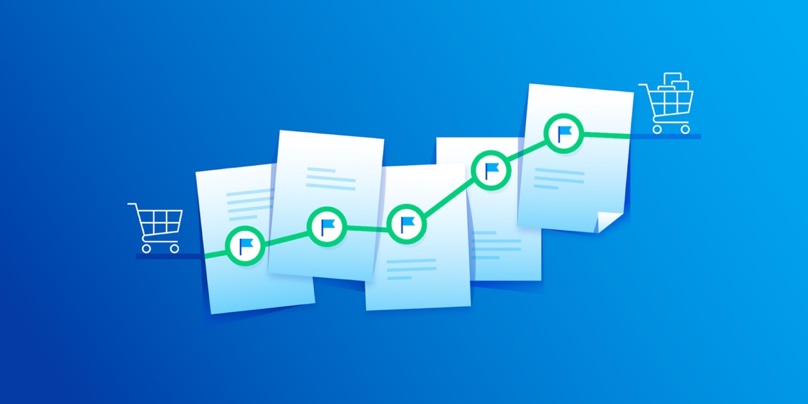
When a shopper asks an AI agent "what is the best ergonomic office chair under $300?", the AI is not browsing Amazon listings. It is synthesizing from structured data, brand authority signals, and content it can parse and trust. The products it recommends are not necessarily the best-sourced they are the best-represented. That makes sourcing a visibility decision, not just an operations one.
Evaluate Supplier Data Quality as a Sourcing Criterion
Before you evaluate price and margins, evaluate the data your supplier can provide. Ask for full technical specifications (dimensions, weights, materials, tolerances), certifications and compliance documents (ISO, CE, FDA, organic, fair trade), manufacturing process details, and third-party testing and quality data. This information becomes the foundation for product pages AI engines treat as authoritative. Brands that provide thin, generic product information cannot compete for AI recommendations regardless of how good the product actually is.
Source Products That Answer Specific Questions
AI search is fundamentally question-driven. Users ask "what is the best X for Y?" and the AI constructs an answer. If your product pages cannot answer specific questions with specific data, you will not be part of that answer. When evaluating a new product, ask: what question does this product answer better than anything else on the market? Products that fill genuine market gaps the only biodegradable phone case that is also MIL-SPEC drop tested, the only standing desk converter that fits on a 60cm-deep desk give you a defensible claim no competitor can match. Commodity products competing purely on price offer nothing for AI to anchor a recommendation to.
Build Supplier Relationships That Support Content
The best ecommerce content does not come from copywriters guessing at features. It comes from deep product knowledge only suppliers and manufacturers can provide. When negotiating with suppliers, negotiate for content access alongside pricing factory visit opportunities, direct access to product engineers, exclusive data points (performance benchmarks, material sourcing transparency), and co-created content like comparison studies or use-case documentation. A competitor sourcing the same product from the same factory but without this content access is structurally disadvantaged in AI search visibility.

Sourcing Models and Their AI Visibility Implications
Not all sourcing models are equal in the AI era.
Dropshipping's fundamental weakness is content differentiation. When dozens of stores sell identical products with identical descriptions from the same supplier, AI engines have no reason to recommend one over another. If you dropship, your sourcing strategy must compensate with content investment original photography, independent testing, detailed comparison content, and structured data markup competitors have not implemented.
Private label offers the strongest AI visibility potential. You control the brand narrative, product specifications, and content entirely. The sourcing decision here should prioritize manufacturers who can provide genuine product differentiation not just logo placement, but specification differences that give you unique, citable claims.
Wholesale and authorized distribution means competing for AI visibility alongside other authorized resellers and the brand itself. Your advantage comes from value-added content: expert reviews, comparison guides, bundling recommendations, use-case specific content the manufacturer does not produce. If you cannot realistically create content that adds value beyond the brand and other retailers, the AI will recommend them instead.
Early sourcing decisions compound. The store that sources with AI visibility in mind from day one builds an advantage that becomes harder to replicate with every passing month, as more reviews, more brand mentions, and more citations feed back into stronger signals.
Architecture When a Distributed Ecommerce Hub Makes Sense

Once a business is operating through more than a handful of storefronts dealers, franchisees, regional brands, reseller networks the architectural question becomes unavoidable. A distributed ecommerce hub is a centralized platform that connects and manages multiple online storefronts from a single administrative layer. Instead of running dozens of isolated sites, businesses use one hub to control branding, product catalogs, pricing, and order management while giving each storefront enough autonomy to serve its local market.
The core architecture separates shared resources (product data, inventory, payments, customer records) from local customization (pricing, language, promotions, design). Each storefront connects to a central back-end through APIs. Changes made at the hub propagate across every connected storefront automatically; changes made locally stay local. BigCommerce and Silk Commerce launched their Distributed Ecommerce Hub specifically for this model, letting businesses launch and manage hundreds of storefronts from one admin panel without developer bottlenecks. Shopify Plus and commercetools offer similar multi-store capabilities, though the implementation approach and degree of storefront autonomy differ.
Three business models benefit most:
- Manufacturers with dealer networks a manufacturer selling through 200 independent dealers needs each dealer to have a branded storefront, but cannot afford to build and maintain 200 separate sites.
- Franchise operations a franchise with locations across multiple countries needs consistent branding but localized pricing, language, and inventory.
- Distributors and resellers businesses supplying products through a reseller network benefit from centralized catalog management so every reseller's storefront updates simultaneously when a description changes or a new SKU is added.

For AI visibility, this architecture changes the equation in two important ways. First, a well-configured hub generates consistent structured data at scale Product, Organization, and BreadcrumbList schema formatted identically across every storefront. That uniformity is exactly what AI agents need to identify, categorize, and recommend products confidently. When 200 storefronts all publish clean, consistent schema, the brand's aggregate AI footprint is dramatically larger than any single site could achieve. Second, localized storefronts give AI engines richer contextual signals for geography-specific queries. When someone asks an AI assistant for "the best commercial coffee machines in Germany," a German-language storefront with local pricing and availability has a meaningfully stronger chance of being cited than a generic English-only page. Proper hreflang tags and locally unique content are non-negotiable here.
The risk is duplication. If a distributed hub generates hundreds of storefronts with near-identical content, AI agents treat them as low-quality duplicates rather than authoritative local sources. Each storefront must provide genuinely differentiated local value regional descriptions, local testimonials, market-specific product bundles not just a copied catalog with a different logo. Four factors matter most when choosing a platform: API architecture (strong APIs are non-negotiable for agentic commerce), storefront autonomy controls, AI-readiness out of the box (automatic structured data, localized meta, unique descriptions per store), and scalability economics (per-storefront vs transaction-based pricing at 50, 100, 500 stores).
The Human Layer Why Automation Alone Isn't Enough

The promise of AI in ecommerce is efficiency. Chatbots handle support tickets. Recommendation engines surface products. AI agents execute purchases. According to McKinsey's research on agentic commerce, this shift is creating an entirely new era for merchants and consumers.
But efficiency without empathy creates a ceiling. When every competitor deploys the same AI tools, the differentiator is not who has the fastest chatbot it is who makes customers feel understood. Epsilon's research found 80% of consumers are more likely to purchase when a brand delivers a personalized experience, and real personalization requires understanding context algorithms alone often miss. The businesses losing ground are those that automated everything and forgot to ask: does this interaction actually serve the customer, or just the spreadsheet?
VML's Tomorrow's Commerce 2026 report highlights what it calls the "Human + Tech Counterpoint" agentic AI is quietly rewiring the customer journey end to end, while consumers simultaneously swing back toward tangible, human-first experiences. This is not a contradiction. The market is telling us people want both convenience and authenticity.
Trust, Transparency, and the Hybrid Support Model
Trust is the currency of digital commerce, and AI introduces new friction points most brands underestimate. When an AI agent recommends a product, the customer's first question is: whose interests is this serving?
Transparency becomes the bridge. Customers need to understand why an AI agent took a specific action why it chose one product over another, why it flagged a deal, why it skipped a cheaper option. The brands building this transparency into their AI systems are earning trust that compounds. In practice, human-first digital commerce looks like:
- Hybrid support models AI handles routine enquiries instantly while escalating complex or emotionally charged situations to trained humans. CMSWire's 2026 CX analysis puts it plainly: automation should handle the simple, but humans must own the complex, especially when emotions and trust are on the line with clear pathways for customers to reach a real person whenever they need one.
- Content that speaks to people, not just algorithms product descriptions, support articles, and brand content should answer real questions in natural language. AI systems extract and recommend content that is clear, specific, and authoritative.
- Transparent AI interactions when a recommendation is AI-generated, say so. When a chatbot reaches its limits, offer a human alternative.
- Personalization with consent the best personalization happens when customers willingly share their preferences because they trust the brand to use the information well.
The connection to AI search visibility is direct. AI engines do not just index content; they evaluate authority, trustworthiness, and information quality. Brands with clear authorship, transparent practices, and genuinely helpful content score higher. Thin, automated content without human oversight scores lower. The irony is real: succeeding in the age of AI commerce requires demonstrating that humans are behind the machine.
What to Do Now A Unified Action Plan

The advice across every dimension we have covered discovery, readiness, agentic commerce, structured data, content, sourcing, architecture, the human layer converges on a small number of concrete moves. If you do nothing else this quarter, do these.
- Audit your structured data across every product and category page. Check whether Product schema covers name, price, availability, brand, aggregate ratings, and identifiers. Add BreadcrumbList, FAQPage, and Organization schema where missing. This is the single highest-impact technical change most stores can make.
- Build a content layer around your catalog. Commission category buying guides, product comparison pages, and specification explainers. Every major category should have a citable "complete guide" that AI agents can extract from when users ask purchase-intent questions.
- Add data quality as a sourcing criterion. When evaluating new products or suppliers, score them on content and data quality alongside price, margin, and logistics. Request full technical specifications and negotiate for content access factory visits, engineer Q&A, exclusive data points.
- Strengthen your third-party presence. Claim and maintain profiles on review platforms relevant to your category. Pursue earned media and product reviews on independent publications. AI engines use these signals to verify brand authority, and different sectors need different approaches.
- Architect for scale where it matters. If you operate through dealers, franchises, or regional storefronts, evaluate whether a distributed hub architecture would turn fragmented operations into a consistent, scaled AI footprint. If you run a single site, focus the same energy on depth make every page count.
- Measure AI visibility directly. Traditional SEO tools do not tell you whether ChatGPT, Perplexity, or Gemini recommend your products. You need to measure that directly and monitor it over time the same way you monitor organic rankings.
Frequently Asked Questions
What is the most important technical change ecommerce stores should make for AI visibility?
Implementing comprehensive Product schema markup is the single highest-impact action. This includes product name, price, currency, availability, brand, aggregate ratings, and product identifiers (GTIN, MPN, or SKU). With comprehensive schema, AI agents can extract precise, citable facts from your pages. Without it, they skip the page entirely. Add BreadcrumbList, FAQPage, and Organization schema alongside Product schema for full coverage.
What is agentic commerce and how big is the opportunity?
Agentic commerce is a model where AI agents act on behalf of consumers comparing products, checking availability, evaluating deals, and completing purchases autonomously. Morgan Stanley projects agentic shoppers could capture 10–20% of US e-commerce by 2030, representing $190–385 billion in spending. For merchants, this means your storefront must communicate with machines as effectively as it communicates with humans, through structured data, machine-readable product information, and strong API surfaces.
Which sourcing model is best for AI visibility?
Private label sourcing offers the strongest AI visibility potential because you control the entire brand narrative, product specifications, and content. Wholesale and authorized distribution can work if you add value through expert reviews and comparison content beyond what the brand publishes. Dropshipping is the weakest model in the AI era because content differentiation is difficult when competitors sell identical products with identical supplier descriptions.
How does the human touch affect AI search visibility?
AI search engines like ChatGPT, Perplexity, and Gemini evaluate authority, trustworthiness, and content quality when deciding which brands to cite. Brands with clear authorship, transparent business practices, hybrid human-plus-AI support, and genuinely helpful content score higher. Thin, automated content without human oversight scores lower. Succeeding in AI commerce requires demonstrating that humans are behind the machine.
Who benefits most from a distributed ecommerce hub?
Three business models benefit most: manufacturers with dealer networks who need branded storefronts for hundreds of dealers, franchise operations requiring consistent branding with localized pricing and inventory, and distributors managing catalogs across a network of resellers. The common thread is scale once you manage more than a handful of storefronts, manual overhead becomes a liability, and consistent structured data across the network becomes a genuine AI visibility advantage.
Can a product page that ranks #1 on Google still be invisible to AI search?
Yes. A product page can rank first in Google organic results while being entirely absent from ChatGPT, Perplexity, or Google AI Overview responses. AI search operates on different principles it synthesizes answers from structured signals, third-party validation, and content that can be extracted as factual statements. Ranking well in Google does not guarantee AI citation.
What type of content helps ecommerce brands get cited by AI agents?
Buying guides, product comparison pages, and category expertise content earn the most AI citations. A well-structured buying guide gives AI agents a complete, citable resource. Product comparison pages serve queries where users ask the AI to compare options. Category expertise content positions your brand as an authority AI agents reference for related questions. In all cases, specificity wins AI cites facts, not superlatives.
Ecommerce is not "ready for AI" on a switch-flip. It is becoming ready, brand by brand, page by page, decision by decision. The stores treating AI visibility as a core channel in product selection, in content, in architecture, in customer experience will capture the growing share of purchase decisions that begin with an AI conversation rather than a search query. The rest will wonder where their traffic went. For the wider commercial roadmap that pairs with the readiness work above, our ecommerce growth playbook for 2026 covers the channel mix, retention economics, and product strategy that underpin durable AI-era growth.
To find out how AI agents currently see your store, request AI Visibility Research and we fix what it finds.