2026 is the year AI search stopped being a separate channel and became the channel. Gartner predicts a 25% decline in conventional search volume by the end of this year, and the traffic is not disappearing. It is migrating. Google AI Overviews now reaches over two billion monthly users. ChatGPT now serves more than 800 million weekly active users and over 5.3 billion monthly visits. Perplexity processes hundreds of millions of queries each month. Claude, Gemini, Microsoft Copilot, Grok, DeepSeek, and Meta AI each pull their own slice of the audience, each with their own retrieval logic and their own favorite sources.
The visibility game has changed shape. Traditional search asks "who ranks?" AI search asks "who gets cited?", and the answer is decided by a small number of platforms pulling from an even smaller number of domains. If your brand is not part of that answer, you are not losing positions. You are invisible.
This guide merges three of the most consequential pieces of AI search research this year: the trend shifts defining 2026, the platforms that rule the AI search market, and the domains AI engines actually quote when your customers ask a question. Read it end to end and you will have the clearest picture available of where you stand, who decides, and what to do next.
Key Takeaways
- AI Overviews now appear in roughly 26% of Google searches and 54.7% of long-tail queries, pushing the first traditional organic result approximately 1,674 pixels down the page.
- ChatGPT holds 60.6% of AI search market share in May 2026 (down from 76.4% in January 2024), while Gemini has nearly tripled to 15.1% and overtaken Perplexity as the second-largest AI referral source.
- AI search traffic converts at 14.2% versus Google's 2.8%, and Claude converts at 16.8%, the highest of any platform measured. Multi-platform visibility is now revenue-critical, not experimental.
- The top 10 domains capture 46% of ChatGPT citations; the top 30 capture 67%. Wikipedia dominates ChatGPT (7.8%), Reddit dominates Perplexity (46.5%), and Google self-cites 22.81% of its own AI Mode answers.
- 44.2% of AI citations originate from the first 30% of a page's text, and zero-click interactions have risen from 56% to 69%. Being cited is no longer the same as being visited.
- 31% of Gen Z users start searches on AI platforms, 58% of US adults under 30 have used ChatGPT, and 75% of NRF 2026 attendees reported implementing or planning agentic commerce. The channel is no longer optional.
The new shape of search: six shifts defining 2026
Two separate waves of research (one focused on AI-native search engines, one focused on the evolution of SEO itself) converge on the same six shifts. These are not predictions. They are the operating conditions right now.
1. AI Overviews are consuming the SERP
Google's AI Overviews have moved from experiment to default. They appear on 20.5% of all SERPs, and on 46.4% of queries of seven or more words, across the 146 million searches Ahrefs analyzed. When an AI Overview renders, the first traditional organic result is pushed approximately 1,674 pixels down the page, effectively below the fold on most screens.
The impact on click-through rates is measurable. Pew Research found clicks are nearly twice as high when no AI summary appears (15% compared to just 8%), and only 1% of users click the links embedded inside the AI summary itself. Seer Interactive tracked 3,119 informational queries across 42 organizations and found organic CTR on AI-Overview queries fell 61% between June 2024 and September 2025.
This is not the death of organic search. It is a redistribution of how SEO works in the AI era. The content that earns citation inside those AI summaries captures the visibility that traditional blue links are losing. Everyone else gets buried. The difference between AI search and traditional search is no longer academic. It is the operating reality. Structured content, clear answers, and parseable schema now decide who shows up above the fold.
2. Zero-click is the default, not the exception
Nearly 60% of US searches now end without a click. SparkToro's 2024 data shows 58.5% zero-click, rising to 69% of interactions by mid-2025. When an AI gives the answer directly, the user's job is done. Your traffic isn't just redistributing. A meaningful share is disappearing entirely from anyone's analytics.
The businesses adapting fastest have shifted their success metrics from clicks and sessions to visibility and brand impressions: how often their name, content, or expertise appears in front of searchers, even when those searchers never visit the site. Optimizing purely for traffic is optimizing for a shrinking pie. Brand-in-answer is the new ranking. Tracking AI visibility is now the measurement framework that matters.
3. Search is no longer one place
Search fragmented in 2026. Search Engine Land coverage of recent Gen Z search-behavior studies finds roughly a third of younger users now start searches on AI platforms rather than Google. Pew Research shows that 58% of US adults under 30 have used ChatGPT, nearly double the rate of those over 30. ChatGPT with web search uses Bing's index. Perplexity crawls independently. Google AI Overviews draws from its own index with different ranking logic. Each platform has its own retrieval strategy and citation criteria.
The industry is calling this "Search Everywhere Optimization." It is the acknowledgement that appearing in one AI engine no longer implies appearing in the others. Brands still optimizing exclusively for Google organic rankings are fighting on one front while losing ground on five others. The multi-platform playbook is no longer advanced territory. It is table stakes.
4. Citations replace rankings as the primary visibility metric
Generative engines do not operate on a ranking system. There are no positions to compete for. Brands either get cited in the AI-generated answer or they do not. This shift makes Generative Engine Optimization, the discipline of earning AI citations, one of the most important strategic investments for 2026.
The economics reinforce the urgency. AI search traffic converts at 14.2% versus Google's 2.8%. The volume is smaller today, but the quality is dramatically higher because AI users arrive with clearer intent and greater trust in the recommendation that brought them to your site. As AI search strategist Bill Hunt puts it: "Being 'callable' through APIs and integrations will be as critical in 2026 as being crawlable was in 2010."
If you are not tracking how often AI engines recommend your brand, you are flying blind in the channel growing fastest.
5. Quality and E-E-A-T beat volume
AI models do not reward publishing frequency. They reward content that directly, completely, and authoritatively answers the question a user has asked. Google's June 2025 Core Update showed the pattern unambiguously: smaller publishers with demonstrable first-hand experience outranked large corporate sites relying on generic, AI-generated content. E-E-A-T (Experience, Expertise, Authoritativeness, Trustworthiness) has moved from quality guideline to de facto ranking factor, and AI search engines apply the same lens when deciding which brands to cite.
iPullRank's Mike King notes that with user embeddings now central to how Google personalizes results, "two users asking the same query may see different citations or receive different answers". AI personalization means each query generates a different response based on context, making it even harder for generic, commodity content to surface. The content strategies that work in 2026 share common traits: summary-first structure, natural conversational language, sections that stand alone as complete answers, and consistent entity signals (brand name, category, location) that AI models can anchor to with confidence. This is how to create content that AI search engines cite.
6. Proprietary data and agentic commerce are reshaping who wins
Two forces are reshaping who captures AI visibility at the top of the market. The first is proprietary data. As commodity content floods the web and AI models grow better at synthesizing it, the brands that earn consistent citations are those with data and insights no one else has. AI educator Britney Muller's bet is on "brands that start building entity moats" by strategically naming their data: "when you own a unique metric, like the '[Brand] Index' or the '[Brand] Score,' you create a source of truth that AI models can't just synthesize or ignore." Original research, unique metrics, and owned datasets force AI systems to cite you because the information cannot be found elsewhere. Brands with 32,000+ referring domains are 3.5x more likely to be cited than those with 200. Authority compounds.
The second force is agentic commerce. AI agents now compare products, evaluate services, and increasingly complete transactions within the conversation itself, without the user ever visiting a website. Stripe's Agentic Commerce Suite enables full-lifecycle agent purchasing for brands including URBN, Etsy, and Revolve. At NRF 2026, 75% of attendees reported they were either implementing or actively planning agentic commerce initiatives. Google's Universal Commerce Protocol and Microsoft Copilot Checkout are making this infrastructure available at scale. If an AI agent cannot parse your offering programmatically (schema, pricing, specifications, availability), you are invisible to the fastest-growing discovery channel in digital.
Who rules AI search: the platform landscape
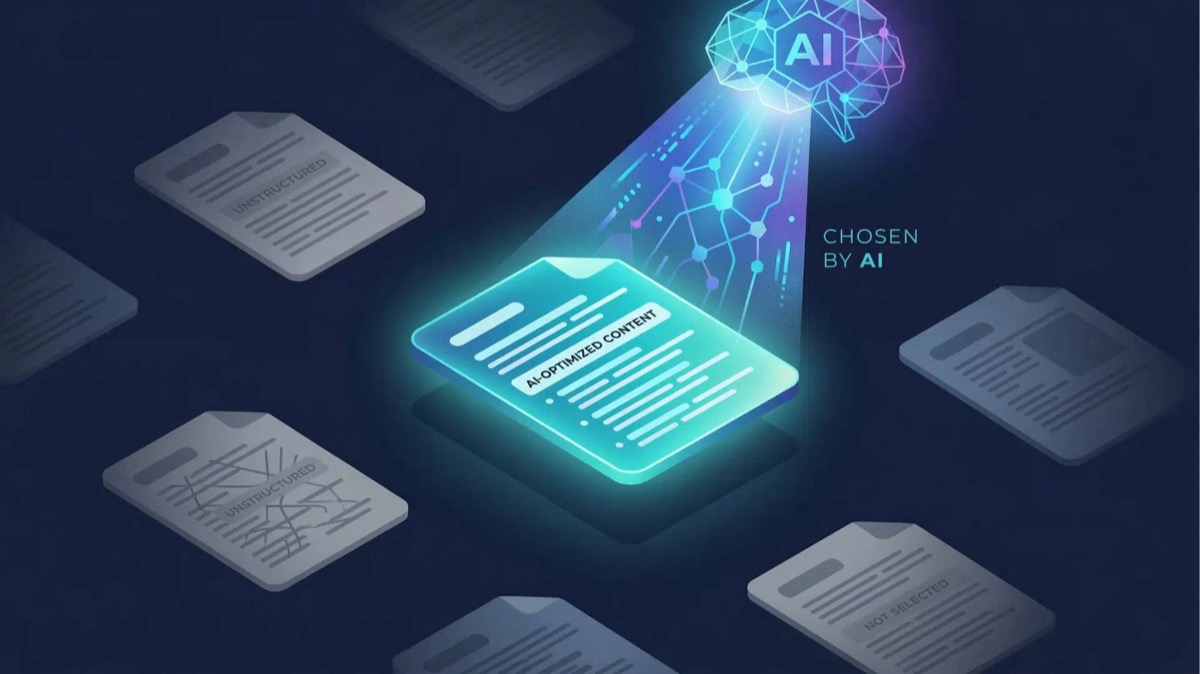
Understanding the trends is one thing. Knowing which platforms actually decide visibility is another. In May 2026, the AI search landscape has consolidated into a clear hierarchy, with each platform pulling in different audiences, different use cases, and different pools of citations. According to First Page Sage:
- ChatGPT: 60.6% market share, 800+ million weekly active users, ~5.3 billion monthly visits
- Gemini: 15.1% market share, 400 million monthly active users, 12% quarterly growth
- Microsoft Copilot: 12.5% market share, 33 million active users
- Perplexity: 5.4% market share, 22 million active users, 780 million monthly queries
- Claude: 5.0% market share, 18.9 million monthly users, 14% quarterly growth (fastest growing)
- Grok: 0.6% market share, integrated into X/Twitter's 600 million user base
- Google AI Overviews: overlays on 2 billion monthly Google users, expanding quarter over quarter
Three things stand out. First, ChatGPT's dominance is eroding. Its share dropped from 76.4% in January 2024 to 60.6% today. Second, the competitors are not converging on a single challenger. They are fragmenting into specialized niches. Third, every single platform showed positive quarterly growth, meaning the entire AI search category is expanding, not just reshuffling users. Appearing in ChatGPT alone, even at 60% share, means missing nearly 40% of the AI search audience. And the 40% you miss includes some of the highest-converting traffic available anywhere online.
ChatGPT: the default answer engine
ChatGPT remains the platform most people think of when they hear "AI search." It is the first place many consumers turn for product recommendations, service comparisons, and business research. Exposure Ninja reports that ChatGPT accounts for approximately 50% of all AI-driven referral traffic to websites. When ChatGPT recommends your business, people click through. When it does not, they go to whoever it does recommend.
But the cracks are showing. ChatGPT's share has fallen nearly 16 percentage points in just over two years. The platform that once held a near-monopoly now faces credible competition on every front: Google's distribution advantage, Perplexity's search-native design, Claude's enterprise traction, and Microsoft Copilot's integration into the Microsoft ecosystem that still dominates corporate desktops. The question every business should be asking is not whether ChatGPT matters. It obviously does. The question is whether ChatGPT cites your brand when a potential customer asks about your industry. Most businesses have never checked.
Gemini: the distribution powerhouse
Gemini's rise is the most significant shift in AI search this year. Its market share climbed from 5.4% to 15.1%, nearly tripling, driven almost entirely by Google's ability to embed Gemini into products that billions of people already use: Search, Android, Chrome, Gmail, and Workspace. Gemini has overtaken Perplexity to become the second-largest source of AI chatbot referral traffic globally, capturing 8.65% of all AI referral visits.
The implication is clear: you do not need to be the best AI to win in AI search. You need to be the most accessible. Google has mastered that playbook for two decades and is now applying it to generative AI. For brands, Gemini's rapid growth means AI visibility is no longer optional even if you think your audience "doesn't use AI." If they use Google (and 90% of the world does), they are increasingly encountering Gemini-generated answers whether they sought them out or not.
Perplexity, Claude, Microsoft Copilot, and Grok: the long tail that matters
It is tempting to dismiss the smaller platforms as rounding errors. That would be a mistake.
Perplexity processes over 780 million queries per month and has carved out a loyal niche among researchers, professionals, and early adopters who value sourced answers over conversational ones. Its users are disproportionately high-intent, actively researching decisions, not casually browsing.
Claude is the fastest-growing platform at 14% quarterly growth, with particular strength in enterprise and professional contexts. AI search traffic from Claude converts at 16.8%, the highest of any platform measured. That conversion rate alone makes Claude visibility worth pursuing, regardless of its share.
Microsoft Copilot holds 12.5% market share and sits inside Microsoft 365, Teams, and Edge, the software stack that hundreds of millions of knowledge workers use daily. Microsoft Copilot's AI answers reach people who never actively chose to use an AI search engine. They just opened their browser or asked a question in Teams.
Grok, integrated into X/Twitter's ecosystem of 600 million users, is the wildcard. Its market share is small but its cultural influence is outsized, particularly among tech-forward audiences and decision-makers who spend significant time on the platform.
Google AI Overviews: the silent kingmaker
While the chatbot platforms compete for share, Google AI Overviews may be the single most impactful force reshaping online visibility. AI Overviews now appear on roughly 26% of Google searches and climb higher every quarter. They push traditional organic results below the fold and replace them with AI-generated summaries citing select sources. The brands that get cited inside the Overview capture the visibility. Everyone else gets buried.
This is today's reality for two billion Google users. It makes the case that AI search visibility is not a separate channel from SEO. It is the next evolution of it. The brands that understand what triggers AI Overviews and structure their content accordingly hold a structural advantage over every competitor still optimizing exclusively for blue links.
Why multi-platform visibility is no longer optional

The data paints an unambiguous picture: there is no single AI search platform a brand can afford to ignore. The combined reach of ChatGPT, Gemini, AI Overviews, Microsoft Copilot, Perplexity, Claude, and Grok touches billions of users. Each platform uses different retrieval models, different ranking logic, and different citation criteria. What gets your brand cited in ChatGPT may not work for Perplexity. What appears in Google AI Overviews may be completely invisible to Claude.
And the gap between channels is significant. AI search traffic converts at 14.2% versus Google's 2.8%. Claude hits 16.8%. For businesses tracking ROI on channel visibility, the math is brutal: a single citation on a high-converting AI platform can be worth more than dozens of traditional organic rankings. A brand visible in ChatGPT but invisible in Perplexity is leaving some of the highest-converting traffic in digital on the table.
This multi-platform challenge is exactly what we test at SwingIntel. Every research engagement measures citation presence across nine AI engines (ChatGPT, Perplexity, Gemini, Claude, Google AI, Grok, Microsoft Copilot, DeepSeek, and Meta AI) with 108 citation prompts across 12 business categories, run separately for every target market. You see exactly which platforms cite your brand, which cite your competitors, and which cite nobody in your industry. Google AI Overview analysis, LLM Mentions tracking, Neural Search Discoverability, and AI Agent Search Visibility all run alongside, and the findings come back as a competitive strategy showing exactly where you lead, where you trail, and what gets fixed first.
Nine engines, 108 prompts, 12 categories, every market you serve: that is the depth it takes to see the whole picture rather than one corner of it. And because AI search shifts quarterly, as the market share data above proves, a baseline is where the work starts, not where it ends. What the research surfaces has to be fixed, and then kept fixed as the platforms move.
What AI engines cite: the domains that dominate 2026
Understanding who rules AI search is step one. Understanding what those engines actually cite is step two, and the picture is more concentrated, and more counterintuitive, than most brands realize. When a user asks ChatGPT for a recommendation, the answer does not come from thin air. It pulls from specific domains, and those domains are not distributed evenly. The top 10 sources account for 46% of all ChatGPT citations within a given topic, while the top 30 capture 67%. A small number of websites are shaping what AI tells hundreds of millions of users every day.
Five domains consistently appear at the top of every major 2025-2026 study: Wikipedia, YouTube, Reddit, LinkedIn, and Google's own properties. Together, they account for roughly 38% of all AI citations across platforms. But the rankings shift dramatically depending on which AI platform you examine.
Wikipedia remains the single most-cited source in ChatGPT, appearing in 7.8% of total citations and 47.9% of ChatGPT's top-10 source slots across the 680 million citations Profound analyzed. Its structured, fact-dense format is precisely what language models are built to extract from. Yet Wikipedia receives only 2-3% of Google AI Mode citations and just 0.8% of Perplexity citations. Same source, wildly different weight.
YouTube leads in citation volume overall. Lantern's February 2026 report found YouTube holds a 3.10% citation share (the highest of any single domain) and accounts for 29.5% of Google AI Overview citations. The correlation between YouTube presence and AI visibility is 0.737, the strongest measured for any platform.
Reddit surged 450% in AI citations between March and June 2025, reaching 46.5% of Perplexity citations and becoming a dominant source across every platform. Reddit is also the only major cited domain where traffic increased alongside citations.
LinkedIn is the fastest-growing citation source in 2026. ChatGPT Search, Google AI Mode, and Perplexity all cite LinkedIn content meaningfully more often than they did a year earlier. LinkedIn's domain rank on ChatGPT climbed from outside the top 10 in late 2025 to the top five by early 2026, a rise no other domain matched.
Citation patterns differ by platform
No two AI platforms cite the same way. A domain that dominates ChatGPT citations may barely register on Perplexity.
ChatGPT leans heavily on Reddit and Wikipedia. Before September 2025, these two sources accounted for roughly 60% and 55% of citations respectively, five times more than any other source. After a September algorithmic shift, Reddit dropped to approximately 10% and Wikipedia fell below 20%, redistributing citations toward Forbes, PRnewswire, and Medium.
Perplexity shows the most stability. Its top sources (Reddit, LinkedIn, NIH, Microsoft, and Google) showed minimal volatility over Semrush's 13-week study. Perplexity's retrieval system prioritizes real-time relevance over pre-trained knowledge, making it a more predictable platform for businesses to target.
Google AI Overviews and AI Mode show a distinct self-referential pattern. Google's own properties (blog.google, support.google.com) account for a combined 22.81% of all citations in AI Mode, a 43% self-referential bias. After Google's own domains, LinkedIn, YouTube, and Reddit are the most frequently cited.
The five traits of most-cited domains
Across every major 2025-2026 study, the domains that earn the most AI citations share five characteristics.
1. Independent validation over brand claims. AI platforms overwhelmingly prefer third-party sources over brand-created content. G2 and Capterra (software review platforms) combine for 1.66% of all AI citations, with G2 alone ranking second in Lantern's study. Sites with structured, independent reviews see 3x higher AI selection rates than sites with only self-reported claims.
2. Structured, extractable content architecture. YouTube has transcripts and structured metadata. Wikipedia has standardized sections and infoboxes. Reddit has threaded Q&A with voting signals. G2 has structured product profiles with normalized data fields. AI models extract information more reliably from content that follows predictable patterns: structured data and JSON-LD are the baseline.
3. Sustained authority built over years. Nine of Lantern's top 10 cited domains have been operating for more than a decade. Slashdot (founded 1997) and SourceForge (founded 1999) still appear in the top 10 despite being far less prominent in traditional search rankings. AI models weight accumulated authority (referring domains, content volume, sustained presence) more heavily than current SEO rankings.
4. High-volume topical focus. The most-cited domains are not generalists. YouTube dominates video. Reddit dominates peer discussion. G2 dominates software reviews. Each has deep, comprehensive coverage within its topic area rather than shallow coverage across many areas. Listicles account for 21.9% of AI-cited content formats, followed by articles at 16.7% and product pages at 13.7%.
5. Cross-platform recognition. Brands appearing across four or more platforms are consistently more likely to be cited by ChatGPT. This is not about traditional link building. It is about digital footprint breadth. A business mentioned on LinkedIn, reviewed on G2, discussed on Reddit, and covered by industry media creates a web of signals that AI models interpret as authority.
The citation paradox: more citations, less traffic
One of the most counterintuitive findings is the traffic paradox. Despite being heavily cited, most top domains are seeing traffic declines. Wikipedia experienced an 8% traffic decline even as its citation count grew. News publishers saw drops of 26-55%. Reddit is the sole exception, showing both citation growth and traffic growth.
This exists because AI citations function differently from search rankings. When ChatGPT cites Wikipedia in an answer, most users read the answer without clicking through. Zero-click interactions rose from 56% in 2024 to 69% by mid-2025. For businesses, this means the goal is not just being cited. It is being cited in a way that drives action. A citation that includes your brand name, product, and a specific recommendation is worth far more than a generic reference that users consume passively.
Where AI citations come from within a page
The studies also reveal that AI models do not weight all parts of a page equally. Citations cluster heavily in the opening third of a page and thin out toward the end, so a claim buried in a conclusion is far less likely to be extracted than the same claim in an introduction. Your most citable claims (the data points, recommendations, and authoritative statements you want AI to extract) should appear early, not buried at the bottom.
What this means for your business
The concentration of AI citations among a handful of domains and the fragmentation of the AI search market are not reasons to give up. They are a map showing where the opportunities are. Merging the recommendations from all three research streams into one prioritized playbook:
1. Audit your visibility across every major AI platform, not just Google. Check whether ChatGPT, Perplexity, Gemini, Claude, Microsoft Copilot, Grok, and the rest cite your brand for your core topics. A multi-platform citation analysis reveals blind spots that single-platform monitoring misses. Guessing does not count. Test with real prompts, real responses, across every engine that matters.
2. Shift your measurement framework from rankings to citations. Track brand mentions across AI platforms alongside traditional rankings. Optimize for featured snippets, knowledge panels, and AI Overview appearances: positions where your brand gets seen even if the user never clicks through. Invest in content that builds brand recognition within the answer itself.
3. Build presence on the platforms AI already trusts. LinkedIn, Reddit, G2, YouTube, and industry-specific review sites are the channels where AI finds sources. A LinkedIn article cited by ChatGPT in 14.3% of relevant queries is a more powerful asset than a blog post on your own domain that AI never discovers. Cross-platform authority is not optional.
4. Structure your content for extraction. Use consistent headings, clear data points, FAQ formats, structured markup. Lead with definitive statements. Place your strongest claims in the first 30% of every page. That is where AI models look first. Make your content easy for a parser to lift verbatim. Our AI visibility checklist covers the technical foundations.
5. Invest in E-E-A-T and proprietary data. Attach clear author profiles with credentials that demonstrate genuine expertise. Publish original research, unique metrics, or owned data that forces AI to cite you because the information cannot be found elsewhere. Thought leadership, industry commentary, and press coverage all feed the authority signals AI uses to decide who to recommend. Building website authority is now AI visibility strategy.
6. Ensure machine-readability at every level. Structured data, clear entity signals, transparent pricing, comprehensive specifications, and a clean llms.txt file. If an AI agent cannot parse your offering programmatically, you are invisible to agentic commerce, the fastest-growing discovery channel in digital. For the complete picture, see the AI search engine optimization guide.
The gap is widening
The distance between brands that have adapted to AI search and those that have not is becoming visible in business results. The traffic is not coming back to Google organic. ChatGPT's dominance is not returning to 76%. Reddit is not going to stop being cited. And AI Overviews are not shrinking.
Every quarter that a brand waits, the brands that moved first compound their advantage. They get cited more, which makes them more likely to be cited next time. They appear in LinkedIn posts that ChatGPT then cites, in Reddit threads that Perplexity then ranks, in review sites that every engine leans on. The flywheel favors the prepared.
The question is not whether AI search will affect your business. It already has. The question is whether you will shape how AI engines perceive your brand or leave that to chance.
Frequently Asked Questions
What's changed about search in 2026 that a business needs to understand?
Three things. First, AI Overviews appear in roughly 26% of Google searches (54.7% of long-tail queries), pushing traditional organic results below the fold. Second, search has fragmented across at least seven major AI platforms: ChatGPT (60.6% share), Gemini (15.1%), Microsoft Copilot (12.5%), Perplexity (5.4%), Claude (5.0%), Grok (0.6%), and Google AI Overviews on top of all Google queries. Third, Gartner predicts a 25% decline in traditional search volume by end of 2026. The traffic is not disappearing. It is migrating to AI answer engines that operate on different rules.
Which AI search platform should I prioritize first?
Start by testing visibility across ChatGPT (60.6% share) and Gemini (15.1%). Together they account for over 75% of the AI search audience. But multi-platform visibility is essential because each engine uses different retrieval models and cites different domains. A brand visible on ChatGPT may be completely absent from Perplexity or Claude, and Claude converts at 16.8%, the highest rate of any platform. Missing the smaller engines means missing disproportionately valuable traffic.
What's the difference between AI search rankings and citations?
Traditional search uses a ranking system where websites compete for positions 1 through 10. AI search has no rankings. Brands are either cited in the AI-generated answer or they are absent. There is no page two. This binary visibility model makes citations the primary metric for AI search success, and AI citation traffic converts at 14.2% compared to Google's 2.8%.
Why do heavily cited domains sometimes see traffic decline?
This is the citation paradox. Wikipedia's citations grew but its traffic declined 8%. News publishers saw drops of 26-55% despite being referenced more often. When an AI cites a source in its answer, most users read the answer without clicking through. Zero-click interactions rose from 56% in 2024 to 69% by mid-2025, and CTR on AI-Overview queries has dropped 61% year-over-year. Being cited is no longer the same as being visited. The goal is being cited in a way that drives action, with your brand name, product, and a specific recommendation inside the answer itself.
How can a small business compete for AI citations against Wikipedia, YouTube, or Reddit?
Focus on the platforms AI already trusts rather than competing head-on with general authority sites. Publish on LinkedIn, participate in Reddit threads relevant to your industry, earn G2 or Capterra reviews, produce YouTube content with transcripts, and contribute to industry-specific directories. Structure your own site for extraction: consistent headings, FAQ formats, clear data points, front-loaded claims in the first 30% of every page. Brands appearing across four or more platforms are consistently more likely to be cited by ChatGPT, and brands with 32,000+ referring domains are 3.5x more likely to be cited than those with 200. Cross-platform digital footprint beats raw domain authority.
What is agentic search and does it matter for non-ecommerce businesses?
Agentic search refers to AI systems that do not just retrieve information but act on it: comparing products, evaluating services, and increasingly completing transactions within the conversation. 75% of NRF 2026 attendees reported implementing or planning agentic commerce. For non-ecommerce businesses, the parallel trend is agent-driven research: AI agents summarize, compare, and recommend service providers based on content they retrieve autonomously. If your site is not machine-readable (structured data, clear entity signals, parseable specifications), you are invisible to the AI agents already making recommendations on your customers' behalf.
Ready to know exactly where your brand stands across nine AI platforms, AI Overviews, neural search, and agentic visibility? Request a consultation for SwingIntel's AI Visibility Research and get the complete picture: real citation data, real AI responses, and a prioritized roadmap for the gaps that are costing you customers right now. Then we close them.