Four acronyms. Two conference tracks. A growing wall of vendors, each selling the discipline they named. And almost no agreement on what any of it actually means.
If you have spent any time researching how to make your brand visible in AI search results, you have encountered SEO, AEO, GEO, and LLMO often used interchangeably, sometimes contradicting each other, and rarely defined in relation to one another. The marketing industry generated the acronyms faster than it built consensus on what they describe.
This guide cuts through the noise. It covers what each term actually means, how AI search differs from the traditional search we spent two decades learning, where the four disciplines genuinely diverge, where they converge, and most importantly how to build a single strategy that earns visibility across every surface that matters in 2026.
The stakes are concrete. 31.3% of the US population is projected to use generative AI search in 2026. Gartner projects a 25% decline in traditional search volume by the end of 2026. Google AI Overviews now appear in a quarter of searches and nearly cut clicks to top-ranking links in half. A generation of buyers is starting their research on ChatGPT before they ever open a browser.
The acronym you choose matters far less than whether you are actively optimizing for AI search at all.
Key Takeaways
- SEO, AEO, GEO, and LLMO describe overlapping but distinct optimization strategies SEO targets search engine rankings, AEO targets direct answers, GEO targets AI-generated citations, and LLMO targets how large language models comprehend and represent your brand.
- Traditional search returns ranked links; AI search generates synthesized answers where your brand is either cited or entirely absent there is no page two, and most AI search sessions end without a website click.
- AI search is fragmented across 9+ platforms (ChatGPT, Perplexity, Gemini, Claude, Google AI Overview, Grok, Copilot, DeepSeek, Meta AI) unlike Google's 90%+ traditional search monopoly.
- The tactical overlap across AEO, GEO, and LLMO is roughly 70–80% structured data, entity authority, citation-ready content but they diverge on platform scope, content strategy, and measurement.
- Content enriched with specific statistics and attributed sources earns up to 40% higher visibility in generative engine responses, per the Princeton-led GEO research one of the strongest signals measured.
- For most businesses in 2026, the right answer is not one acronym it is a unified AI visibility strategy built on SEO fundamentals, measured separately per channel.
What Each Acronym Actually Means
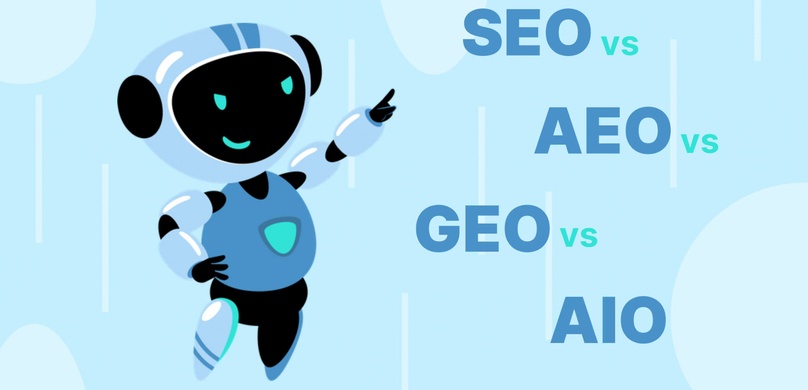
Before untangling the differences, the four terms need clean definitions. Most confusion comes from treating them as synonyms when each optimizes for a different output.
SEO Search Engine Optimization
The original. SEO is the practice of optimizing web pages to rank higher in search engine results primarily Google. It focuses on keywords, backlinks, technical site health, and content relevance. SEO has been the foundation of digital marketing for over two decades, and it is not going anywhere Google still processes more than 5 trillion searches per year, roughly 13 billion every day.
SEO operates on well-established signals: keyword relevance, backlink authority, page speed, mobile responsiveness, technical crawlability, and content quality. Success is measured by rankings, organic traffic, click-through rates, and conversions. The model is incremental moving from position eight to position four delivers measurable gains. Every position improvement captures more traffic.
What SEO does not do: guarantee that your content gets cited, summarized, or even acknowledged by AI platforms like ChatGPT, Perplexity, or Google AI Overviews. Ranking number one on Google does not mean an AI agent will mention your brand when answering a related question.
AEO Answer Engine Optimization
Answer Engine Optimization is the practice of structuring content so AI-powered platforms select and cite it when generating direct answers to user queries. AEO emerged when Google began surfacing featured snippets and knowledge panels positions where one source becomes the answer rather than one of ten links. It grew out of the featured snippet era; in 2026 its scope has expanded to voice assistants, Google AI Overviews, and any platform that delivers a single synthesized answer.
The core principle remains consistent: format your content so an answer engine can extract a clear, authoritative response and attribute it to you. AEO focuses on direct-answer formatting, featured snippet capture, knowledge panel optimization, and voice-search-ready conversational queries.
GEO Generative Engine Optimization
Generative Engine Optimization is the practice of structuring your content, authority signals, and digital presence so AI search engines ChatGPT, Perplexity, Gemini, Claude, and others retrieve and cite your brand when generating multi-paragraph responses.
The term was formalized by researchers at Princeton, Georgia Tech, the Allen Institute for AI, and IIT Delhi, who demonstrated that specific content techniques statistical enrichment, explicit source citation within content, and quotation inclusion boosted source visibility in generative engine responses by up to 40%. That research gave GEO a structured theoretical foundation the other acronyms lack.
The critical distinction: GEO targets citation within synthesized AI responses, not ranking positions or extracted snippets. An AI engine reads hundreds of sources, synthesizes one answer, and cites only 2–7 domains per response. GEO is about being one of those 2–7.
LLMO Large Language Model Optimization
LLMO focuses specifically on making content comprehensible, extractable, and accurately representable by large language models. Where GEO targets the AI search experience, LLMO targets the models themselves ensuring that when an LLM processes your content, it can accurately interpret, summarize, and reference it.
In practice, LLMO and GEO overlap by approximately 80%. The same techniques entity clarity, structured data, factual density, topical authority serve both objectives. LLMO originated from practitioners rather than academia, and the functional distinction is primarily one of framing rather than execution. LLMO practitioners tend to focus more on training-data presence and model-level brand representation; GEO practitioners focus more on real-time retrieval and citation.
AI Search vs Traditional Search: Six Differences That Matter
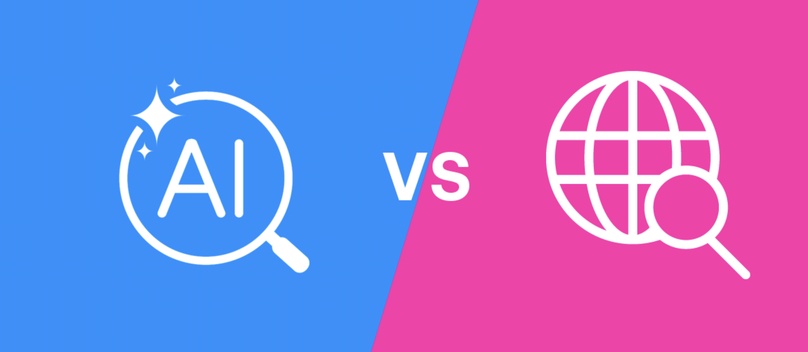
Understanding the four acronyms requires understanding why they exist at all. Traditional search and AI search now coexist as two fundamentally different discovery models, and the rules that governed one do not automatically apply to the other.
1. Answers vs. Links
Traditional search returns a list of links. You click one, visit a page, and find the information yourself. The search engine is a directory it points you somewhere.
AI search generates an answer. The AI reads, synthesizes, and summarizes content from multiple sources, then delivers a direct response. The user often never clicks through to any website at all. In traditional search, getting your link onto page one was enough the user would come to you. In AI search, the AI brings your information to the user. If the AI doesn't extract content from your site, you don't exist in that interaction.
2. Citations vs. Rankings
In traditional search, success means ranking position 1, 3, or 10. Visibility is measured by where you appear in the list, and even lower positions get some traffic.
In AI search, success means being cited. When an AI agent answers a query, it may reference specific sources. A citation is an endorsement the AI is telling the user "this source informed my answer." Being cited carries an implicit trust that a numbered link position never did.
The critical difference: there is no page two in an AI response. You're either cited or you're absent. A website ranking position 11 in Google still exists users can scroll to it. A website not cited by ChatGPT simply doesn't appear. This binary visibility model means the stakes are higher and the margin for error is smaller. Our structured AI citation playbook covers exactly how to earn those citations across each platform.
3. Multi-Platform vs. Single Dominant Platform
Traditional search has been a near-monopoly. Google holds over 90% of global search market share, according to StatCounter. Optimizing for Google meant optimizing for search.
AI search is fragmented across multiple platforms ChatGPT, Perplexity, Gemini, Claude, Google AI Overview, Grok, DeepSeek, Microsoft Copilot, and Meta AI each have different data sources, retrieval methods, and citation preferences. A website visible on Perplexity may be completely invisible on ChatGPT. Google AI Overview pulls from different signals than Claude. Independent studies have found only modest domain overlap between Google AI Overview citations and Google AI Mode citations and that is within the same company's products. Cross-platform overlap is even smaller.
SwingIntel's AI Readiness Audit tests across all nine major AI platforms precisely because single-platform visibility is no longer enough.
4. Semantic Understanding vs. Keyword Matching
Traditional search engines match keywords. Despite years of algorithm updates, the fundamental model is still built around matching the words in a query to the words on a page. Keyword research, keyword placement, and keyword density remain core practices.
AI search engines parse meaning. They use large language models to understand what content says, not just which words it contains. A page about "affordable accounting software for freelancers" can be surfaced by an AI agent in response to the query "what tools do independent contractors use to manage their finances?" even though none of those keywords overlap.
Content optimized purely for keyword matching may underperform in AI search, while content written for clarity and factual completeness may outperform its traditional ranking position. The 10 steps to optimize content for AI search break down how to restructure content for this semantic model.
5. Structured Data vs. Backlink Authority
In traditional SEO, backlinks are a primary trust signal. The more authoritative sites that link to your page, the higher it ranks. Link building has been a core SEO discipline for two decades.
In AI search, structured data carries disproportionate weight. JSON-LD schema markup, clear heading hierarchies, and machine-readable content organization help AI agents understand what your page is about, what entities it references, and what facts it contains. Schema.org structured data acts as a translation layer between your content and the AI's understanding.
This doesn't mean backlinks are irrelevant they still influence traditional rankings, and many AI platforms use traditional search results as an input. But a website with excellent structured data and clear content will outperform a heavily linked but poorly structured competitor in AI citation results.
6. Real-Time Evaluation vs. Cached Indexing
Traditional search engines crawl and index the web on a schedule. Your page is cached, and changes take days or weeks to reflect in rankings. The index is a snapshot.
AI search engines increasingly evaluate content in real time. Platforms like Perplexity and Google AI Overview can access and cite content that was published hours ago. Some AI agents retrieve and process pages on the fly during the query, rather than relying on a pre-built index.
This creates both an opportunity and a pressure. New content can gain AI search visibility much faster than traditional search rankings allow. But outdated or contradictory content on your site can also be cited in its current state there is less buffer time to fix errors before they appear in AI responses.
Where AEO, GEO, and LLMO Actually Diverge

With the macro picture clear, the distinctions between the three AI-focused disciplines come into focus. The differences are real, even if the tactics overlap significantly.
Scope of Platforms
AEO historically optimizes for answer features within search engines primarily Google. Featured snippets, knowledge panels, People Also Ask boxes, and now AI Overviews are all answer-engine surfaces. The optimization target is a single platform ecosystem.
GEO optimizes across the entire generative AI landscape. Each platform ChatGPT, Perplexity, Gemini, Claude, Copilot, Grok, DeepSeek, Meta AI has different retrieval mechanisms and citation patterns. A brand cited consistently by Perplexity may be invisible to ChatGPT.
LLMO overlaps with GEO but concentrates on model-level comprehension: ensuring LLMs can build an accurate internal representation of your brand, products, and expertise, regardless of which retrieval layer sits on top.
Content Strategy Emphasis
AEO content strategy centers on winning specific answer positions. The content goal is to provide the single best answer to a specific question concise, authoritative, and extractable.
GEO content strategy is broader. Generative engines do not select one source per answer they synthesize across multiple sources and cite several. The goal is not to be the answer, but to be one of the three to five sources the AI trusts enough to cite. This requires topical depth, consistent entity signals, and content that AI models can chunk and reference across different parts of a generated response.
LLMO strategy is closest to GEO but emphasizes entity establishment across every source an LLM might encounter your website, third-party reviews, industry mentions, Wikipedia references, structured data so the model's representation of your brand is coherent wherever it reads.
Academic and Industry Lineage
AEO evolved organically from SEO practice practitioners noticed that featured snippets required different optimization and gave the approach a name. It is a practitioner-driven discipline.
GEO has academic roots. The Princeton GEO paper provided a research framework that the industry adopted. This gives GEO a more structured theoretical foundation, but it also means the term carries assumptions about how generative retrieval works that may not perfectly match every platform's actual architecture.
LLMO, like AEO, grew from practitioner vocabulary. Its value is conceptual a reminder that optimizing for a search interface (GEO) is not the same as optimizing for the underlying model's comprehension.
How Success Is Measured
AEO success has traditionally been measurable through existing SEO tools: featured snippet capture rates, knowledge panel presence, position-zero rankings. These metrics fit neatly into existing marketing dashboards.
GEO and LLMO success require entirely new measurement approaches. Citation frequency across AI platforms, mention rates in LLM responses, brand visibility in AI-generated answers, sentiment analysis of how models represent your brand none of these map to traditional analytics. Most Google AI Mode searches end without a click, making traffic-based measurement nearly irrelevant for the generative channel.
SEO vs. AI Optimization: The Comparison That Matters Most
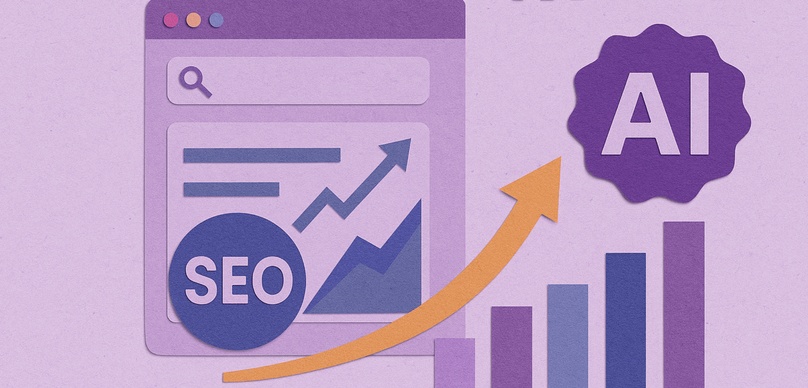
The honest assessment: GEO and LLMO are functionally identical for most marketing teams. The 20% difference lies in edge cases. The more meaningful distinction is between traditional search optimization (SEO) and AI search optimization (AEO/GEO/LLMO). That is where strategy genuinely diverges.
| Dimension | SEO | AI Search Optimization (AEO/GEO/LLMO) |
|---|---|---|
| Target platforms | Google, Bing (link-based search) | ChatGPT, Perplexity, Gemini, Claude, Google AI Overview, Grok, Copilot, DeepSeek, Meta AI |
| Goal | Rank higher in search results | Get cited in AI-generated answers |
| Content model | Keyword-optimized pages that earn clicks | Fact-dense, structured content that AI models extract, cite, and comprehend |
| Visibility model | Incremental (position 1–100) | Binary (cited or invisible) |
| Key signals | Backlinks, keywords, page speed, domain authority | Structured data, factual density, source attribution, entity clarity |
| Query length | Short keyword phrases (average ~4 words) | Conversational prompts (average ChatGPT non-search prompt is 13.5 words) |
| User interaction | User clicks through to your site | User reads the AI answer may never visit your site |
| Measurement | Rankings, organic traffic, CTR | Citation frequency, brand mentions, AI visibility across platforms |
| Competitive dynamic | Top 10 results share traffic | Top 2–7 cited sources capture all visibility |
What AI Search Demands That Traditional SEO Never Addressed

Traditional SEO built the foundation AI search depends on crawlability, site speed, structured data, backlinks all carry over directly. Without a technically sound website, AI engines cannot find, read, or trust your content. If your traditional SEO foundation is weak, AI optimization will not save you.
But AI search introduces entirely new requirements that traditional SEO never had to solve.
Content chunking. AI engines extract and cite individual sections of a page, not the full article. Each H2 section needs to be self-contained and independently citable a complete answer to a specific question. Traditional SEO rewarded comprehensive, long-form pages. AI SEO rewards pages where every section stands on its own.
Direct, quotable statements. AI engines need clear factual sentences they can extract verbatim. "SwingIntel's AI Readiness Audit runs 19 checks across structured data, content clarity, and technical signals" is citable. "We run comprehensive checks across multiple areas" is not. Write sentences AI can quote directly.
Multi-platform visibility. Traditional SEO means one platform. AI SEO means nine or more, each with different retrieval methods, different training data, and different citation patterns. Optimizing for one does not mean the rest follow.
Entity establishment. AI engines build an internal model of your brand from every signal they can find. Your Google Business Profile, Wikidata entries, industry directory listings, third-party reviews, and structured data all feed this model. Traditional SEO cared about links. AI SEO cares about entity coherence whether every source tells the same story about who you are.
Conversational intent modeling. Traditional SEO targets specific keyword phrases "best running shoes 2026." AI SEO targets the full intent behind a conversational query. The average ChatGPT non-search prompt runs roughly three times longer than a typical Google search. AI engines interpret meaning, so your content needs to answer the underlying question comprehensively, not just match the surface keywords.
Freshness at AI speed. Pages updated within the last three months earn materially more AI citations than older pages. AI models weight recency heavily content refresh strategy is not optional.
What Actually Drives AI Visibility
Regardless of which acronym you prefer, the optimization techniques that make your brand visible to AI platforms are well-established. Six signals do most of the work:
1. Structured data is non-negotiable. JSON-LD schema markup (Organization, Article, Product, FAQ, HowTo) gives AI engines machine-readable context about your content. Every strategy on the spectrum SEO, AEO, GEO, and LLMO benefits from comprehensive schema.
2. Entity clarity beats keyword density. AI models parse content for meaning, not exact keyword matches. Define your brand, products, and expertise clearly so models can build accurate entity representations. This is where LLMO-specific thinking has genuine value.
3. Factual density increases citation probability. The Princeton-led GEO research confirmed it: content enriched with specific statistics and citations to authoritative sources receives up to 40% higher visibility in AI-generated responses. Brands are 6.5x more likely to be cited through third-party sources regardless of which platform does the citing.
4. Freshness signals matter. Pages updated within three months earn roughly twice as many AI citations as older content. Recent industry analyses consistently find that freshly updated content outperforms outdated pages in both featured snippets and ChatGPT responses.
5. Topical authority compounds. AI models evaluate your entire domain's authority on a topic, not just individual pages. Building interconnected content clusters where each piece links to and reinforces related content is essential for both GEO and traditional SEO.
6. Multi-platform presence creates resilience. Citation share varies dramatically across AI platforms what appears prominently on one engine may be absent from another. Brand visibility can swing meaningfully even across identical queries on the same platform. A search everywhere approach is the only way to build consistent visibility.
How to Measure Each Channel
Traditional SEO metrics (rankings, impressions, CTR) do not capture AI search performance. Each strategy requires its own measurement framework.
For SEO: Rankings, organic traffic, click-through rates, and conversions from search. Tools are mature Google Search Console, rank trackers, standard analytics suites.
For AEO: Featured snippet wins, voice search appearances, knowledge panel presence, and AI Overview inclusion. Many existing SEO tools have extended into AEO territory.
For GEO/LLMO: Citation rates across AI platforms, brand mention frequency in AI-generated responses, and sentiment analysis of how models represent your brand. This requires dedicated AI visibility monitoring traditional SEO tools cannot measure it. There is no equivalent of Google Search Console for ChatGPT citations. The most direct method is systematic citation testing: querying AI platforms with relevant prompts and tracking whether your brand appears.
The volatility of AI citations makes measurement particularly challenging. AI Overview content can change substantially between identical queries, and brand visibility in AI answers can swing week over week without ongoing optimization. This is not a set-and-forget channel.
Which Strategy Should You Prioritize?

The right split depends on your business, your audience, and how your customers actually search. But the strategic question is rarely "choose one." It is "where to weight the effort."
If you have strong SEO but no AI visibility: Start with GEO. You already have the content foundation structured data, topical authority, high-quality pages. GEO builds on those assets by optimizing how AI platforms interpret and cite them.
If you are starting from scratch: Start with SEO fundamentals. Domain authority, technical health, and content quality are prerequisites for every strategy on this list. AI platforms disproportionately cite high-traffic domains domain traffic is the single strongest predictor of AI citations.
If your audience is AI-native (Gen Z, early adopters, tech professionals): Prioritize GEO and AEO together. These users are already searching on ChatGPT and Perplexity. A majority of US marketers now plan to implement GEO within the coming months if you are not among them, your competitors likely are.
If you sell complex or high-consideration products: Focus on AEO first. Buyers of complex products ask detailed questions that AI platforms answer by synthesizing multiple sources. Being the authoritative source for those answers directly influences purchase decisions.
If your revenue depends on transactional queries ("buy," "pricing," "near me"): Keep weighting toward SEO. Local search, Google Maps, and local-pack results still dominate purchase-intent traffic.
If you compete on expertise and thought leadership: Weight toward GEO and LLMO. Brand perception and recommendation carry more weight than direct traffic in these categories. AI citations are a trust signal that compounds over time.
For most businesses in 2026, the right answer is all four, layered in the right order: SEO as the foundation, AEO for structured direct answers, GEO for multi-platform citation, LLMO to ensure the model-level representation is coherent. The tactical overlap is large enough that a unified strategy costs less than running parallel programs and delivers better results.
Building a Unified AI Visibility Strategy
Rather than choosing between acronyms, build a foundation that serves all four:
-
Audit your current AI visibility. Before splitting resources, understand where you actually appear and where you do not. Test how AI platforms currently cite your brand across answer engines and generative engines simultaneously.
-
Fix the technical foundation first. Crawlability, site speed, canonical tags, and indexing. These affect every downstream channel. A free AI readiness scan takes 30 seconds and shows you where your technical foundation stands.
-
Add comprehensive structured data. JSON-LD schema is the single highest-leverage investment for AI visibility. Start with Organization, Product, FAQ, Article, and HowTo schemas. It helps Google understand your content better and gives AI engines the context they need to cite you accurately.
-
Restructure content for extraction and synthesis. Lead each section with a clear, factual statement that answers a specific question. AI models extract the first definitive answer they find. Use statistics with attributed sources. Make every H2 section independently citable.
-
Build entity authority broadly. Knowledge graph presence, consistent NAP data, third-party mentions, authoritative backlinks, Wikidata entries, industry directories. AI engines cross-reference these sources to build confidence in your brand identity.
-
Measure each channel on its own terms. Track rankings and traffic for SEO. Track featured snippet capture and knowledge panel presence for AEO. Track citation frequency, mention rates, and brand visibility across AI platforms for GEO and LLMO. Do not try to force all four into the same KPI framework.
-
Test across platforms regularly. AI citation patterns shift constantly. What works on ChatGPT this month may not work next month. Google AI Overview citations do not predict Perplexity citations. Regular multi-platform testing is the only way to maintain visibility.
The Bottom Line
SEO, AEO, GEO, and LLMO are not competing strategies they are layers of the same visibility stack. SEO is the foundation. AEO structures content for direct answers. GEO optimizes for AI citations. LLMO ensures models represent your brand accurately. Most businesses need all four, weighted by where their audience searches.
AI referral traffic is still a small share of total website traffic but those visitors convert at materially stronger rates than standard organic visitors because they arrive already persuaded by the AI. Fewer visitors, dramatically higher value per visit. Most AI search sessions end without a website click which means the citation is the conversion event, not the click.
The brands treating AI search optimization as a future priority are already behind. The brands implementing it today regardless of whether they call it GEO, AEO, LLMO, or simply "AI visibility" are capturing the traffic their competitors cannot see. The terminology debate will continue. What matters is whether your content appears when AI platforms answer questions about your industry.
Frequently Asked Questions
Are AEO, GEO, and LLMO the same thing?
No, but they share roughly 70–80% of their tactical requirements. AEO focuses on direct-answer features within search engines, primarily Google. GEO targets citation across the broader generative AI ecosystem ChatGPT, Perplexity, Gemini, Claude. LLMO focuses on how models comprehend and represent your brand. The foundation structured data, entity authority, citation-worthy content serves all three.
Do I need to choose between SEO and AI search optimization?
No. For most businesses in 2026, the answer is both. AI platforms still draw from web crawling data and search indexes, so strong SEO directly supports AI visibility. The key is structuring content to perform in both systems: maintaining traditional search fundamentals while adding extractable facts, statistical enrichment, and structured data AI models can cite.
Can I rank #1 on Google and still be invisible to AI search engines?
Yes. Traditional search rankings and AI citations are measured differently and driven by different signals. A page can hold the top Google position for a keyword while being completely absent from ChatGPT, Perplexity, and Gemini responses for the same topic. AI engines evaluate entity reputation, content structure, and citation patterns not just keyword relevance and backlink authority.
What is the biggest difference between traditional SEO and AI search optimization?
Traditional SEO optimizes individual pages for keyword rankings in a list of ten results. AI search optimization builds entity authority how AI models understand your brand as a whole across your website, third-party reviews, industry mentions, and structured data. In AI search, there is no ranked list you are either cited in the generated answer or absent entirely.
How do I measure AEO vs. GEO vs. LLMO performance?
AEO performance maps to existing SEO metrics: featured snippet capture rate, knowledge panel presence, AI Overview inclusion. GEO and LLMO performance require AI-specific measurement: citation frequency across LLM platforms, mention rates, and brand visibility in AI-generated responses. The SwingIntel AI Readiness Audit tests all three simultaneously across 9 AI platforms.
What does Princeton's GEO research actually say?
The Princeton GEO paper found that content optimized with specific techniques citation density, definition-lead formatting, statistical enrichment achieves up to 40% higher visibility in generative engine responses. This research formalized GEO as a distinct discipline and provided the empirical foundation for many GEO best practices.
Do backlinks still matter for AI search visibility?
Backlinks still influence traditional rankings, and many AI platforms use traditional search results as an input for retrieval. However, structured data carries more weight than backlinks in AI search specifically. A website with excellent JSON-LD schema and clear content will outperform a heavily linked but poorly structured competitor in AI citation results.
How does AI search handle content freshness differently from traditional search?
Traditional search engines crawl and index pages on a schedule changes take days or weeks to reflect. AI search engines increasingly evaluate content in real time, retrieving and processing pages during the query itself. New content can gain AI visibility much faster, but outdated content can also be cited in its current state with less buffer time to fix errors.
Want to know exactly where your brand stands across all nine major AI platforms? SwingIntel's AI Readiness Audit tests your visibility across ChatGPT, Perplexity, Gemini, Claude, Google AI, Grok, Microsoft Copilot, DeepSeek, and Meta AI with thousands of citation tests, competitive benchmarking, and a strategic roadmap for improving your AI search presence. Or run a free AI scan in 30 seconds to see how your website performs across the structured data, content clarity, and technical signals AI platforms evaluate.