Shopify powers over five million active online stores and the vast majority of them are invisible to the places customers actually look in 2026. Google is still the largest search engine on earth, but it is no longer the first stop. Shoppers now ask ChatGPT what to buy, check Perplexity for comparisons, let Gemini summarize reviews, and increasingly hand the entire purchase to an AI agent. If your Shopify store is only optimized for the old SERP, you are optimized for the smaller half of commerce.
This guide is a single, end-to-end playbook for Shopify merchants who want to fix that. It walks through the boring-but-essential setup, the on-page and technical work that actually moves rankings, the branded GEO framework that controls what AI platforms say about your store, and the loyalty architecture that keeps both humans and agents coming back. Whether you just opened a store this week or you have been running one for years without thinking about AI, it covers everything you need.
Key Takeaways
- Shopify handles many technical SEO basics automatically (SSL, sitemaps, canonical tags, mobile responsiveness), but keyword research, product descriptions, and comprehensive structured data still require manual work.
- AI Overviews now appear in a substantial share of Google results, Gartner expects a 25% drop in conventional search queries as users shift to AI, and ChatGPT has crossed 800 million weekly users and is still climbing so optimizing only for traditional SEO leaves the fastest-growing discovery channel on the table.
- Branded GEO the discipline of managing how AI platforms describe your brand is defensive where general GEO is offensive, and it depends on three pillars: content authority, semantic clarity, and narrative consolidation across third-party sources.
- Nearly 60% of US consumers already use AI platforms for shopping research, roughly a third would prefer to buy directly inside AI interfaces, and Morgan Stanley projects nearly half of online shoppers will use AI shopping agents by 2030 so loyalty has to work for both humans and algorithms.
- Stores that publish comprehensive structured data (Organization, Product, Offer, FAQ, Review, BreadcrumbList) consistently get cited more often, because AI engines extract facts rather than infer them from marketing copy.
Why Shopify in the AI Era Is a Different Game
Google still processes billions of searches per day, and AI Overviews now appear in a substantial share of those results, with measured frequencies ranging widely depending on the query category. Meanwhile, AI platforms like ChatGPT, Perplexity, Gemini, and Claude are answering product questions directly often recommending specific stores and brands without the shopper ever loading a search results page. Gartner predicts a 25% drop in conventional search volume by the end of 2026 as buyer research shifts into AI chat.
The consequence for Shopify merchants is simple and uncomfortable. In 2026, being "on page one of Google" is only half the job. The other half is being readable, structured, and authoritative enough that AI systems choose to surface your products and describe them correctly when they do. Stores that treat SEO as a box-ticking exercise will lose ground to competitors optimizing for both audiences at once.
The good news is that Shopify handles a real chunk of the technical fundamentals out of the box: SSL, mobile-responsive themes, XML sitemaps, and self-referencing canonical tags. The bad news is that none of that does the work that actually wins citations and agent recommendations. The platform will not write your product descriptions, refine your keyword targeting, or structure your data for AI extraction. That is where the rest of this guide comes in.
Foundations: Get the Shopify Setup Right
Before you touch a single product page, get the boring stuff right. These settings affect every page on your store and are easy to overlook.
Custom domain. If you are still using yourstore.myshopify.com, you are signaling to search engines and AI platforms that this is a hobby, not a business. Register a short, memorable, category-relevant domain. Shopify lets you buy one directly or connect a domain from any registrar.
Google Search Console and Analytics. Connect Google Search Console to monitor how Google sees your site, and Google Analytics 4 to track visitor behavior. Without both, you are optimizing blind. Search Console shows which queries bring traffic, which pages are indexed, and where errors exist you need this data before making any optimization decisions.
Site structure. Keep your hierarchy flat no page should be more than three clicks from the homepage. A clean Home → Collection → Product structure helps search engines crawl efficiently and helps AI agents understand the relationships between your pages. Deeply nested categories punish both.
Page speed. Google measures performance through Core Web Vitals, and slow stores lose both rankings and conversions. Compress images before uploading, limit the number of installed apps (each one adds JavaScript), and choose a lightweight theme. Shopify's Dawn theme is built for speed and makes a strong starting point.
On-Page SEO for Product and Collection Pages

Every product and collection page is a potential entry point from search and a potential citation target for AI. Optimize each one individually; this is where most beginners see the fastest movement.
Title tags. Keep them under 60 characters so they display fully. Put your primary keyword near the beginning. A reliable pattern: [Product Name] [Key Benefit] | [Store Name]. Avoid stuffing multiple keywords into one title it reads poorly and gets penalized.
Meta descriptions. Write unique descriptions of 120–160 characters for every product and collection. Include the target keyword naturally and give the searcher a reason to click. Shopify auto-generates descriptions from your product body if you leave them blank, but auto-generated text rarely converts as well as a crafted one.
Product descriptions. Write at least 150–300 words per product, with the primary keyword within the first 100. Describe features, benefits, and use cases in clear language. Never copy manufacturer descriptions duplicate content hurts rankings and gives AI agents nothing unique to cite about your store.
Image alt text. Every product image needs descriptive alt text that includes relevant keywords where natural. Edit it directly in the Shopify product image settings. Alt text helps search engines understand your images, makes your store accessible to screen readers, and gives AI systems additional context to work with.
URLs. Shopify auto-generates URLs from page titles. Edit them to be short and keyword-rich /collections/leather-wallets is better than /collections/mens-premium-handcrafted-italian-leather-wallets-2026. Clean URLs are easier for search engines to parse and for AI agents to interpret.
Technical SEO Essentials for Shopify
Most technical elements are handled by the platform, but a few deserve your attention.
Robots.txt. Shopify blocks checkout pages and internal search results by default. Since June 2021, merchants can customize robots.txt through the robots.txt.liquid template. Review yours to make sure you are not accidentally blocking anything important.
Canonical tags. Shopify adds self-referencing canonicals by default, which prevents the classic duplicate-content problems that come with URL parameters and collection-based product URLs. This is a genuine strength platforms without automatic canonicals often suffer ranking penalties for the same inventory.
Structured data. Most Shopify themes output basic Product schema, but coverage is often incomplete. We cover this in depth in the section on structured data below and it is by far the highest-leverage investment you can make for AI visibility.
Sitemap. Shopify auto-generates a sitemap at /sitemap.xml and submits it to search engines. Verify in Search Console that it is being read correctly and that indexing errors are not quietly piling up.
Content Strategy: Using Shopify's Built-In Blog
A surprising number of Shopify store owners ignore the built-in blogging feature entirely. This is a mistake. A blog gives you pages that can rank for informational queries the questions your customers ask before they are ready to buy.
If you sell running shoes, write posts answering "how to choose running shoes for flat feet" or "best running shoes for beginners." These posts attract visitors who are not yet searching for a specific product but are actively researching. Internal links from blog posts to your product and collection pages pass authority and guide readers toward purchase.
Publish consistently even one well-researched post per week compounds over time. Each post is a new indexed page, a new opportunity to rank, and critically in 2026 a new piece of content that AI agents can discover and cite when answering related questions.
Branded GEO: Controlling What AI Says About Your Shopify Brand
Here is the uncomfortable part. You can do everything above perfectly and still have ChatGPT describe your brand in a way you never approved.
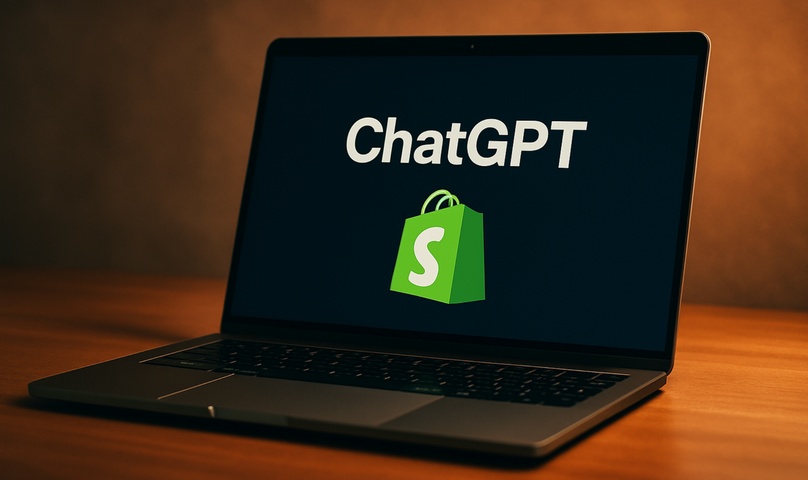
Your Shopify store has a carefully crafted story. Your About page says exactly what you want it to say. But when a potential customer asks ChatGPT "What does [your brand] do?" or Perplexity "Is [your brand] any good?", the answer they get is not pulled from your About page. It is assembled from fragments scattered across the internet reviews, forum threads, news articles, directory listings, competitor comparisons and synthesized into a narrative you never approved.
This is the branded GEO problem, and it is growing fast. As AI search engines replace traditional Google queries for an increasing share of buyer research, the AI-generated description of your brand is becoming the first impression for millions of potential customers. If you are not actively managing that impression, someone or something else is.
What Branded GEO Is (and Isn't)
Standard Generative Engine Optimization (GEO) is the practice of structuring content so AI platforms cite your brand when answering topic-level queries. If a shopper asks "What is the best handmade leather wallet brand?", GEO helps your store appear in the answer.
Branded GEO is narrower and more defensive. It focuses on queries that mention your brand by name "What is [Brand]?", "Is [Brand] reliable?", "How does [Brand] compare to [Competitor]?" and ensures those AI-generated answers are accurate, current, and aligned with how you want to be perceived.
Put simply: general GEO is offense (earning citations). Branded GEO is defense (ensuring accuracy when you are cited). Both matter. Neither is optional. And for Shopify merchants, branded GEO is especially important because most of your competitors are ignoring it entirely.
Why Branded GEO Is Urgent Now
Three converging trends make this an active problem rather than a future one:
- AI search is replacing research. Gartner's 25% drop projection, ChatGPT crossing 800 million weekly users, Perplexity's hundreds of millions of monthly queries shoppers increasingly ask AI rather than click through results.
- AI answers are treated as authoritative. Unlike a list of search results where users evaluate multiple sources, AI-generated answers are presented as definitive summaries. If ChatGPT says your brand "struggled with customer service issues in 2024," that becomes the accepted truth even if it is based on a single outdated review from three years ago.
- AI narratives compound. Models learn from each other's outputs and the web content they crawl. An inaccurate description today gets reinforced in training data, repeated in future versions, and amplified across platforms. Early corrections create compounding accuracy. Delayed corrections create compounding misinformation.
The 7-Step Branded GEO Framework for Shopify Stores
1. Audit what AI currently says about you. Query your brand name across every major AI platform ChatGPT, Perplexity, Gemini, Claude, Microsoft Copilot, Google AI Overview using the exact questions customers would ask: "What is [Brand]?", "Is [Brand] good?", "How does [Brand] compare to [Competitor]?", "[Brand] reviews", "What does [Brand] cost?". Document every answer, the sources cited, the claims made, and where information is outdated or wrong. We run this across 9 AI platforms with 108 citation prompts per market, giving you a systematic baseline rather than manual spot-checks.
2. Build your brand's knowledge-base pages. AI engines need unambiguous, structured sources to extract facts from. On your Shopify store, that means an About page written in clear declarative sentences (what you do, when you founded, who leads the company, what makes you different), product pages with specifications and use cases stated as facts, an FAQ page structured as question-and-answer pairs that mirror the audit queries, and a press or newsroom page with dated entries for milestones and product launches. Write these pages as if you are populating a database, not writing marketing copy. AI engines extract facts. Give them facts.
3. Implement comprehensive structured data. Covered in depth in the next section. Structured data is the single highest-leverage technical signal for branded GEO.
4. Consolidate your external narrative. Roughly 85% of brand mentions in AI responses come from third-party sources, not from the brand's own website. That means controlling what third parties say about you is as important as optimizing your own pages. Update directory listings so your description is consistent across Google Business Profile, Crunchbase, LinkedIn, and industry directories. Pursue strategic earned media in publications AI engines already cite in your category. Respond to reviews especially negative ones with factual corrections. If your brand meets Wikipedia's notability threshold, keep your Wikipedia and Wikidata entries current. For the full breakdown, see our guide to why AI engines choose some brands over others.
5. Create entity-level clarity. AI platforms need to understand your brand as a distinct entity, not just a collection of keywords. Use your exact brand name consistently across all platforms don't alternate between "SwingIntel," "Swing Intel," and "SWINGINTEL" on different profiles. If other companies or concepts share your name, publish content that distinguishes your entity with unique identifiers (industry, location, founding date). Connect your website to your social and directory properties using sameAs schema. For the full checklist, see our AI visibility checklist.
6. Establish a content freshness cadence. AI engines weight recency as a trust signal. A brand page last updated in 2023 will be treated with less authority than one updated this month. Review About and product pages quarterly, add FAQ entries monthly based on new customer questions and AI audit findings, publish new blog content regularly, and update your press/news page immediately for milestones and product changes. The goal is not churn it is signaling that your information is actively maintained.
7. Monitor, measure, and correct. AI models are retrained regularly, new content enters the training data, and competitor activity shifts the narrative. Re-query your brand across all platforms monthly and compare to your baseline. Track how often you are cited versus competitors. Monitor brand sentiment in AI answers. When AI platforms surface outdated or incorrect information, update your source content immediately and document the correction.
Branded GEO vs. General GEO
| Dimension | General GEO | Branded GEO |
|---|---|---|
| Goal | Get cited for topic queries | Control accuracy of brand queries |
| Queries targeted | "Best leather wallets" | "[Your brand name]" |
| Primary content | Thought leadership, guides | About, FAQ, product pages |
| Key signals | Authority, statistics, citations | Entity clarity, consistency, freshness |
| Success metric | Citation frequency | Narrative accuracy |
| Posture | Offensive (earn visibility) | Defensive (protect accuracy) |
Both are necessary. General GEO gets your Shopify brand into AI answers. Branded GEO ensures that when it appears, the description matches reality.
Structured Data: The Layer That Makes Everything Work
If branded GEO is the strategy, structured data is the machinery that executes it. JSON-LD schema markup gives AI engines machine-readable facts about your store and your products that eliminate ambiguity and ambiguity is how wrong narratives form.
Brands with comprehensive structured data see meaningfully higher citation rates in AI answers, for one simple reason: AI engines can extract facts with confidence rather than guessing from marketing prose. "Founded in 2018. Ships from Portugal. Offers lifetime warranty." is easy to extract. "We're a passionate team of craftspeople dedicated to quality" is not.
Most Shopify themes include only basic Product schema. That is a starting point, not a finish line. At minimum, deploy:
- Organization schema name, URL, logo, founding date, founders, social profiles, contact points,
sameAsreferences to your directory listings. - Product schema with
offers,price,priceCurrency,availability,sku,brand, andaggregateRatingwhen you have reviews. - Review schema individual reviews and aggregate ratings with review counts.
- FAQPage schema every question-answer pair on your FAQ page.
- BreadcrumbList schema on product and collection pages so AI agents understand your catalog hierarchy.
- Article schema on blog posts, with author, date, and publisher.
If your current theme does not output this coverage, install a dedicated structured-data app (JSON-LD for SEO is the most common choice) or extend your theme's Liquid templates directly. Verify every implementation with Google's Rich Results Test. Our guide to technical SEO factors for AI search covers the full implementation detail.
One more signal worth adding: an llms.txt file. This is a newer protocol a structured guide that tells AI agents what your store sells, which pages matter most, and how to navigate your catalog. We wrote a dedicated guide on implementing llms.txt for ecommerce adoption is still early, which is exactly why forward-thinking Shopify brands should implement it now.
Winning Loyalty When AI Agents Are the Buyers
The most valuable customer your Shopify store acquires this year might never open a promotional email, never notice a banner ad, and never feel the emotional pull of a well-crafted rewards tier. It will be an autonomous AI agent querying product catalogs, comparing subscription value, and executing purchases on behalf of a human who trusts the machine to choose well.

This is not a thought experiment. Nearly 60% of US consumers already use AI platforms like ChatGPT and Gemini for shopping research, and roughly a third say they would prefer to complete purchases inside AI interfaces rather than being redirected to merchant websites. Morgan Stanley projects that nearly half of online shoppers will use AI shopping agents by 2030, capturing 10–20% of US e-commerce spending ($190B–$385B). The buy button still exists. Increasingly, the entity clicking it is not human.
Why Traditional Loyalty Programs Break Down
Traditional loyalty was engineered for human psychology. Points systems exploit the endowment effect. Tiered memberships trigger status-seeking behavior. Birthday discounts create reciprocity. Email campaigns lean on time-limited urgency. None of this works when the decision-maker is an AI agent.
An agent evaluates your loyalty program against a competitor's in milliseconds, with no emotional attachment and no brand nostalgia. It queries structured data, compares quantifiable value, and makes a recommendation based on the criteria set by the human it serves. If your program is not machine-readable, it is invisible. If it is not quantifiably superior on the dimensions the agent weighs, it loses.
That does not mean human psychology stops mattering. It means loyalty now runs on two parallel tracks one for the human who sets preferences, and one for the AI agent that executes decisions. Brands that optimize only one will lose customers on the other.
What Changes When Agents Become Customers
- Discovery becomes algorithmic, not emotional. Humans discover you through advertising, word of mouth, or browsing. Agents discover you through structured data, API accessibility, and semantic relevance. If your product information is not structured for agents to parse, you do not exist in the consideration set. This is why AI search optimization for ecommerce has become a commercial priority, not just a technical one.
- Evaluation becomes computational, not intuitive. Humans use heuristics brand recognition, packaging, a friend's recommendation. Agents use data price history, specification matching, review sentiment analysis, delivery reliability. Your moat shifts from brand perception to data quality.
- Repeat purchasing becomes conditional, not habitual. Human loyalty often persists through inertia we keep buying the same coffee because switching requires effort. Agents have zero switching cost. Every purchase is a fresh evaluation unless you give the agent a quantifiable reason to prefer you, expressed in a format it can read.
What AI-Optimized Loyalty Looks Like on Shopify
Machine-readable value propositions. Your loyalty tiers, benefits, qualification criteria, and reward values need to be exposed as structured data that agents can query. In practice: publish tier thresholds and benefits as schema markup, not just marketing pages. Express reward values in concrete units (percentage discounts, fixed monetary values) rather than abstract points. Document redemption rules in machine-parseable formats. Where possible, expose real-time benefit status through APIs that agents can check during evaluation.
Predictive retention over reactive rewards. Traditional loyalty reacts buy ten coffees, get one free. AI-optimized loyalty predicts. By analyzing browse-to-purchase ratio decline, wishlist stagnation, email engagement drop-off, and review interaction patterns, AI systems can flag churn risk before a customer consciously decides to leave. AI-driven churn prediction models have reached over 95% accuracy in identifying at-risk customers, with usage pattern changes as the strongest leading indicators. The best retention interventions are not blanket discount codes they are precisely timed, individually calibrated offers triggered by predictive signals.
Personalization that goes beyond product recommendations. High-level personalization predicted recommendations based on individual behavior has been shown to lift average revenue per user by as much as 166%. But AI-powered recommendations are only the starting point. True AI-optimized loyalty personalizes the whole relationship: dynamic reward structures that adapt to individual patterns, contextual communication that adjusts timing and channel based on predicted receptivity, and flexible redemption that matches actual behavior rather than forcing customers into fixed categories.
The Visibility–Loyalty Feedback Loop
Here is where loyalty connects back to everything above. Your loyalty program is only as valuable as your discoverability. If AI agents cannot find your Shopify store during the discovery phase, they never encounter your loyalty program at all.
This creates a compounding advantage for brands that get both right. High AI visibility drives initial discovery. A machine-readable, quantifiably superior loyalty program drives repeat selection. Each reinforces the other the agent learns that your brand delivers value, recommends you more often, which drives more transactions, which generates more positive signals. Brands invisible to AI face the mirror image: no discovery → no first purchase → no loyalty engagement → no positive signals. The rich get richer, and the invisible stay invisible. Thinking about loyalty in isolation from AI visibility is a strategic error. They are the same system.
Real-World Signals
Several companies are already engineering loyalty for the AI era, and their patterns are worth studying:
- Eagle Eye's AIR platform delivers real-time, behavioral personalized promotions at the point of sale. Loyalty as a live computation rather than a ledger.
- Dine Brands (parent of Applebee's and IHOP) uses ordering history to recommend dishes and customize deals per customer. The value is a progressively smarter understanding of what each customer wants.
- PayPal's integration with Perplexity surfaces payment and loyalty benefits inside AI-native shopping experiences. Loyalty value becomes queryable by agents during the decision, not merely redeemable after it.
The common pattern: making loyalty value computationally accessible in real time, at the moment of decision, in formats both humans and agents can evaluate. For a deeper look at where this is heading, see our agentic commerce guide.
A Practical Loyalty Framework for Shopify Merchants
- Audit your machine readability. Can an agent query your loyalty program's benefits, tiers, and reward values via structured data or APIs? If not, start here. Implement schema for the loyalty structure itself. Publish benefit details agents can parse.
- Instrument your behavioral signals. Move beyond transaction-only tracking. Monitor engagement patterns, browse behavior, content interaction, and communication responsiveness the data foundation that makes predictive retention possible.
- Make your value quantifiable. Abstract points systems are hard for agents to evaluate comparatively. Express value in concrete terms: percentage savings, monetary equivalents, exclusive-access windows with clear start and end dates.
- Connect loyalty to discovery. Your loyalty data is part of your AI search visibility strategy. The agent that discovers your brand should simultaneously discover the loyalty value of choosing you repeatedly.
- Design for dual audiences. Every touchpoint should work for both the human and the algorithm. The human needs emotional resonance and perceived status. The algorithm needs structured data and quantifiable value. These are complementary layers of the same program, not competing ones. For a broader view of the human-plus-algorithm balance, see ecommerce in the AI era.
Measuring Your Progress
SEO improvements take time to show typically four to eight weeks for Google to re-evaluate your pages. Branded GEO moves on a similar cadence, because AI models are retrained on rolling schedules.
- Traditional SEO. Track through Google Search Console (impressions, clicks, average position) and GA4 (organic traffic, conversion rate from organic visitors).
- AI visibility and citations. Monitor whether AI platforms mention your brand, cite your pages, and recommend your products. This is where a systematic baseline matters one-off spot checks across ChatGPT and Perplexity miss the full picture and are easy to gaslight yourself with.
- Loyalty and retention. Layer in the predictive signals above: browse-to-purchase ratio, wishlist engagement, email responsiveness, review interaction. These lead churn; transactions lag it.
You can check your store's current AI readiness against the structured data, content clarity, and technical signals we test across 9 AI platforms, 108 citation prompts per market, and 14 scoring dimensions.
Common Mistakes to Avoid
- Ignoring third-party sources. Optimizing only your Shopify site while outdated directory listings and negative reviews shape the AI narrative is like renovating the kitchen while ignoring the Zillow listing.
- Writing for humans, not extraction. Marketing copy full of metaphors, superlatives, and emotional language is harder for AI to pull facts from. Your brand and product pages need both: compelling copy for readers and structured, factual content for AI extraction.
- Treating any of this as a one-time project. A perfect setup in January can be undermined by a viral Reddit thread in March. Continuous monitoring is not negotiable.
- Neglecting structured data. Without JSON-LD, AI engines have to infer your store's attributes from unstructured text. Inference introduces errors. Structured data eliminates them.
- Running loyalty programs that are invisible to agents. A beautifully designed loyalty page with animated graphics is invisible to an agent. A clean schema definition of benefits, thresholds, and value is everything.
Frequently Asked Questions
Does Shopify automatically handle SEO for my store?
Shopify handles several technical basics automatically SSL, XML sitemaps, self-referencing canonical tags, and mobile-responsive themes. It does not handle keyword research, unique product descriptions, image alt text, or comprehensive structured data. Those require manual work on every product and collection page.
What is the single most important Shopify SEO action for a beginner?
Start with unique, keyword-optimized product descriptions of at least 150–300 words per product. This is where most beginners see the fastest ranking improvements. Never copy manufacturer descriptions duplicate content hurts rankings and gives AI agents nothing unique to cite about your store.
How do I add comprehensive structured data to my Shopify store?
Most themes include basic Product schema, but comprehensive markup requires either a dedicated app (like JSON-LD for SEO) or custom Liquid code. At minimum, add Organization, BreadcrumbList, FAQPage, and Review schemas alongside the default Product schema. Verify every implementation with Google's Rich Results Test.
What is the difference between GEO and branded GEO?
General GEO is the practice of structuring content so AI platforms cite your brand when answering topic-level queries ("best leather wallets"). Branded GEO focuses on queries that mention your brand by name and ensures the AI-generated answers are accurate and aligned with your positioning. GEO is offensive (earning visibility). Branded GEO is defensive (protecting accuracy).
Do AI agents actually influence purchase decisions today?
Yes. Nearly 60% of US consumers have used AI platforms like ChatGPT and Gemini for product research, and roughly a third say they would prefer to complete purchases directly inside AI interfaces. Morgan Stanley projects nearly half of online shoppers will use AI shopping agents by 2030, capturing 10–20% of US e-commerce spending ($190B–$385B).
How do I make my loyalty program machine-readable?
Publish loyalty tiers, benefits, and qualification criteria as structured schema rather than burying them in marketing pages. Express reward values in concrete, comparable units (percentage discounts, fixed monetary amounts) rather than abstract points. Make redemption rules available in parseable formats and, where possible, expose real-time benefit status through APIs agents can query.
Should I abandon human-centered loyalty in favor of AI optimization?
No. The winning strategy is a dual-layer system. Humans still need emotional resonance, perceived status, and brand connection these drive engagement when they interact directly. AI agents need structured data and quantifiable value these drive selection when algorithms mediate the purchase. The two layers are complementary, not contradictory.
Start With a Baseline
The stores that win in 2026 are not the ones with the biggest ad budgets. They are the ones whose content is structured clearly enough for both search engines and AI agents to understand, trust, and recommend and whose loyalty programs are readable by the algorithms that will increasingly mediate the decision.
Shopify gives you a solid platform. Everything in this guide foundations, on-page, technical, content, branded GEO, structured data, loyalty is what you build on top of it. Start with the fundamentals, measure your progress, and iterate. The brands that move first on AI visibility build a compounding advantage: AI engines learn which brands provide reliable, structured, consistent information, and they reward those brands with more prominent, more accurate citations over time. Waiting is not a neutral strategy. It is an active decision to let AI write your brand story without your input.
See where your Shopify store stands today with AI visibility research and then let us make the changes, from the structured data up to the brand pages AI engines read.