
Every marketer in 2026 knows AI matters. They've read the headlines, run the pilots, signed the licenses, and sat through the all-hands on "how we're embracing AI." Very few are winning with it. That gap between knowing about AI and actually capturing value from it is the defining marketing problem of the year.
The failure has two causes, and most teams are only tackling one of them.
The first is internal: teams adopt AI tools without redesigning the work around them. They bolt ChatGPT onto the same five-person approval chain and wonder why output didn't improve. That's the knowing-doing gap the reason Deloitte finds only 20% of organizations are already growing revenue through their AI initiatives, while 74% are still hoping to in the future.
The second is external, and almost no one is addressing it: AI has become the discovery layer. When a buyer asks ChatGPT, Perplexity, Gemini, or Google's AI Overview for a recommendation in your category, something gets returned a name, a ranking, a reason. If that something isn't you, the lead is gone before your marketing funnel ever sees it. That's the AI visibility gap.
This playbook closes both. It starts inside your organization with how you actually deploy AI for measurable results, and it ends outside your organization with how AI search platforms talk about your brand to the people you want to reach. If you're after the higher-altitude framing first, our AI marketing strategy for 2026 is the strategic companion to this tactical playbook.
Key Takeaways
- Only 6% of marketers have fully embedded AI into their daily workflows, despite widespread adoption mandates per the 2026 Marketing Data Report from Supermetrics.
- Only 20% of organizations are already realizing revenue growth from AI; 74% are still hoping to in the future, according to Deloitte's State of AI in the Enterprise 2026. Productivity gains are more common (66%), but revenue impact remains aspirational for most. Buying tools is not a strategy.
- 70% of AI implementation challenges are people- and process-related, not technology problems per the World Economic Forum. Technology delivers only 20% of AI's value; the other 80% comes from redesigning work.
- 63% of enterprise marketers are still in the planning phase for AI search budgets in 2026 the window for early movers is open but narrowing fast.
- Gartner predicts traditional search engine volume will drop 25% by 2026 as users shift to AI assistants. And Gartner expects 60% of brands will use agentic AI for one-to-one interactions by 2028.
- Sephora customers who use the Virtual Artist AI try-on tool are 3x more likely to complete a purchase and the brand has reported up to 30% fewer returns on those orders agentic readiness is already producing measurable revenue.
- JSON-LD structured data sits at roughly 41% of pages (HTTP Archive Web Almanac 2024) the single highest-leverage technical fix for AI visibility, and most pages still don't have it.
- The emerging KPI is "Share of Model" measuring how often AI agents recommend your brand. It will matter as much as share of voice within two years.
Part 1: The Knowing-Doing Gap

There is a widening divide between businesses that use AI and businesses that use AI well. On one side, companies have subscriptions to every AI tool imaginable. On the other, a smaller group has fundamentally changed how they operate, make decisions, and reach customers.
The numbers confirm this divide. Deloitte's State of AI in the Enterprise 2026 report found that 74% of organizations are still hoping to grow revenue through their AI initiatives in the future, while only 20% are already doing so. Productivity and efficiency wins are more common about 66% of organizations are reporting gains there but most companies have not yet translated AI activity into the top-line impact they expected.
That is not a technology problem. The World Economic Forum puts it plainly: 70% of the challenges companies face when implementing AI come from people and process issues. Only 30% relate to technology, and just 10% come from the AI algorithms themselves. The bottleneck is not the AI it is your organization, your workflows, and the incentives your teams operate under.
PwC's 2026 AI Business Predictions put numbers on the pattern. Most companies are using AI at a surface level, bolting tools onto existing workflows without changing anything structural. A smaller group is redesigning key processes around AI. Only a minority are using AI to genuinely transform their business, creating new products, reinventing core processes, building new business models. That bottom group accounts for most of the value destruction, because technology delivers only about 20% of an initiative's value. The other 80% comes from redesigning work so AI handles the routine and people focus on what drives impact. Skip the redesign and you capture, at most, one-fifth of the potential.
A marketing team that uses AI to generate blog drafts but still routes every piece through the same five-person approval chain has not implemented AI. They have added a step.
Part 2: 8 Adoption Challenges and How to Fix Them

Surface-level adoption isn't random it fails in predictable ways. Here are the eight challenges that account for most stalled AI initiatives, and how to get past them.
1. No Clear AI Strategy
The most common failure pattern is adopting AI tools without a defined strategy. Leadership mandates "use AI more" but provides no framework for which tasks AI should handle, who owns it, or what success looks like. Salesforce's 2026 State of Marketing report found that 75% of marketers have adopted AI, yet most still use it for one-way, generic campaigns the very thing AI should eliminate.
Fix it: Start with a use-case audit. Have everyone on your marketing team list the tasks they perform daily or weekly. Identify the repetitive, data-heavy, time-consuming ones competitor monitoring, content briefs, ad copy variations, audience segmentation. Map each use case to a specific tool and KPI before buying anything our AI search strategy guide for marketing teams gives you the team blueprint and operating model to wrap around that audit.
2. Data Quality and Access Problems
AI is only as good as the data it receives. The Supermetrics report found that 52% of marketing teams don't own their data strategy, and only 24% have actually achieved personalization at scale. Fragmented data across CRMs, ad platforms, and analytics tools creates blind spots AI cannot fill on its own.
Fix it: Audit your data stack before your AI stack. Identify where customer data lives, who owns it, and whether it flows cleanly between systems. If your CRM data is incomplete or your analytics are siloed, no AI tool will produce useful output. Fix the inputs first.
3. Skills Gap and Training Deficit
You cannot scale what your team doesn't understand. According to HubSpot's AI challenges research, 39% of marketers cite training and time investment as a major barrier and most teams still don't have a formal AI training program in place at all.
Fix it: Invest in role-specific training, not generic AI overviews. Your content team needs different AI skills than your paid media team. Pair training with dedicated experimentation time so learning translates to action.
4. Resistance to Change and Job Security Fears
AI adoption fails at the human level more often than the technical level. MarTech research shows that fear, risk perception, and past experience are the biggest blockers not technology limitations. When team members worry AI will replace them, they disengage rather than adopt.
Fix it: Address fears directly instead of ignoring them. Walk each team member through how AI affects their workflow specifically. Point out which repetitive tasks AI will automate, then explain what higher-value work strategy, creative, customer relationships they'll focus on with that freed-up time.
5. Data Privacy and Compliance Concerns
Privacy concerns are a legitimate blocker, not an excuse. HubSpot's State of AI research found 42% of marketers say data privacy concerns have prevented their team from adopting AI tools making it the single largest reported barrier. GDPR, CCPA, and industry-specific regulations are real constraints.
Fix it: Establish clear AI governance policies before rolling out new tools. Define what data can and cannot be fed into AI systems. Vet every AI vendor's data handling practices against your compliance requirements. Form a cross-functional AI council with marketing, legal, and IT.
6. Tool Sprawl and Integration Failures
The AI tool market is flooded. HubSpot's data shows 35% of marketers cite too many tools as a challenge, while 32% struggle with integration. Teams end up with separate AI tools for content, analytics, social, and email none of which talk to each other.
Fix it: Consolidate ruthlessly. Before adding any new AI tool, ask whether an existing platform already covers that use case. Prioritize tools that integrate with your current stack over standalone point solutions. Identify no more than three to four AI tools that cover the critical gaps without creating new silos.
7. No Framework for Measuring AI ROI
This is the challenge that kills AI momentum. Even as AI adoption surges across advertising, IAB research shows that governance, measurement, and incident-handling gaps are among the largest blockers to scaling AI responsibly. Without clear metrics, leadership cannot justify continued investment.
Fix it: Define metrics before deployment, not after. For each AI use case, establish a baseline, a target, and a measurement method. Time saved on content production, increase in personalization rates, improvement in lead quality these are measurable outcomes. Report in business terms, not technical ones. Leadership does not care about model accuracy; they care about pipeline and revenue impact.
8. Ignoring AI's Impact on Your Brand Visibility
This is the challenge most marketing teams have not even identified yet, and it's the bridge between internal adoption and external impact. While teams focus AI inward on content creation, campaign optimization, analytics they overlook that AI is now the lens through which buyers discover brands. ChatGPT, Perplexity, Gemini, and other AI search agents are answering purchase-related queries and recommending brands directly. If your brand is invisible to these AI agents, you are losing opportunities before the buyer ever reaches your website.
According to Harvard Business Review, AI is upending marketing on two fronts simultaneously: how teams work internally and how customers discover brands externally. Most marketing teams are only addressing the first front.
Fix it: Audit how AI sees your brand. Test what AI agents say when asked about your industry, your competitors, and your product category. The rest of this playbook is that fix.
Part 3: AI Is the New Discovery Layer
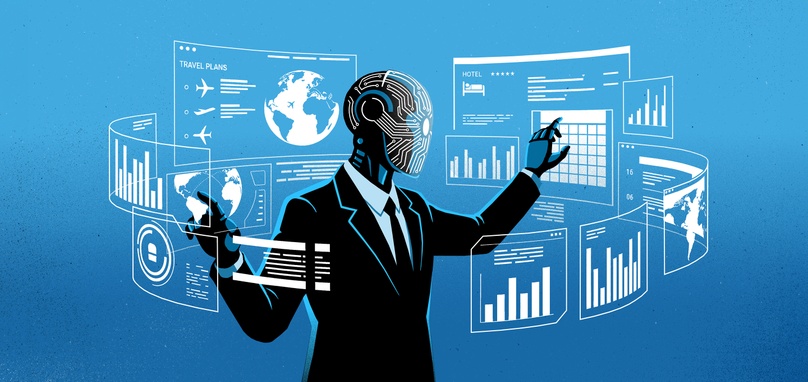
More buyers are skipping Google and going straight to an AI assistant. Gartner predicts traditional search engine volume will drop 25% by 2026 as users shift to AI assistants and conversational agents. That prediction is playing out in real time, and three forces are defining what replaces it.
Multi-platform fragmentation. There's no single AI search engine. Users are spread across ChatGPT, Perplexity, Gemini, Claude, Google AI Overview, Grok, Microsoft Copilot, DeepSeek, and Meta AI. Each platform has different data sources, different citation patterns, and different strengths. A business that's cited by Perplexity might be completely absent from ChatGPT. Optimizing for one platform isn't enough.
Zero-click answers are the norm. AI agents don't send users to a list of links they synthesize a direct answer. If your business is cited in that answer, you get the recommendation. If it's not, the user never knows you exist. There's no "page two" in an AI-generated response, and no click-through to optimize. You're either in the answer or you're invisible.
AI agents are becoming the customers. Beyond how humans use AI search, AI agents themselves are increasingly making purchase decisions on behalf of consumers. A meaningful share of US shoppers now expect to use agentic AI for purchases within the coming year, and most would welcome AI agents helping them shop. When a consumer asks ChatGPT "What is the best project management tool for a remote team of 20?", the AI researches, evaluates, and recommends often without the consumer ever visiting a brand's website.
Here's the uncomfortable part: traditional SEO and AI search optimization are not the same game. Traditional SEO is about ranking climbing from position 8 to position 3 for a target keyword. AI search is about citation. These platforms don't rank websites in order; they select which brands to mention based on content structure, source authority, and cross-platform consensus. As Semrush's AI search trends analysis explains, visibility now depends on freshness, off-site credibility, and how clearly your content can be interpreted inside an AI-generated answer.
That's a fundamentally different challenge. You can rank on page one of Google and still be completely invisible to ChatGPT. This is a common pattern: businesses with strong traditional SEO that don't appear in a single AI answer for their core category.
A new KPI is emerging for marketers who take this seriously: Share of Model measuring how often AI agents recommend your brand when consumers ask for advice. Independent research has shown AI brand recommendations are highly inconsistent across runs and platforms, which means the brands earning consistent citations are doing so on purpose, not by accident. This metric will become as critical as share of voice within two years, and the brands measuring it today are building data advantages their competitors cannot backfill.
Part 4: The Agentic Shift

Agentic AI autonomous systems that can perceive data, make decisions, take actions, and learn from outcomes without requiring human intervention at each step is rewriting marketing operations alongside search. Gartner predicts that 60% of brands will use agentic AI for streamlined one-to-one interactions by 2028. The operational impact is already measurable.
Campaign orchestration. Agentic AI doesn't just optimize individual channels it coordinates entire campaigns. An agent can build audience segments from real-time behavioral signals, push them to Meta, Google, or Klaviyo, monitor performance, identify creative fatigue, and adjust budgets without human intervention between steps. As Adweek reports, organizations operating like "control rooms overseeing agentic workflows" are outperforming those that run marketing as a relay race between specialized teams.
Personalization at scale. Customers who use Sephora's Virtual Artist AI try-on tool are 3x more likely to complete a purchase, and the brand has reported up to 30% fewer returns on those orders. ServiceNow has publicly reported its own internal AI specialist resolves IT service desk cases 99% faster than human agents, the kind of step-change that has HBR framing agentic readiness as a strategic question for every brand, not a niche tooling decision. This level of personalization was theoretically possible before, but only agentic systems can execute it continuously across millions of individual customer journeys without ballooning headcount.
Agents as customers. The most consequential shift is not that marketers use AI tools it's that AI agents themselves are increasingly the ones making purchase decisions on behalf of consumers. Leading retail and SaaS brands are already reporting meaningful revenue attribution to agentic channels, and early movers are seeing rapid growth in referral traffic from AI platforms. Brands optimized exclusively for traditional search are largely invisible to the agents now influencing those decisions.
The brands that will dominate in the agentic era are not the ones with the biggest ad budgets. They're the ones AI agents can understand, evaluate, and confidently recommend. That requires a different kind of marketing infrastructure and for most teams, it requires catching up.
Part 5: The Catch-Up Playbook

Here's the good news most "AI is eating your traffic" articles skip over: you are not as far behind as you think. Most enterprise marketing teams are still budgeting and planning for AI search rather than executing against it. If you start now, you're joining the wave, not chasing it.
According to Search Engine Land's 2026 predictions roundup, most businesses are still figuring out what AI visibility even means, let alone how to measure it. The gap between early movers and the rest of the market is real, but it's not insurmountable. The brands already visible in AI search didn't get there through some secret formula. They got there by doing the fundamentals well structured data, clear content, authoritative sourcing before anyone was calling it "generative engine optimization" or sorting out the AEO, GEO, and LLMO acronyms. You can do those same things today, and the results compound faster than you'd expect.
The playbook in Part 6 is the concrete version of that work five steps, in order, sequenced by how much each one moves AI visibility relative to the effort it takes.
Part 6: The 5-Step Playbook Step by Step
Step 1: Baseline Your AI Visibility

You can't fix what you can't see. The single highest-ROI action is getting a baseline measurement of your current AI visibility. How often do AI platforms mention your brand? Which platforms cite you and which don't? What do they say when they do?
This is exactly what we measure. We query nine AI platforms ChatGPT, Perplexity, Gemini, Claude, Google AI, Grok, DeepSeek, Microsoft Copilot, and Meta AI with 108 citation prompts per market, drawn from 12 query categories relevant to your business. The result is a concrete AI Readiness Score and a map of where you're visible, where you're invisible, and what's blocking you. Our guide to building an AI visibility research framework covers the methodology in depth.
Whichever way you approach it, don't skip this step. Every other step is more effective when you know your starting point.
Step 2: Fix Structured Data First
AI engines parse structured data before anything else. If your pages lack proper JSON-LD schema markup, you're making it harder for AI to understand what your business does, where you operate, and what you offer. And structured data is still wildly underadopted JSON-LD only sits on roughly 41% of pages per the HTTP Archive Web Almanac, which means properly marking up the rest is still a significant, measurable advantage over the majority of competitors.
The priority schema types, in order:
- Organization tells AI agents who you are, where you're located, and how to categorize your business
- LocalBusiness if applicable, for multi-location or service-area businesses
- Product or Service defines what you sell with prices, descriptions, and availability
- FAQ directly matches the question-and-answer format AI agents use to build responses
- Article marks content pages with author, publication date, and topic metadata
Implement these as JSON-LD in your page headers and validate with Google's Rich Results Test and Schema.org's validator. This is the lowest-effort, highest-impact fix for most businesses starting from scratch. Technical SEO factors for AI search covers the full technical foundation.
Step 3: Rewrite for Citability
AI engines cite content they can extract clean, direct answers from. Traditional marketing copy is designed to persuade humans through emotion and visual design. Agentic marketing requires content that persuades AI agents through clarity, specificity, and verifiable authority. "We're an industry-leading provider of innovative solutions" gives an AI nothing concrete to cite. "We serve 2,400 businesses across 15 countries with automated invoice processing" is a factual claim an AI agent can actually use.
Review your homepage, service pages, and about page through the lens of AI extraction. For each page, ask: what specific, factual statement could an AI agent pull from this? Then rewrite with four principles:
- Clear headings that match how people phrase questions to AI
- Direct answer paragraphs in the first 1-2 sentences after each heading
- Named entities mention your brand, your products, your founders by name
- Statistics and data points with sources AI loves citable numbers
Our AI visibility checklist breaks this down into specific items you can work through page by page. Our guide to AI content optimization goes deeper on the writing craft.
Step 4: Build Cross-Platform Authority

Most catch-up guides stop at your website. Here's the one thing they don't tell you: AI engines don't just read your site. They synthesize information from across the web at the entity level, not the domain level. If the only place your brand is mentioned is your own pages, AI has limited evidence to cite you confidently.
According to AirOps' 2026 State of AI Search report, brands with a strong off-site presence are 6.5 times more likely to earn AI visibility than those relying on owned content alone. What builds that authority:
- Third-party mentions press coverage, industry publications, directories
- Review signals Google reviews, Trustpilot, industry-specific review platforms
- Community presence Reddit threads, Quora answers, forum discussions where your brand appears naturally
- Content syndication guest posts, interviews, podcast transcripts
The key word is systematic. Random acts of content marketing don't move the needle. Intentional, structured off-site work does. Our AI content marketing guide covers how to structure that effort, and our deep dive on how to earn AI citations and mentions walks through the off-site tactics that consistently produce them.
Step 5: Test Multi-Platform and Monitor Quarterly

This is where most businesses stop short. Testing on ChatGPT alone misses the full picture. Each AI platform has different data sources and citation behaviors, and a win on one platform does not transfer automatically to another:
- ChatGPT draws from web browsing and training data
- Perplexity emphasizes real-time web search with source citations
- Gemini integrates with Google's knowledge graph
- Claude relies on training data and web access for factual claims
- Google AI Overview pulls from Google's search index and featured snippets
A business cited by Perplexity might be invisible to ChatGPT, and vice versa. Testing across all platforms reveals where your gaps are and where your strengths lie.
And AI visibility isn't a one-time fix. AI models update their training data, their citation logic shifts, and your competitors are optimizing too. Build a quarterly cadence: audit, optimize, test citations, measure progress, repeat. The right AI visibility monitoring tools make this a sustainable discipline rather than a fire drill. Think of it as a credit score for your AI presence you want to know if something changes before it costs you traffic.
Part 7: What to Skip (For Now)
Not everything in the AI optimization conversation is urgent. If you're catching up, here's what you can safely deprioritize without falling further behind:
- llms.txt files useful, but not a ranking factor yet for most businesses. Fix the fundamentals first.
- AI-specific landing pages rewrite your existing pages for citability before creating new ones.
- Prompt engineering for SEO focus on content quality, not gaming specific prompts.
- Panic about AI Overviews stealing traffic they're a reality, but optimizing for them is more productive than worrying about them.
None of these are bad ideas. They're just not the first ideas.
Part 8: The Compounding Advantage of Moving Now
The most important thing about AI search optimization is that it compounds. AI agents learn which sources are reliable, well-structured, and frequently cited. Businesses that establish AI visibility now are training these systems to recommend them in the future.
This is the same dynamic that played out in early SEO. The businesses that invested in search optimization in 2005 built domain authority that took competitors years to match. AI search is at that same inflection point early movers build advantages that are exponentially harder to replicate later.
The difference is that AI search is moving faster. The window to establish a first-mover advantage is measured in months, not years. Every month you wait, the gap widens not because AI search optimization gets harder, but because your competitors who start now will build citation history, authority signals, and training data presence that compound over time. The businesses that act in Q2 2026 will have 6-12 months of AI visibility data and a working AEO marketing motion by the time most companies even begin.
The experimentation phase of AI is ending. The results phase rewards action, not awareness.
Frequently Asked Questions
What is agentic AI in marketing?
Agentic AI refers to autonomous AI systems that can plan, execute, and optimize marketing activities without human direction at every step. Unlike traditional automation that follows predefined rules, agentic AI perceives data, makes strategic decisions, takes action, and learns from outcomes managing everything from campaign orchestration to personalized customer interactions at scale. Gartner expects 60% of brands will use agentic AI for one-to-one interactions by 2028.
Why do most AI marketing pilots fail to deliver value?
Because teams treat AI as a tool to buy, not a way to redesign work. Deloitte finds only 20% of organizations are already growing revenue through their AI initiatives, while 74% are still hoping to in the future. The World Economic Forum attributes 70% of AI implementation challenges to people and process issues not technology. Technology delivers only 20% of AI's value; the other 80% comes from rebuilding workflows around AI capabilities. Teams that skip that redesign are grafting new tools onto old processes and wondering why nothing improves.
Is it too late to start optimizing for AI search in 2026?
No. 63% of enterprise marketers are still in the planning phase for AI search budgets in 2026, which means the majority haven't started executing yet. The brands already visible in AI search got there by executing fundamentals well structured data, clear content, authoritative sourcing. You can do those same things today, and the results compound faster than expected.
Can I rank on Google but still be invisible to ChatGPT?
Yes, and it's a common pattern. Traditional SEO optimizes for ranking algorithms; AI search is about citation. ChatGPT, Perplexity, and Gemini select which brands to mention based on content structure, source authority, and cross-platform consensus not Google rankings. A business can rank on page one of Google and still never appear in a single AI-generated answer for its core category.
What is "Share of Model" and why does it matter?
Share of Model is an emerging marketing KPI that measures how often AI agents recommend a specific brand when consumers ask for product or service advice. As agentic commerce grows and AI agents increasingly mediate purchase decisions, this metric becomes as critical as traditional share of voice or search impression share. The brands measuring Share of Model today are building data advantages their competitors cannot backfill later.
How quickly does AI search optimization show results?
Structured data changes can show results within days for platforms like Perplexity that fetch live web data. Broader AI visibility improvements typically become measurable within four to eight weeks. The compounding effect means early improvements reinforce themselves each citation and each mention strengthens the signals AI engines already trust about your brand.
How should I measure the ROI of AI in marketing?
Measure AI ROI by comparing baseline performance (before AI) against post-implementation results for specific use cases. Track metrics like time saved on content production, improvement in personalization rates, lead quality increases, or reduction in cost per acquisition. For AI visibility specifically, measure Share of Model, citation frequency, and retrieval rates across platforms. Report in business terms pipeline and revenue impact not technical ones. Leadership doesn't care about model accuracy; they care about outcomes.
Which AI search platform should I optimize for first?
Don't optimize for just one. ChatGPT, Perplexity, Gemini, Claude, and Google AI Overview each draw from different data sources and have different citation behaviors. Start with structured data and citable content these foundations improve visibility across all platforms simultaneously then test citation performance on each platform separately to find your specific gaps.
Close the Gaps Before Your Competitors Do
Knowing about AI is table stakes in 2026. Winning with it is rare, and it requires closing both gaps at once the internal adoption gap and the external AI visibility gap. Neither is solved by buying another tool. Both are solved by disciplined, measurable, structured work.
The businesses that will define the next decade are not the ones that knew about AI first. They are the ones that used it first strategically, measurably, and completely and made themselves impossible for AI to ignore.
For the complete picture across nine AI platforms and your target markets, request our AI Visibility Research. It's built exactly for the work this playbook describes, and we carry that work out rather than handing you another list.