GPT-5 is no longer a rumour on a roadmap. OpenAI released GPT-5 in August 2025 and has already iterated to GPT-5.4 as of March 2026. With 900 million weekly active users and over 5.35 billion monthly visits, ChatGPT is not an alternative search channel — it is a primary one. The model powering it just got dramatically smarter, more accurate, and more capable of taking action on behalf of users.
For search marketers, this is not an incremental update. GPT-5 changes what ChatGPT can do with information, how reliably it cites sources, and how directly it connects users to products and services. Every one of those changes has implications for how your brand shows up — or doesn't.
Key Takeaways
- GPT-5 hallucinates 26% less than GPT-4o, making AI citations more reliable and raising the stakes for brand accuracy across the web
- Native agentic capabilities let GPT-5 browse, compare, and act autonomously — your content must be machine-parseable, not just human-readable
- ChatGPT shopping now connects 5.6 million Shopify merchants to 880 million monthly active users, with product recommendations driven by relevance, not ad spend
- Deep Research synthesises multi-source reports that shape buying decisions before prospects ever visit your website
- 77% of ChatGPT users already perform web searches in the app — GPT-5's reasoning upgrades determine which brands appear in those results
What Actually Changed in GPT-5
Not every model update matters for marketing. GPT-5 matters because it changes three things simultaneously: accuracy, autonomy, and commerce integration.
Accuracy. GPT-5 reduced its hallucination rate to 9.6%, down from 12.9% in GPT-4o — a 26% relative reduction. The enhanced reasoning variant, GPT-5-thinking, pushes hallucination rates as low as 4.5%. Fewer hallucinations mean more confident citations, which means the model is more willing to name specific brands, products, and sources when it trusts the underlying data.
Autonomy. GPT-5 is the first widely available model with native agentic capabilities — it can plan multi-step tasks, browse the web in real time, and execute actions without constant human prompting. The context window exceeds one million tokens. This is not a chatbot that answers questions. It is an agent that researches, evaluates, and acts.
Commerce. As of March 2026, every eligible Shopify store is discoverable inside ChatGPT by default — no app install, no setup. Users can browse, compare, and purchase products without leaving the conversation. With Walmart, Etsy, and over 5.6 million Shopify merchants already integrated, ChatGPT is becoming a transactional platform, not just an information one.
Fewer Hallucinations Mean Higher Stakes
The hallucination reduction sounds like a technical improvement. For marketers, it is a strategic shift.
When GPT-4o hallucinated more frequently, its recommendations carried a natural disclaimer — users knew to double-check. As GPT-5 becomes measurably more accurate, user trust increases. Research from Pew shows that 58% of US adults under 30 have used ChatGPT, and trust in AI-generated answers is climbing in parallel with accuracy improvements.
Higher trust means higher consequence. If GPT-5 confidently recommends your competitor instead of you, the user is less likely to verify that recommendation. The factors that determine whether ChatGPT recommends your brand — entity consistency, structured data, authoritative third-party mentions — become more decisive with every accuracy improvement.
The inverse is also true. If your brand information is inconsistent across the web — different names, conflicting descriptions, outdated claims — GPT-5 is more likely to avoid citing you entirely rather than risk an inaccurate recommendation. Accuracy cuts both ways.
Agentic Search Changes the Discovery Model
GPT-5's agentic capabilities represent the most fundamental change to search marketing since mobile. Traditional search follows a linear path: query, results, click, evaluate, decide. Agentic search collapses that entire sequence.
A user can now ask ChatGPT to "find the best project management tool for a 20-person remote team under $15 per seat" and the model will browse vendor websites, compare feature sets, check pricing pages, read reviews, and deliver a synthesised recommendation — all within a single conversation. The user never visits a search engine results page. They may never visit your website at all.
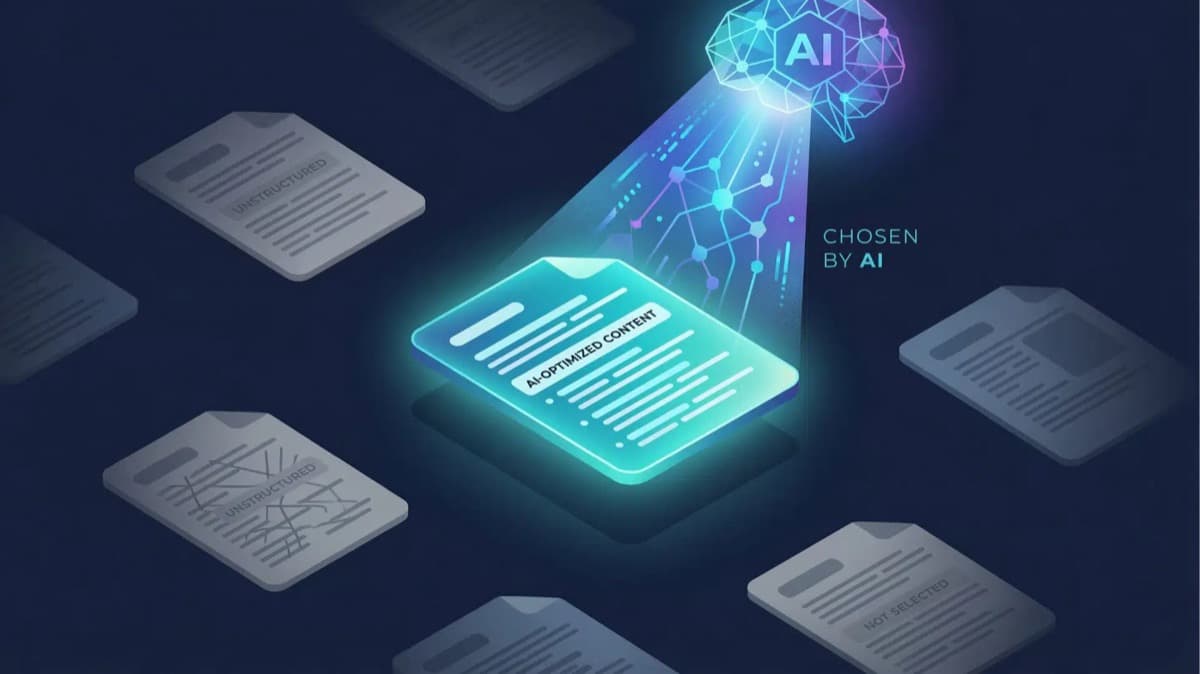
This is agentic commerce in action, and it fundamentally changes what "visibility" means. Your content does not just need to rank. It needs to be parseable by an AI agent conducting autonomous research. That means structured data, clear entity signals, transparent pricing, and comprehensive product specifications that an agent can extract programmatically.
If an AI agent cannot parse your offering, you are invisible to the fastest-growing discovery channel in digital. The difference between AI search and traditional search is no longer theoretical — it is the operating environment.
ChatGPT Shopping: The New Product Discovery Channel
The integration of native shopping into ChatGPT is one of the most commercially significant developments in search marketing this decade. Here is what makes it different from every other shopping platform: product recommendations are organic. Relevance — not ad spend — determines which products appear.
Shopify's agentic storefronts give merchants access to major AI channels — ChatGPT, Microsoft Copilot, AI Mode in Google Search, and Gemini — managed centrally from the Shopify Admin. For brands that have built strong AI visibility signals, this is a direct revenue channel. For those that haven't, it is a competitive gap that widens daily.
The implications extend beyond e-commerce. Service businesses, SaaS companies, and professional service firms are all affected by how ChatGPT handles product discovery. When a user asks ChatGPT to recommend a marketing agency, an accounting firm, or a software tool, the same retrieval and citation logic applies — and GPT-5's improved reasoning makes those recommendations more specific and more confident.
Deep Research Shapes Buying Decisions Before You Know They Exist
GPT-5 powers ChatGPT's Deep Research feature, which autonomously conducts multi-source research across the web and produces comprehensive cited reports. A single Deep Research query can synthesise information from dozens of sources in minutes — research that would take a human hours.
For B2B marketers especially, this changes the buyer journey. Prospects are arriving at your website with AI-synthesised research already completed. They have read summaries of your case studies, comparisons against your competitors, and evaluations of your pricing — all assembled by an AI agent before they ever filled out a contact form.
The brands that appear in Deep Research outputs are the ones with content structured for AI retrieval: clear claims supported by data, authoritative third-party validation, and consistent entity information across the web. If your content is not being pulled into these research reports, your competitors' content is.
What This Means for Your AI Visibility Strategy
GPT-5 does not change the fundamentals of AI visibility. It accelerates them. The signals that mattered before — structured data, entity consistency, authoritative mentions, citable content — matter more now because the model using them is smarter, more confident, and more commercially integrated.
Here is what to prioritise:
Audit your brand accuracy across the web. GPT-5's reduced hallucination rate means it is more selective about what it cites. Inconsistent brand information across directories, social profiles, and third-party sites will cause the model to hedge or omit your brand entirely. Use an AI visibility audit to identify gaps.
Make your content machine-parseable. Agentic search does not read your content the way a human does. It extracts structured data, parses specifications, and evaluates claims against other sources. Implement comprehensive JSON-LD markup, use clear heading hierarchies, and ensure every key claim is supported by verifiable data.
Optimise for ChatGPT specifically. With 900 million weekly active users and native commerce integration, ChatGPT is no longer one of many AI platforms to monitor — it is the dominant one. Follow a structured approach to boost your ChatGPT visibility across training data presence, entity signals, and citation patterns.
Track your AI citations, not just your rankings. GPT-5 does not rank websites. It cites them — or it doesn't. If you are not measuring how often AI engines cite your brand, you are optimising blind. Citation tracking across multiple AI platforms reveals which signals are working and which are not.
Prepare for agentic commerce. Whether you sell products or services, AI agents are increasingly making recommendations and completing transactions on behalf of users. Ensure your pricing, specifications, and competitive differentiators are structured so agents can compare them accurately.
The Window Is Closing
GPT-5 did not create the shift toward AI-driven discovery. But it accelerated the timeline. The model is more accurate, more autonomous, and more commercially capable than anything that came before it — and 900 million people are using it every week.
The brands that adapt their visibility strategy now will compound their advantage as the model continues to improve. The brands that wait will find themselves competing for attention in a channel they never optimised for, against competitors who did.
The question is not whether GPT-5 affects your business. It already does. The question is whether you are shaping how it perceives your brand — or leaving that to chance.