Most SEO teams were built for a world that no longer exists. They were hired to chase keyword rankings, build backlinks, and monitor Google's algorithm updates. That playbook worked brilliantly for fifteen years. It is now incomplete.
AI search engines — ChatGPT, Perplexity, Gemini, Google AI Overviews — now answer questions directly, recommend products by name, and cite specific brands in their responses. According to the Search Engine Journal State of SEO 2026 report, 78% of SEO teams use AI tools daily. But using AI tools and being structured to win in AI search are two different things. Most teams have the tools. Very few have the right roles, skills, and workflows to compete in this new landscape.
This guide covers exactly how to build an SEO team that's ready for AI search — whether you're hiring from scratch, restructuring an existing team, or upskilling the people you already have.
Key Takeaways
- Traditional SEO teams lack three critical capabilities for AI search: entity modelling, citation monitoring, and structured data engineering — skills that don't exist in standard SEO job descriptions.
- The most effective structure follows a 70-20-10 model: 70% internal upskilling, 20% borrowed consultant expertise, 10% net-new hires for roles that didn't exist two years ago.
- Every SEO team in 2026 needs at least one person who understands how AI Overviews, LLMs, and generative engines process and surface content — this is no longer optional.
- Communication now ranks as the top non-technical requirement for SEO hires, because AI search optimisation requires cross-functional alignment between content, product, engineering, and brand.
- Building an AI-ready team is a structural change, not a tool purchase — adding AI tools to an SEO-only team structure produces diminishing returns within months.
Why Traditional SEO Teams Fall Short
A conventional SEO team has three core functions: technical SEO (crawlability, site speed, indexation), content (keyword research, editorial calendar, copywriting), and link building (outreach, digital PR, backlink analysis). These functions map perfectly to how Google's traditional search works — crawl, index, rank.
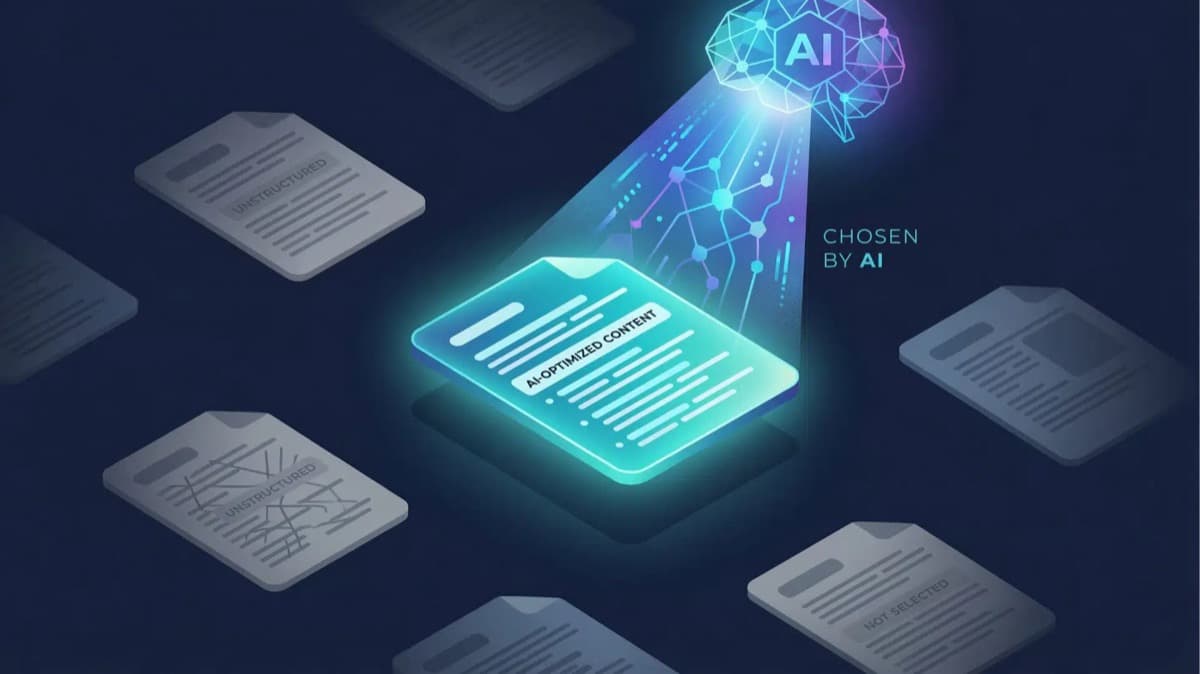
AI search engines don't follow that pipeline. When someone asks ChatGPT "what's the best CRM for small businesses?", ChatGPT doesn't crawl an index and rank pages. It synthesises an answer from its training data, augments it with real-time web retrieval, evaluates which brands have enough third-party authority to recommend with confidence, and constructs a response that names specific products.
The skills your team needs for this new pipeline are fundamentally different:
Entity modelling instead of keyword targeting. AI systems understand brands as entities with attributes, relationships, and authority signals — not as pages that rank for keywords. Your team needs someone who can ensure your brand's entity representation is consistent and complete across the web.
Citation monitoring instead of rank tracking. Traditional SEO measures position 1-10 on a search results page. AI visibility measurement tracks whether your brand gets mentioned, cited, or recommended across nine different AI platforms — each with its own retrieval mechanism.
Structured data engineering instead of basic schema markup. Adding a few lines of JSON-LD to your homepage is table stakes. AI search requires comprehensive, interconnected structured data across your entire site — Product, Organization, FAQ, HowTo, and Article schemas with complete property coverage.
Content architecture instead of content volume. AI systems don't reward publishing frequency. They reward content that's structured for extraction — clear claims backed by evidence, factual density, and information that can be directly quoted in an AI-generated answer.
The Five Roles Every AI-Ready SEO Team Needs
Whether you hire these as dedicated positions or add these responsibilities to existing roles depends on your team size and budget. But every AI-ready team needs these five capabilities covered.
1. AI Visibility Strategist
This is the role that didn't exist two years ago and is now the most important. The AI visibility strategist owns the team's understanding of how AI search platforms discover, evaluate, and recommend brands.
Core responsibilities:
- Monitor brand visibility across ChatGPT, Perplexity, Gemini, Claude, Google AI Overviews, and other AI platforms
- Track citation accuracy and frequency across AI-generated answers
- Identify gaps between what AI platforms say about your brand and what's actually true
- Define the AI search strategy that informs what the rest of the team works on
Key skills: familiarity with how LLMs process content, understanding of retrieval-augmented generation (RAG), experience with AI visibility monitoring tools, ability to interpret AI-generated responses for strategic signals.
Hiring tip: You won't find this person with "AI visibility strategist" on their CV. Look for SEO professionals who've been experimenting with AI search on their own — testing prompts, tracking citations, building their own monitoring workflows.
2. Structured Data Engineer
Most SEO teams have someone who can add basic schema markup. An AI-ready team needs someone who thinks about structured data architecturally — as the machine-readable layer that determines how AI systems understand your entire business.
Core responsibilities: Design and implement comprehensive JSON-LD across all page types. Maintain entity consistency between your structured data and Knowledge Graph presence. Test how AI systems interpret your structured data using AI readiness audits. Coordinate with engineering to ensure structured data is server-side rendered and accessible to AI crawlers.
Key skills: deep Schema.org vocabulary knowledge, understanding of how AI systems parse structured data, ability to work with engineering teams on implementation.
3. Content Strategist (AI-Focused)
This isn't your traditional content marketing manager. An AI-focused content strategist designs content specifically to be surfaced, cited, and quoted by AI systems.
Core responsibilities: Design content architecture that maximises extractability — clear claims, factual density, and answer-ready formatting. Build content strategies that establish entity authority across topics your brand should own. Create content that earns citations from AI platforms, not just traffic from Google.
Key skills: understanding of how AI systems select and synthesise sources, experience with generative engine optimisation (GEO), ability to balance human readability with machine extractability.
4. Technical SEO (AI-Extended)
The technical SEO role doesn't disappear — it evolves. Traditional skills still matter, but the scope expands to include AI-specific requirements.
Additional AI responsibilities: Manage robots.txt directives for AI bots (OAI-SearchBot, PerplexityBot, ClaudeBot, GoogleOther). Implement llms.txt files for AI agent discoverability. Ensure server-side rendering for AI crawler compatibility. Monitor AI crawler access patterns and troubleshoot crawl issues.
5. Data Analyst (AI Metrics)
Traditional SEO analytics measures rankings, traffic, and conversions. AI search analytics requires tracking an entirely different set of metrics.
Core responsibilities: Build dashboards that track AI visibility metrics — mention rate, citation accuracy, competitor visibility gaps. Measure the business impact of AI visibility on pipeline and revenue. Identify correlations between content changes and AI citation improvements.
Team Structure by Company Size
Small Teams (1-3 People)
For small teams, you can't hire five specialists. Instead, combine responsibilities:
One person can own AI visibility strategy and content, focusing on monitoring AI search results and creating content designed for citation. A second person (or the same person if you're a team of one) handles technical SEO, structured data, and analytics.
The critical minimum: at least one person on the team must understand how AI search works at a platform level. If nobody on the team is tracking AI visibility, you're flying blind.
Supplement with: a specialist consultant for quarterly AI visibility audits and structured data reviews.
Mid-Market Teams (4-8 People)
Hire the AI visibility strategist as your first AI-specific role. This person becomes the centre of gravity for your AI search efforts, informing what the content team writes, what the technical team implements, and what the analytics team measures.
Recommended hiring sequence:
- AI visibility strategist (or promote your most AI-curious team member)
- Structured data engineer (can be part of the technical SEO role)
- Dedicated AI content strategist (separate from your traditional content manager)
Enterprise Teams (10+ People)
Enterprise teams can afford dedicated specialists in each role. The key challenge isn't headcount — it's coordination. AI search optimisation touches content, engineering, brand, product, and data teams. Appoint a cross-functional AI search council that meets monthly to prevent the common failure mode where the SEO team optimises structured data while the engineering team accidentally blocks AI crawlers.
The 70-20-10 Model: Build, Borrow, Buy
Restructuring a team is expensive and slow. A more practical approach follows a 70-20-10 framework that balances internal development with external expertise:
70% Build (Upskill Your Existing Team). Most of the capability you need already exists on your team — it just needs redirecting. Your technical SEO already understands crawlability; they need to learn AI-specific crawler requirements. Your content strategist already writes for search intent; they need to learn how AI systems select sources for citation. Run monthly AI search workshops, assign each team member one AI platform to monitor weekly, and dedicate 20% of sprint capacity to AI search experiments.
20% Borrow (External Expertise). Some capabilities are faster to borrow than build — particularly specialised AI visibility auditing and structured data architecture. Consider bringing in consultants for quarterly AI visibility audits, structured data architecture design, and AI search strategy workshops.
10% Buy (New Hires). Reserve new hires for roles that genuinely don't exist on your team and can't be easily upskilled into. In most cases, this means one dedicated AI visibility specialist who becomes the team's centre of expertise. Hire externally when nobody on the team has been tracking AI search results for more than six months, or when you need someone who can work directly with engineering on structured data at scale.
Five Skills Every Team Member Needs
Regardless of specific role, every member of an AI-ready SEO team should have baseline competency in five areas:
1. AI Platform Literacy. Everyone should understand how ChatGPT, Perplexity, and Google AI Overviews retrieve and present information — and why AI search differs from traditional search.
2. Prompt Testing. The ability to systematically test how AI platforms respond to queries relevant to your brand — understanding what your brand's AI presence actually looks like to users.
3. Structured Data Basics. Even non-technical team members should know what structured data is, why it matters for AI, and how to spot when it's missing or broken.
4. Cross-Functional Communication. AI search optimisation requires coordinating with engineering, brand, product, and leadership. Communication is now the top-ranked non-technical skill for SEO hires.
5. Data Interpretation. Every team member needs to understand AI-specific metrics — citation frequency, mention accuracy, visibility scores — and what they mean for strategy.
The 90-Day Implementation Roadmap
Transforming your team doesn't happen overnight. Here's a realistic timeline:
Days 1-30 — Assess and align. Audit your team's AI search knowledge. Run an AI visibility audit on your website to establish a baseline. Define which AI platforms matter most for your industry. Get leadership buy-in by presenting the gap between your AI visibility and your competitors'.
Days 31-60 — Restructure and upskill. Assign AI-specific responsibilities to existing roles — don't wait for new hires. Start weekly AI search monitoring with each team member covering one platform. Bring in a consultant for a structured data architecture review. Begin your first AI-focused content sprint targeting queries where you're absent from AI results.
Days 61-90 — Optimise and measure. Evaluate what's working — are citations improving? Are mention rates increasing? Decide whether you need a dedicated hire based on 60 days of data, not assumptions. Establish permanent workflows: monthly strategy review, weekly monitoring, daily execution. Set quarterly AI visibility targets that the entire team owns.
Start With What You Have
You don't need to hire an entirely new team to compete in AI search. You need to give your existing team the right focus, the right metrics, and the right understanding of how AI platforms work.
Start by running a free AI visibility scan on your website. See exactly how AI search engines perceive your brand today. Then use that baseline to prioritise which team capabilities to build first.
The SEO teams that thrive in 2026 won't be the biggest. They'll be the ones that understood the shift earliest and restructured fastest.