Most SEO tutorials for the AI era make the same mistake: they either rehash traditional SEO basics with "AI" in the title or treat AI search as an entirely separate discipline requiring you to start from scratch. Neither is accurate. The reality is more nuanced — and more actionable.
Gartner projects that 25% of traditional search volume will shift to AI chatbots and answer engines by the end of 2026. That shift does not invalidate your existing SEO work. It changes how that work gets evaluated, extracted, and surfaced. This tutorial is built for SEO practitioners who already know the fundamentals and need a precise map of what changes in the AI search context — and what to do about it.
Key Takeaways
- Traditional SEO foundations (site speed, crawlability, quality content) remain essential — AI search adds requirements on top of them, it does not replace them
- The critical shift is from ranking in a list of ten to being cited as the source in a single AI-generated answer — a higher bar with higher conversion payoff
- Platform-specific optimization matters: ChatGPT, Perplexity, Gemini, and Google AI Overviews each pull content differently and weight different signals
- Structured data has moved from "nice to have" to baseline requirement — pages without JSON-LD schema are measurably disadvantaged in AI retrieval
- Your existing content likely has extractability problems that are invisible in traditional SEO audits but critical for AI citation
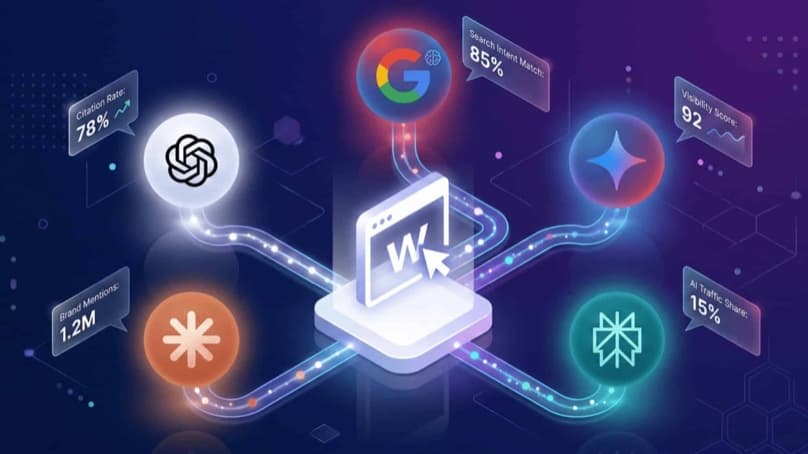
- Measuring AI visibility requires new metrics — citation rate, mention frequency, and AI-referred traffic are distinct from organic rankings
What Stayed the Same: The SEO Foundations AI Search Still Rewards
Before diving into what changed, it is worth being explicit about what did not. If your existing SEO programme covers these areas well, you are already partway there:
- Site speed and Core Web Vitals — AI crawlers have timeout thresholds. Pages that load slowly get skipped, just as they always have. Fast, well-optimized pages earn crawl priority from both traditional and AI engines
- Clean, crawlable HTML — server-side rendered or statically generated content remains the gold standard. Client-side JavaScript rendering that traditional Googlebot eventually processes may never be seen by AI crawlers with shorter timeout windows
- Topical authority — depth of coverage across a subject area signals expertise to AI models just as it does to Google's ranking algorithms. A site with 30 well-structured pages on a topic earns more AI citations than a site with one page that tries to cover everything
- Backlink authority — external links still signal trust. AI engines cross-reference sources, and sites with strong backlink profiles are more likely to be cited in AI-generated answers
- Mobile-friendly, accessible design — the page experience signals that have always mattered for SEO continue to matter
The critical point: if your SEO foundations are weak, fixing them is still the first priority. AI search optimization does not compensate for slow pages, broken crawlability, or thin content. It builds on top of those fundamentals.
What Changed: The Seven Shifts SEO Practitioners Must Understand
Here is where AI-driven search diverges from the traditional playbook. Each of these shifts has direct implementation implications:
1. From Rankings to Citations
In traditional search, success means ranking in positions 1 through 10. In AI search, success means being cited as the authoritative source in a generated answer. There is often only one or two citation slots per AI response. The bar for selection is higher, but the payoff is dramatically larger — AI-referred traffic converts at 23 times the rate of traditional organic search.
2. From Keywords to Extractable Answers
Keyword optimization still matters for discoverability, but AI engines evaluate content by how extractable its answers are. A page can rank #1 for a keyword and still never be cited by AI because the answer is buried in the fifth paragraph. The first 30 to 60 words after a heading must contain a clear, self-contained answer to the implied query.
3. From Meta Descriptions to Structured Data
Traditional SEO puts significant effort into meta titles and descriptions. AI search puts that emphasis on structured data. JSON-LD schema markup — FAQPage, HowTo, Article, Organization — tells AI engines what your content is and how to extract information from it. Pages without schema are not excluded, but they are at a measurable disadvantage.
4. From Google-Only to Multi-Platform
SEO traditionally optimized for one engine. AI search spans ChatGPT, Perplexity, Gemini, Google AI Overviews, Claude, Copilot, Grok, and others. Each platform has different content retrieval mechanisms. Optimizing for just one leaves visibility gaps across the others.
5. From Page-Level to Entity-Level Authority
Traditional SEO builds authority page by page. AI search evaluates entity-level authority — does your brand appear consistently across knowledge graphs, business directories, Wikidata, and authoritative third-party sources? AI models cross-reference multiple signals before deciding whether to cite a source. Entity consistency across the web is now a ranking factor that did not exist in traditional SEO.
6. From Click-Through to Zero-Click
AI answers frequently satisfy the query without a click. This changes the value equation: instead of optimizing for clicks, you optimize for brand presence in the answer itself. Being named as the cited source in an AI response builds brand authority even when the user does not click through.
7. From Annual Audits to Continuous Monitoring
Traditional SEO audits happen quarterly or annually. AI search visibility changes faster because AI models update their knowledge, citation preferences, and retrieval methods on shorter cycles. Monthly monitoring of AI citation rates and mention frequency is the new minimum.
How to Audit Your Site for AI Search Readiness
If you are an SEO practitioner with an existing site, start with a diagnostic pass rather than a full rebuild. This audit identifies the specific gaps between your current SEO state and AI search readiness:
Content Extractability Check:
- Open your top 20 pages by traffic. For each page, read only the first paragraph after the H1. Does it contain a clear, self-contained answer to the query the page targets? If you need to read further to understand the answer, AI engines will too — and they may not bother
- Check whether key facts are embedded in paragraphs or structured in lists and tables. AI engines extract structured formats more reliably
Structured Data Audit:
- Validate JSON-LD on your top pages using Google's Rich Results Test. Pages missing FAQPage, HowTo, or Article schema need it added
- Check that Organization schema is present on your homepage with consistent name, URL, and description
Technical AI Accessibility:
- Review your robots.txt for AI crawler user agents. OpenAI uses GPTBot, Anthropic uses ClaudeBot, Perplexity uses PerplexityBot. Verify these are not blocked
- Check whether you have an llms.txt file — a machine-readable summary of your site purpose that AI agents reference during discovery
- Confirm your sitemap is current and includes all pages you want AI engines to find
Entity Consistency Scan:
- Compare your brand name, description, and core claims across your website, Google Business Profile, LinkedIn, industry directories, and any Wikidata entries. Inconsistencies create trust gaps that AI models penalize
Citation Baseline:
- Test whether AI platforms currently cite your brand. Ask ChatGPT, Perplexity, and Gemini questions in your domain and see if your business appears. This establishes the baseline that makes every subsequent optimization measurable
Platform-Specific Optimization: What Each AI Engine Wants
One of the biggest gaps in current SEO-to-AI tutorials is treating all AI engines identically. They are not. Each platform has distinct content retrieval mechanisms that reward different optimization approaches:
ChatGPT pulls from Bing's search index and its own training data. Pages that rank well in Bing have an advantage. ChatGPT also accesses live web data through browsing, meaning fresh, regularly updated content gets priority. Schema markup and clear page structure significantly influence what ChatGPT extracts and cites.
Perplexity is the most citation-heavy AI engine, typically including 5 to 15 source links per response. It crawls the web aggressively and favors pages with clear, factual content supported by evidence. Perplexity rewards content structured for direct citation — specific claims, data points, and named sources.
Google AI Overviews pull directly from Google's search index, meaning traditional SEO ranking strength directly influences AI Overview inclusion. Pages that already rank in the top 10 for a query are most likely to appear in the AI Overview. Structured data, particularly FAQPage and HowTo schema, increases the likelihood of being featured.
Gemini leverages Google's knowledge graph and search infrastructure. Entity-level authority — consistent brand presence across Google's ecosystem including Business Profile, YouTube, and Scholar — influences Gemini's citation decisions. Content depth and topical authority carry significant weight.
Claude relies primarily on training data rather than live web browsing. This means that content needs to be established, well-linked, and present across multiple authoritative sources to appear in Claude's knowledge base. Recency matters less; authority and consistency matter more.
The practical implication: a single optimization approach will not maximise visibility across all platforms. The most effective strategy addresses the common foundations (structured data, extractable content, entity consistency) while making platform-aware decisions about content freshness, citation formatting, and distribution.
The Dual Optimization Challenge: When SEO and AI Search Conflict
Here is something most guides avoid: traditional SEO best practices and AI search optimization sometimes pull in opposite directions. Acknowledging these tensions — and knowing how to resolve them — separates effective practitioners from those following generic checklists.
Click-bait titles vs. descriptive clarity — traditional SEO often rewards curiosity-gap headlines that drive clicks. AI engines prefer descriptive titles that clearly state what the page covers, because they need to match content to queries with precision. Resolution: use descriptive H1s for AI discoverability and test more engaging meta titles for SERP click-through.
Keyword density vs. natural language — traditional SEO still benefits from strategic keyword placement. AI engines evaluate semantic meaning and penalize content that reads as keyword-optimized rather than naturally written. Resolution: write for humans first, then verify that primary keywords appear in H1, first paragraph, and at least two H2s.
Long-form depth vs. extractable brevity — traditional SEO rewards comprehensive, long-form content. AI engines extract short passages. Resolution: write long-form content but structure every section so its first 2 to 3 sentences can stand alone as a complete answer. Depth supports authority; extractability supports citation.
Internal link density vs. clean structure — traditional SEO benefits from extensive internal linking. Excessive links can dilute the clarity of content for AI extraction. Resolution: link contextually where it adds value for the reader, not for link equity distribution.
Measuring What Matters: AI Search Metrics for SEO Teams
Traditional SEO metrics — rankings, organic traffic, click-through rate — do not capture AI search performance. Teams that only track traditional metrics will miss both the wins and the gaps in their AI visibility. Add these to your measurement framework:
- AI citation rate — the percentage of relevant AI queries where your brand is cited as a source. This is the primary metric for AI search success
- AI mention frequency — how often AI platforms reference your brand, products, or content even without a direct citation link
- AI-referred traffic — visits originating from AI platform citations, tracked separately from organic search in analytics
- Platform coverage — whether your brand appears across multiple AI engines or only one, indicating the breadth of your AI visibility
- Citation accuracy — whether the information AI platforms surface about your brand is correct, current, and favorable
Setting up this measurement layer is often the highest-value first step because it establishes the baseline that makes every subsequent optimization provable. You can start with a free AI scan to see where your site stands across key AI visibility signals — 30 seconds, no signup required.
For comprehensive measurement across 9 AI platforms with 108 prompts per audit, SwingIntel's AI Readiness Audit provides the diagnostic depth that manual testing cannot match.
Frequently Asked Questions
Is traditional SEO still important for AI search?
Yes. AI search engines build on top of traditional search infrastructure — Google AI Overviews pull from Google's index, ChatGPT uses Bing's index, and all AI platforms evaluate site speed, crawlability, and content quality. Strong traditional SEO is a prerequisite for AI search visibility, not an alternative to it.
How is optimizing for AI search different from regular SEO?
The core difference is the shift from ranking in a list to being cited in a generated answer. This requires extractable content structure (answers in the first 30 to 60 words), structured data as a baseline, entity-level authority across the web, and multi-platform optimization rather than Google-only focus. Traditional SEO and AI optimization are complementary but require distinct workflows.
Which AI search engine should I optimize for first?
Start with Google AI Overviews if your site already ranks well in Google, since AI Overview inclusion correlates strongly with existing rankings. If you are building from scratch, Perplexity is the most citation-friendly platform and provides the fastest feedback loop for optimization efforts. The long-term goal is visibility across all major AI platforms.
How do I know if AI engines are citing my brand?
Manual testing — asking AI platforms questions in your domain — provides a starting point but does not scale. Automated monitoring tools track citation rates across platforms over time. SwingIntel tests citation presence across 9 AI platforms with 108 prompts per audit, providing a systematic measurement that manual spot-checks cannot replicate.
How long does it take to see results from AI search optimization?
Content restructuring and schema markup additions can produce citation improvements within 2 to 4 weeks for platforms that crawl frequently (Perplexity, Google AI Overviews). Entity building and authority signal development take 2 to 6 months to compound. The timeline is comparable to traditional SEO, with the important difference that AI citation improvements often produce outsized conversion impact due to the higher trust signal of being an AI-cited source.
The shift to AI-driven search does not require you to abandon what you know about SEO. It requires you to build on it — adding the content structure, structured data, entity authority, and measurement infrastructure that AI engines need to find, trust, and cite your brand. Start with the audit, fix the gaps, and measure the results. The practitioners who move now are the ones AI platforms will cite first.