Google reviews are the single fastest way to build trust with both customers and the AI platforms that increasingly decide who gets recommended. A BrightLocal survey found that 87% of consumers read online reviews for local businesses before making a decision. But reviews now do more than persuade human buyers — they feed directly into the trust signals that ChatGPT, Perplexity, Gemini, and Google AI Overviews use when recommending businesses in their answers.
The challenge is not whether reviews matter. The challenge is getting customers to actually leave them. Most satisfied customers never think to write a review unless you ask — and how you ask determines whether they follow through or forget.
Here are six proven strategies to generate more Google reviews, complete with templates you can use immediately.
Key Takeaways
- Review likelihood drops significantly after 24 hours — ask at the peak moment of customer satisfaction for the highest response rate.
- SMS review requests outperform email by two to three times, with open rates above 95% and most messages read within three minutes.
- Businesses that systematise in-person asks alongside digital follow-ups typically see review volume increase by 200% or more within three months.
- AI platforms extract specific phrases from review text (like "fast turnaround" or "transparent pricing") and use them to describe your business in AI-generated answers.
- Responding to every review is both a trust signal for AI engines and a driver of more reviews through perceived reciprocity.
1. Ask at the Peak Moment of Satisfaction
Timing is everything. The best moment to request a review is when the customer has just experienced a positive outcome — the project is delivered, the meal was excellent, the issue is resolved. At that moment, their satisfaction is at its highest and the effort of writing a review feels smallest.
Do not wait days or weeks. Research from Spiegel Research Center shows that review likelihood drops significantly after 24 hours. The emotional connection fades, details blur, and the ask feels like an interruption rather than a natural follow-up.
What this looks like in practice:
- A contractor asks while walking through the completed renovation
- A dentist's receptionist asks as the patient checks out after a successful appointment
- An ecommerce brand triggers an automated email within 2 hours of delivery confirmation
The principle is simple: ask when the answer is obviously yes.
2. Make It Effortless with a Direct Review Link
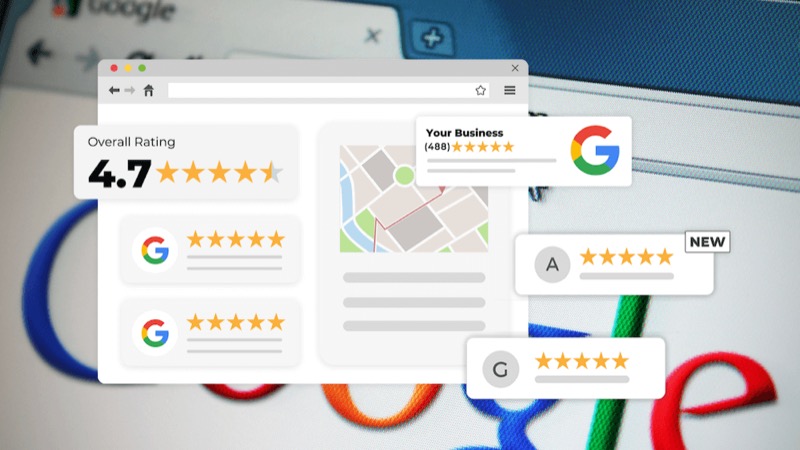
Every Google Business Profile includes a shareable review link that takes customers directly to the review screen — no searching, no navigating, no friction. If you have not set this up, you are making customers work harder than they need to.
How to get your direct link:
- Go to your Google Business Profile
- Click "Ask for reviews" in the dashboard
- Copy the generated short link
- Google also provides a downloadable QR code — use it on printed materials
Place this link everywhere: email signatures, invoices, receipts, follow-up messages, thank-you pages, and physical signage in your location. The fewer steps between "I should leave a review" and actually typing one, the more reviews you will collect.
Example email signature line:
Enjoyed working with us? Leave a quick Google review — it takes 30 seconds and helps others find us.
3. Send a Follow-Up Email Within 24 Hours
Email remains one of the most reliable review channels because it reaches customers at a moment when they can actually sit down and write. The key is sending it while the experience is still fresh.
Email template:
Subject: How was your experience with [Business Name]?
Hi [First Name],
Thank you for choosing [Business Name]. We hope [specific reference — "your new kitchen looks great" / "your consultation was helpful"].
If you have a moment, we would genuinely appreciate a Google review. It helps other [customers/patients/clients] find us and tells us what we are doing right.
Thank you, [Your Name]
Keep it short. One ask, one link, one paragraph of context. Long emails with multiple calls to action reduce follow-through.
4. Use SMS for the Highest Response Rates
SMS has an open rate above 95%, and most messages are read within three minutes. For review generation, that immediacy translates to significantly higher conversion rates compared to email. Textline's research found that SMS review requests outperform email by two to three times.
SMS template:
Hi [Name], thanks for visiting [Business Name] today! If you have 30 seconds, a Google review would mean a lot: [short-review-link]. Thank you!
Keep SMS messages under 160 characters when possible. Include the direct review link, and send within a few hours of the interaction. Make sure you have explicit consent to text the customer — unsolicited marketing texts violate regulations in most jurisdictions.
5. Train Your Team to Ask in Person
The most effective review request is often the simplest: a genuine, face-to-face ask from someone the customer just had a positive interaction with. Train your team to recognise the right moments and give them a specific script to follow.
In-person script:
"I'm really glad we could help with [specific outcome]. If you have a moment later today, it would mean a lot to us if you left a Google review. I can text you the link right now if that's easier."
The keys are specificity (reference the outcome, not a generic "thanks for your business"), immediacy (offer to send the link now), and authenticity (a genuine ask, not a rehearsed pitch). Staff who understand why reviews matter — and who see the direct impact on the business — will ask naturally and consistently.
Businesses that systematise in-person asks alongside digital follow-ups typically see review volume increase by 200% or more within three months.
6. Respond to Every Single Review
Responding to reviews is not just good customer service — it is a signal that drives more reviews. When potential reviewers see that the business actively engages with feedback, they feel their review will be read and valued. That perceived reciprocity increases the likelihood they will take the time to write one.
Respond to positive reviews with specific gratitude:
"Thank you, [Name] — we're glad the [specific service] met your expectations. We appreciate you taking the time to share your experience."
Respond to negative reviews with empathy and a path to resolution:
"Thank you for this feedback, [Name]. We're sorry your experience didn't meet the standard we aim for. We'd like to make this right — please reach out to [contact] so we can discuss this directly."
Google confirms that businesses that respond to reviews are considered more trustworthy by both users and their algorithms. AI platforms that draw from Google's data inherit this trust signal.
Why Google Reviews Are Now an AI Visibility Strategy
This is the part most review guides miss entirely. In 2026, Google reviews are not just a local SEO tactic — they are a direct input to whether AI search platforms recommend your business.
When someone asks ChatGPT "best accountant in Bristol" or Perplexity "recommend a reliable plumber near me," those platforms evaluate trust signals across the web. Review volume, recency, sentiment, and the quality of review responses all factor into which businesses AI platforms choose to cite. A 2026 study tracking 456,570 citations across ChatGPT, Perplexity, and Google AI Mode confirmed that businesses with strong review profiles receive disproportionately more AI recommendations.
AI platforms also extract specific context from review text. If multiple reviews mention "fast turnaround" or "transparent pricing," those phrases become part of how AI systems describe your business in their answers. Your customers' words become your AI search profile.
This creates a compounding advantage: more reviews improve your traditional search rankings, which improves your AI visibility, which drives more customers, which generates more reviews.
For a deeper look at how AI platforms evaluate trust signals, read our guide on building trust for SEO in 2026. If you are focused on local visibility specifically, our local SEO for AI search guide covers the full eight-step playbook — reviews are step three of a much larger strategy.
Start Building Your Review Engine Today
The businesses winning in both traditional search and AI recommendations are the ones that treat review generation as a system, not an afterthought. Set up your direct review link, automate your follow-up emails, train your team, and respond to every review that comes in.
Frequently Asked Questions
When is the best time to ask a customer for a Google review?
Ask at the peak moment of satisfaction — immediately after a successful project delivery, appointment, or purchase. Research shows review likelihood drops significantly after 24 hours. The emotional connection fades, details blur, and the ask feels like an interruption rather than a natural follow-up.
Do Google reviews affect AI search recommendations?
Yes. Review volume, recency, sentiment, and the quality of business responses all factor into which businesses AI platforms choose to cite. AI platforms also extract specific context from review text — phrases like "fast turnaround" become part of how AI systems describe your business in their answers.
What is the most effective channel for requesting reviews?
SMS has an open rate above 95% and most messages are read within three minutes, making it two to three times more effective than email. However, combining in-person asks with automated email and SMS follow-ups produces the highest overall volume.
Should I respond to negative Google reviews?
Yes. Respond to every review — positive and negative — within 48 hours. A thoughtful response to a negative review demonstrates accountability, and Google confirms that businesses that respond to reviews are considered more trustworthy by both users and their algorithms. AI platforms inherit this trust signal.
Every review you collect today strengthens your position in the AI search landscape tomorrow. And if you want to know exactly how visible your business is to AI platforms right now, run a free AI visibility scan — it takes 30 seconds and shows you what ChatGPT, Perplexity, and Gemini actually see when they evaluate your brand.